Pot Roast Recipe: Fork Tender Masterpiece
- Time: Active 20 minutes, Passive 3 hours 30 mins, Total 3 hours 50 mins
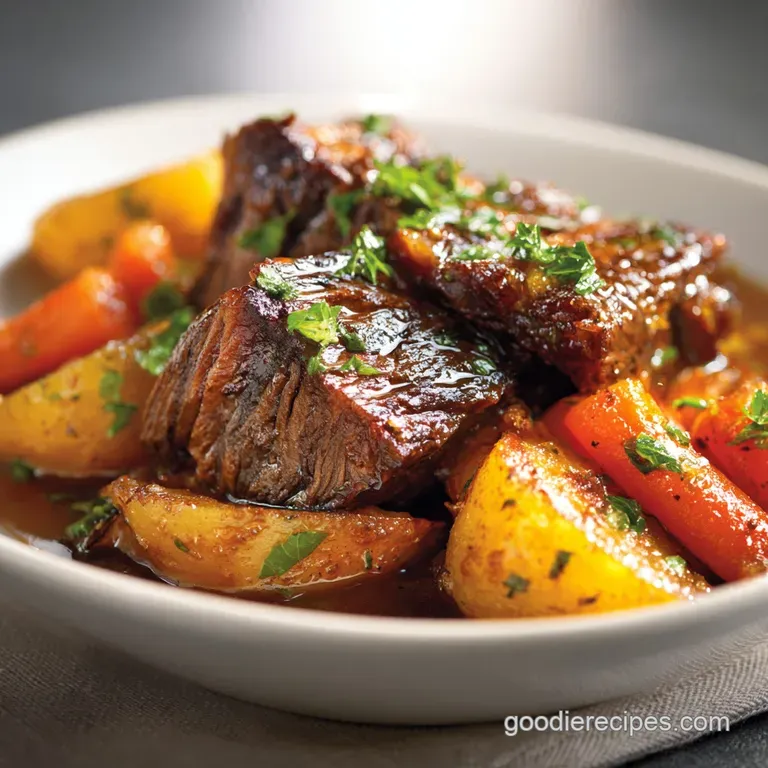
- Flavor/Texture Hook: Succulent, falling apart beef with a rich, savory glaze
- Perfect for: Cozy Sunday family dinners or hands off meal prep
- Mastering this classic family pot roast recipe
- The physics of melting fat
- Component analysis for the roast
- Ingredients for the best flavor
- Kitchen gear for roasting
- Cooking steps for succulent beef
- Fixing common roast problems
- Troubleshooting Common Issues
- Ways to adapt the meal
- Myths about roasting beef
- How to store your leftovers
- Tips for beautiful plate presentation
- Recipe FAQs
- 📝 Recipe Card
Mastering this classic family pot roast recipe
The kitchen started smelling like home the second that beef hit the hot oil. You know that specific sound? That aggressive sizzle that tells you the crust is forming just right? I remember the first time I tried making a pot roast recipe, I was so impatient.
I didn't sear it long enough, and the result was a grey, sad looking piece of meat that tasted like nothing. It was a total heartbreak, but it taught me that the first ten minutes are where the magic actually begins.
Now, I treat the searing process like a ritual. When the aroma of browning beef mixes with smashed garlic and fresh rosemary, the whole house feels warmer. This isn't just about feeding people, it's about that feeling of everyone gathering around a steaming pot while the windows fog up from the cold outside.
We've all had those dry, stringy roasts that require a gallon of water to swallow, but this version is the exact opposite. It's lush, it's velvety, and the sauce is so good you'll want to drink it with a spoon.
Trust me, we are going to get that beef so tender it practically melts when the fork touches it. I've spent years tweaking the ratios of wine to broth and learning why some potatoes turn to mush while others stay firm.
We're skipping the shortcuts that kill flavor and focusing on the simple, reliable steps that actually work. Grab your heavy pot and let's get into the details of why this specific method never fails.
The physics of melting fat
Collagen Conversion: The long, slow heat breaks down tough connective tissue into gelatin, which gives the meat a silky mouthfeel and thickens the sauce.
Maillard Reaction: Searing the beef at high heat creates hundreds of new flavor compounds that a slow cooker simply cannot replicate without a pre sear.
Osmotic Balance: Salting the meat early allows the seasoning to penetrate deep into the muscle fibers, ensuring every bite is seasoned from the inside out.
Acid Tenderization: The tannins and acidity in the dry red wine help weaken the protein bonds, speeding up the tenderization process while adding complexity.
| Thickness | Internal Temp | Rest Time | Visual Cue |
|---|---|---|---|
| 2 inch roast | 195°F - 205°F | 20 minutes | Meat shreds easily with two forks |
| 3 inch roast | 195°F - 205°F | 25 minutes | Connective tissue looks translucent/melty |
| 4 inch roast | 195°F - 205°F | 30 minutes | The center feels soft when pressed |
Choosing the right cut is half the battle. If you pick a lean roast, it will stay tough no matter how long you cook it. We need that "intermuscular" fat, those little white flecks, to keep things moist while the heat does its work.
Component analysis for the roast
| Ingredient | Science Role | Pro Secret |
|---|---|---|
| 3 lbs beef chuck roast | High collagen content | Always sear until it's deep mahogany, not just grey. |
| 1 cup dry red wine | Acidity for breakdown | Use a Cabernet or Merlot for the most "beefy" flavor profile. |
| 6 cloves garlic | Aromatic depth | Smash them to release oils instead of mincing to prevent burning. |
| 2 cups bone broth | Gelatin source | Use low sodium so you can control the final salt level perfectly. |
Ingredients for the best flavor
For the beef and the initial sear, you'll need the following.
- 3 lbs beef chuck roast, trimmed of exterior fat Why this? Chuck has the perfect fat to meat ratio for long braising.
- Substitute: Beef brisket (flat cut), though it might be slightly stringier.
- 1.5 tsp sea salt Why this? Coarse grains draw out moisture for a better crust.
- Substitute: 1 tsp table salt (but adjust for saltiness).
- 1 tsp cracked black pepper Why this? Freshly cracked adds a spicy, floral hit.
- Substitute: White pepper for a more subtle heat.
- 2 tbsp avocado oil Why this? High smoke point means no burnt oil flavors.
- Substitute: Grapeseed oil or clarified butter (ghee).
Now for the liquids and aromatics that build the base.
- 2 large yellow onions, quartered Why this? Yellow onions provide natural sugar for caramelization.
- Substitute: White onions or 4 large shallots.
- 6 cloves garlic, smashed Why this? Smashed garlic infuses the oil without burning.
- Substitute: 1 tbsp garlic paste added with the liquids.
- 2 cups low sodium beef bone broth Why this? Adds body and richness to the gravy.
- Substitute: Vegetable broth with a splash of soy sauce.
- 1 cup dry red wine Why this? Cuts through the richness of the beef fat.
- Substitute: 1 cup extra broth plus 1 tbsp balsamic vinegar.
- 2 tbsp tomato paste Why this? Concentrated umami and deep color.
- Substitute: 3 tbsp tomato puree (reduce for longer).
- 3 sprigs fresh thyme, 2 sprigs fresh rosemary, 2 bay leaves Why this? Wooded herbs withstand long cooking times.
- Substitute: 1 tsp dried Italian seasoning.
Finally, the root vegetables that soak up all that goodness.
- 1 lb baby Yukon Gold potatoes, halved Why this? Thin skins mean no peeling required.
- Substitute: Red bliss potatoes or large Russets (cut into chunks).
- 4 large carrots, cut into 2 inch chunks Why this? Large chunks don't disintegrate during the braise.
- Substitute: Parsnips for a peppery, earthy twist.
- 2 stalks celery, sliced into thick half moons Why this? Adds a subtle salty, vegetal base.
- Substitute: Fennel bulb for a licorice like sweetness.
Kitchen gear for roasting
You really don't need a pantry full of gadgets for a great pot roast recipe. A heavy bottomed Dutch oven is my absolute favorite because it holds heat so consistently. If you don't have one, a deep oven safe skillet with a very tight fitting lid will do the trick.
The key is preventing steam from escaping, so if your lid is a bit loose, cover the pot with a piece of foil before putting the lid on.
You'll also want a good pair of tongs. I once tried flipping a three pound roast with a fork and ended up splashing hot oil all over my favorite apron. Tongs give you the grip you need to sear the sides of the meat, which is where a lot of the flavor hides.
A sharp chef's knife for the carrots and potatoes is the only other "must have." We're keeping it simple and reliable here.
Cooking steps for succulent beef
- Season the meat. Pat the 3 lbs beef chuck roast dry with paper towels then rub the 1.5 tsp sea salt and 1 tsp cracked black pepper onto all sides. Note: Drying the surface ensures a sear rather than a steam.
- Heat the pan. Add 2 tbsp avocado oil to a Dutch oven over medium high heat until the oil ripples and a tiny wisp of smoke appears.
- Sear the beef. Place the roast in the pot and cook for 5 minutes per side until a dark, mahogany crust forms and the meat releases easily from the pan.
- Sauté aromatics. Remove the beef and add the 2 quartered yellow onions and 2 stalks sliced celery. Cook for 4 minutes until the onion edges start to brown and soften.
- Add garlic and paste. Toss in the 6 smashed cloves of garlic and 2 tbsp tomato paste. Stir constantly for 2 minutes until the paste turns a deep rust color and smells sweet.
- Deglaze the pot. Pour in the 1 cup dry red wine. Use a wooden spoon to scrape the bottom until all the brown bits (fond) are dissolved into the liquid.
- Combine and braise. Return the beef to the pot and pour in the 2 cups beef bone broth. Add the 3 sprigs thyme, 2 sprigs rosemary, and 2 bay leaves. Cover and bake at 150°C (300°F) for 2 hours 30 mins.
- Add the vegetables. Carefully stir in the 1 lb halved baby potatoes and 4 large chunks of carrots. Cover the pot again.
- Finish the cook. Bake for another 1 hour until the potatoes are tender when pierced and the beef pulls apart with no resistance.
- Rest the meat. Remove the pot from the oven and let it sit, covered, for 20 minutes. Note: This allows the fibers to relax and reabsorb the flavorful juices.
Chef's Tip: To get an even richer sauce, grate one of the onions instead of quartering it. The grated onion will practically dissolve into the braising liquid, acting as a natural thickener that makes the gravy feel much more luxurious without needing extra flour.
Fixing common roast problems
If things aren't looking quite right, don't panic. Most pot roast recipe issues come down to time and temperature. A common mistake I used to make was pulling the roast out because the clock said it was done, even if the meat was still "bouncy." If it doesn't shred, it's not done.
Just put the lid back on and give it more time.
If your sauce is tasting a little bit flat, it might just need a tiny hit of acid. A teaspoon of balsamic vinegar or even a squeeze of lemon juice right at the end can brighten the whole dish. It's similar to the way we balance the richness in our Lemon Herb Chicken recipe to make the flavors pop.
Troubleshooting Common Issues
| Issue | Solution |
|---|---|
| Meat still tough | If the beef is difficult to chew or won't shred, the collagen hasn't fully melted yet. This usually happens if the oven temperature was too low or if you didn't cook it long enough. Simply return it t |
| Sauce too salty | Using full sodium broth plus the salt on the meat can lead to an salt heavy sauce. If this happens, you can add a splash of water or more unsalted broth. Dropping in an extra potato for the last 20 mi |
| Why are my vegetables mushy | This is a classic "timing" issue. If you add the carrots and potatoes at the very beginning with the meat, they will turn into a puree by the time the beef is tender. Always wait until the last hour o |
Ways to adapt the meal
If you are cooking for a smaller crowd, you can easily halve this pot roast recipe. Just use a smaller Dutch oven (around 3 to 4 liters) and reduce the cooking time by about 20%. The beef still needs enough time to break down, so don't cut the time too drastically.
If you are scaling up for a big holiday dinner, you'll want to sear the meat in batches so you don't crowd the pan and lose that beautiful crust.
For a great side pairing, this roast is incredible when served alongside a Broccoli Casserole recipe. The creamy texture of the casserole balances the savory, wine heavy sauce of the beef. If you're looking for a shortcut version, you can do this in a slow cooker on low for 8 to 10 hours, but I still highly recommend searing the meat in a skillet first.
| Servings | Beef Amount | Cook Time | Pan Size |
|---|---|---|---|
| 2-3 People | 1.5 lbs | 2 hours 45 mins | 3 Liter Pot |
| 6 People | 3 lbs | 3 hours 30 mins | 5-6 Liter Pot |
| 10-12 People | 6 lbs | 4 hours 30 mins | 8-9 Liter Pot |
If you want a thicker gravy: Whisk 1 tbsp cornstarch with 1 tbsp cold water and stir it into the boiling liquid at the end. Whisk in a tablespoon of cold butter right before serving for a "glossy" finish. Blend one of the cooked carrots back into the sauce for natural thickness and sweetness.
Myths about roasting beef
Many people believe that searing meat "seals in the juices." This is actually a myth! Searing causes the surface of the meat to dry out, which is exactly what creates that delicious crust.
The real reason the roast stays juicy is the breakdown of collagen into gelatin, which holds onto moisture far better than muscle fibers do.
Another common misconception is that you must use expensive wine for a pot roast recipe. In reality, the long cooking time cooks off the nuances of a premium bottle. As long as it's a dry wine that you would be willing to drink a glass of, it's perfect for the pot.
Avoid "cooking wines" sold in grocery stores, as they are often loaded with unnecessary salt.
Finally, don't believe that you can't overcook a pot roast. While it's hard to do because of the liquid, eventually the fibers will give up all their moisture and become mushy and stringy. Once it's fork tender, it's time to stop the heat.
How to store your leftovers
This pot roast recipe actually tastes better the next day. As it sits in the fridge, the flavors in the sauce continue to meld and deepen. You can store the leftovers in an airtight container in the fridge for up to 4 days.
When you're ready to eat, reheat it gently on the stove with a splash of water or extra broth to keep it from drying out.
If you want to freeze it, I recommend freezing the meat and the sauce together in a freezer safe bag for up to 3 months. The potatoes can sometimes get a bit grainy after freezing and thawing, so you might want to eat those fresh and just freeze the beef.
For a zero waste tip, save any leftover sauce and shredded beef to make an incredible "cottage pie" by topping it with mashed potatoes and baking it until bubbly. You can even use the leftover bones or scraps to start a new batch of broth.
Tips for beautiful plate presentation
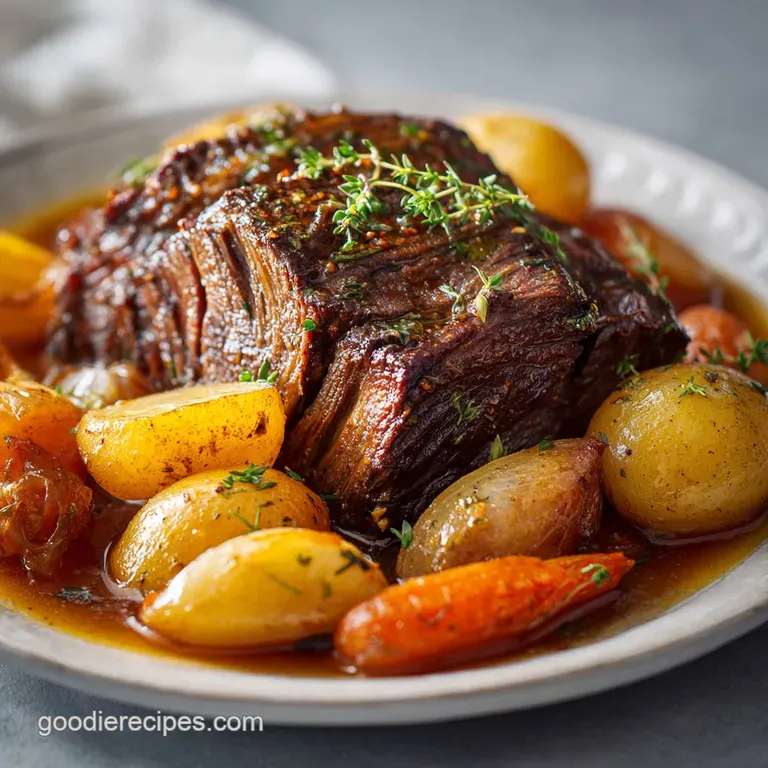
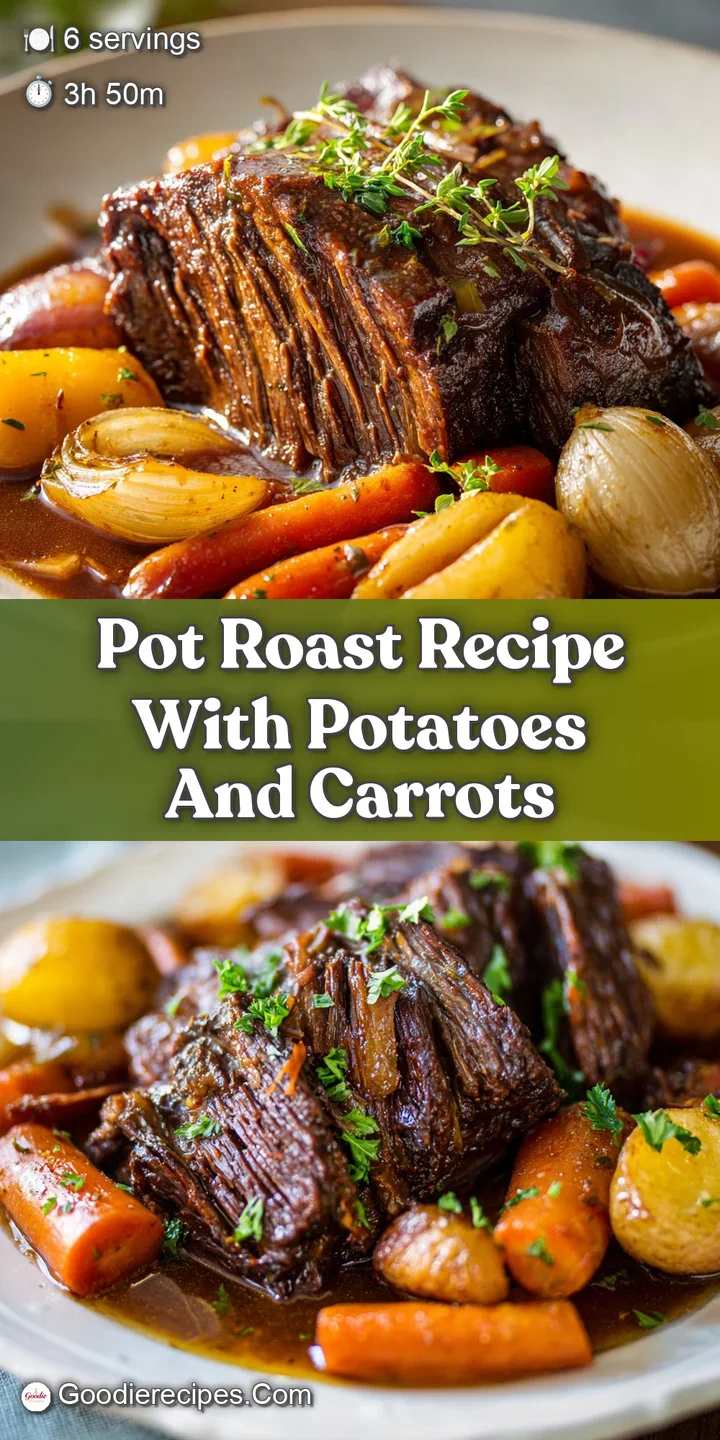
When you're ready to serve, don't just dump everything into a bowl. I like to lift the roast out onto a large cutting board and thick slice it against the grain. Place the slices in the center of a large, shallow platter and arrange the glistening carrots and potatoes around the edges.
This makes it look like a feast rather than just a stew.
Pour the rich, dark sauce over the top of the meat so it catches the light. A final sprinkle of fresh parsley or a few fresh thyme leaves adds a pop of green that makes the deep browns and oranges of the dish really stand out. It’s a simple touch, but it makes the meal feel special.
Honestly, there's nothing better than bringing a beautiful, steaming platter to the table and seeing everyone's eyes light up. It’s pure comfort on a plate.
Recipe FAQs
What is the secret to a good pot roast?
Searing the meat deeply. The Maillard reaction creates hundreds of new flavor compounds on the surface, which slow cooking alone cannot achieve. Don't rush this initial high heat step to build a flavorful crust.
What cut of meat is pot roast usually?
Chuck roast is the standard and recommended cut. It has the ideal balance of fat and connective tissue (collagen) needed to break down slowly into tender, moist meat.
How many hours does it take to do a pot roast?
Expect about 3.5 to 4 hours total cooking time. This includes 20 minutes of active prep and searing, followed by at least 3 hours of low and slow oven time until the beef shreds easily.
What cooking method is best for pot roast?
Braising in a covered Dutch oven in the oven is best. This method provides consistent, surround heat and allows the liquid to keep the meat moist while the connective tissue breaks down into gelatin.
Is it true that you must sear the roast to seal in the juices?
No, this is a common misconception. Searing is done purely to develop flavor via the Maillard reaction, not to seal in moisture, which is maintained by the low, slow braise.
How do I make sure my roast is fork tender, not dry?
Cook the roast until its internal temperature hits 200°F (93°C). The meat is tender when the collagen has fully converted to gelatin, which requires holding a temperature between 195°F and 205°F for several hours.
When should I add root vegetables like carrots and potatoes to the roast?
Add sturdy vegetables during the last hour of cooking. If added too early, they will turn to mush by the time the tough meat is fully tender; this staggered approach helps achieve perfectly cooked sides.
Best Pot Roast Recipe
Ingredients:
Instructions:
Nutrition Facts:
| Calories | 562 kcal |
|---|---|
| Protein | 46 g |
| Fat | 31 g |
| Carbs | 22 g |
| Fiber | 4 g |
| Sugar | 5 g |
| Sodium | 740 mg |
