Classic Scalloped Potatoes Recipe
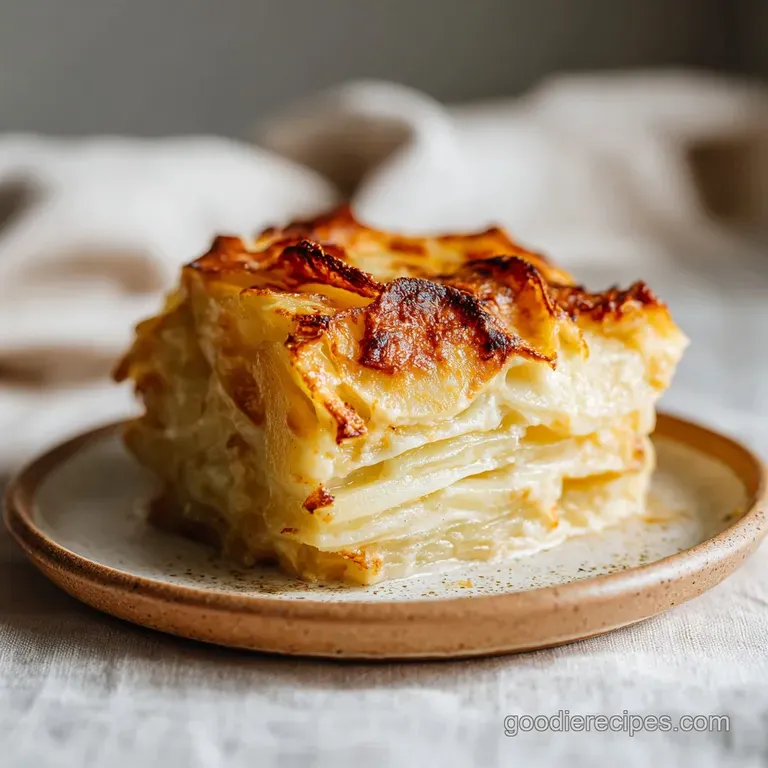
- Time: Active 20 minutes, Passive 1 hours 30 mins, Total 1 hours 50 mins
- Flavor/Texture Hook: Buttery, garlic infused cream with a golden brown top
- Perfect for: Holiday dinners, Sunday roasts, or cozy family gatherings
- Perfecting This Classic Scalloped Potatoes Recipe
- The Physics of Starch Gelatinization
- Analyzing the Essential Ingredients
- Gathering the Necessary Components
- Tools for a Flawless Bake
- Steps for the Perfect Bake
- Fixing the Most Common Mistakes
- Adjusting the Recipe Size
- The Truth About Potato Prep
- Storing and Using Every Scrap
- Garnishing for a Professional Look
- Recipe FAQs
- 📝 Recipe Card
Perfecting This Classic Scalloped Potatoes Recipe
The first time I tried making these, I ended up with what I can only describe as "potato soup." The sauce was thin, the potatoes were swimming in a sea of liquid, and the flavor was just... flat. I realized then that you can't just toss milk and sliced spuds into a dish and hope for the best.
You need a strategy to tame the starch and build layers of flavor that actually stick to the vegetable.
When you pull this dish out of the oven, the first thing you notice is the sizzle around the edges where the cream has reduced into a concentrated, savory crust. The aroma of nutmeg and garlic hits you instantly, and as you slide a spoon in, you feel that slight resistance of the golden top layer before it gives way to the velvety, soft interior.
It’s the kind of side dish that usually disappears faster than the main roast.
We aren't making a quick weeknight fix here; we are making the version your grandmother would have spent all afternoon on, but with a few modern tricks to ensure the sauce never breaks.
You'll get those beautiful, distinct layers of potato held together by a cream sauce that is thick enough to coat a spoon but light enough not to feel heavy.
The Physics of Starch Gelatinization
Starch Suspension: When Russet potatoes heat up, their starch granules swell and burst, thickening the surrounding milk and heavy cream into a stable sauce.
Fat Stabilization: The high fat content in heavy cream prevents the proteins in the milk from curdling when they meet the heat and the slight acidity of the potatoes.
Infusion Dynamics: Simmering garlic and thyme in the liquid before baking allows the essential oils to bond with the fat molecules, distributing flavor evenly throughout every layer.
| Cook Method | Time | Texture | Best For |
|---|---|---|---|
| Classic Oven | 1 hours 30 mins | Silky, golden crust | Holidays and dinner parties |
| Slow Cooker | 4 hours | Very soft, uniform | Saving oven space |
| Toaster Oven | 1 hours 15 mins | Crispy edges | Small batches for two |
This comparison shows that while the oven takes time, it is the only way to get that shattered, bubbly top layer that makes this dish iconic. If you are looking for a main to go with this, it pairs perfectly with my Lemon Herb Chicken recipe.
Analyzing the Essential Ingredients
| Ingredient | Science Role | Pro Secret |
|---|---|---|
| Russet Potatoes | High starch content | Don't soak them in water after slicing or you'll lose the natural thickener. |
| Heavy Cream | Prevents curdling | Use cold cream to start your infusion so the garlic flavor develops slowly. |
| Nutmeg | Flavor enhancer | Just a tiny pinch mimics the "nutty" notes of the potato skin. |
| All purpose Flour | Secondary stabilizer | Toss the potatoes in it directly to create a "roux" in the oven. |
The starch in the Russets is your best friend here. While some people love Yukon Golds for their buttery flavor, they don't have enough starch to really thicken the sauce on their own without a heavy roux. Using Russets ensures that the sauce becomes part of the potato rather than just sitting on top of it.
Gathering the Necessary Components
- 3 lbs Russet potatoes: Peeled and sliced 1/8 inch thick. Why this? Their high starch is vital for a thick, creamy sauce.
- 1 tbsp unsalted butter: For greasing the pan. Why this? Prevents sticking and adds a toasted flavor to the bottom.
- 2 cups heavy cream: The base of the sauce. Why this? High fat prevents the sauce from breaking at high heat.
- 1 cup whole milk: Thins the cream slightly. Why this? Ensures the potatoes have enough liquid to fully soften.
- 3 cloves garlic: Smashed. Why this? Provides a mellow, sweet aromatic base without being bitter.
- 3 sprigs fresh thyme: Steams in the cream. Why this? Adds an earthy, floral note that cuts through the richness.
- 1 tsp fine sea salt: To season throughout.
- 1/2 tsp freshly cracked black pepper: For a subtle bite.
- 1/4 tsp ground nutmeg: The secret "missing" flavor.
- 2 tbsp all purpose flour: To stabilize the cream.
If you don't have fresh thyme, you can use a half teaspoon of dried thyme, but be careful as it can be much stronger. For a heartier meal, you could even serve these potatoes alongside a Pot Roast Recipe.
| Original Ingredient | Substitute | Why It Works |
|---|---|---|
| Heavy Cream (2 cups) | Half and Half (2 cups) | Lighter, but increase flour by 1 tbsp to prevent a thin sauce. |
| Russet Potatoes | Yukon Gold Potatoes | Waxier texture that holds its shape better, though the sauce will be thinner. |
| Fresh Thyme | Fresh Rosemary | Adds a piney, bold flavor. Note: Use half the amount as it is very strong. |
The milk and cream combination is classic, but if you want to experiment, you can use all heavy cream for a truly decadent, restaurant style finish. Just know it will be significantly richer.
Tools for a Flawless Bake
You really don't need much, but a mandoline slicer is the secret to success here. If you try to hand cut 3 lbs of potatoes into 1/8 inch slices, you're going to end up with varying thicknesses, which means some will be mushy while others are still crunchy. A consistent slice means consistent cooking.
Beyond that, a heavy bottomed saucepan for the cream infusion is helpful to prevent scorching. You'll also need a 9x13 inch baking dish. I prefer ceramic or glass because they distribute heat more evenly than thin metal pans, which can cause the bottom layer to burn before the middle is tender.
Steps for the Perfect Bake
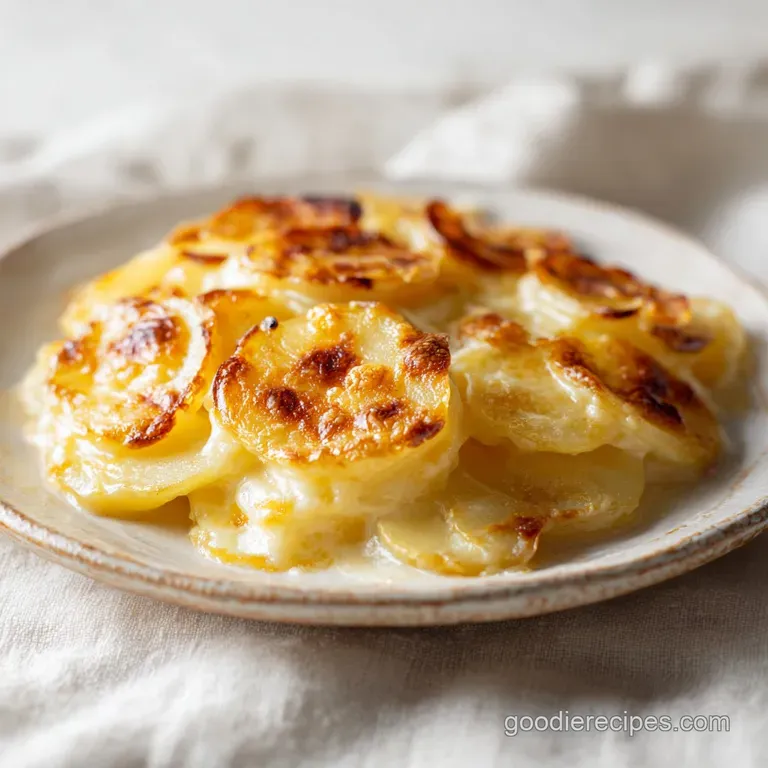
- Preheat the oven to 350°F (180°C) and grease your baking dish with the 1 tbsp of unsalted butter.
- Infuse the 2 cups heavy cream and 1 cup whole milk in a saucepan with the 3 smashed garlic cloves, 3 sprigs of thyme, and 1/4 tsp nutmeg over medium heat. Note: Do not let it boil; a gentle simmer is all you need.
- Slice the 3 lbs of Russet potatoes into 1/8 inch rounds. Note: Work quickly or keep them covered to avoid browning.
- Whisk the 2 tbsp of flour into the warm cream mixture after removing the garlic and thyme sprigs.
- Layer one third of the potatoes into the dish, then sprinkle with a portion of the 1 tsp salt and 1/2 tsp pepper.
- Pour one third of the cream mixture over the first layer of potatoes.
- Repeat the layering process twice more until the dish is filled and the liquid nearly covers the top.
- Cover the dish tightly with foil and bake for 45 minutes. Note: This steams the potatoes so they become tender.
- Remove the foil and bake for another 45 minutes until the top is bubbly and a deep golden brown.
- Rest the dish for at least 15 minutes until the sauce has thickened and set.
Chef's Tip: Freeze your butter for 10 minutes before greasing the dish. It leaves a thicker coating on the walls of the pan, which creates a better crust on the edges of the potatoes.
Fixing the Most Common Mistakes
Why Your Potatoes Are Still Hard
The most frustrating thing is pulling the dish out and finding the center is still crunchy. This usually happens if the potatoes were sliced too thick or if the dish wasn't covered tightly enough during the first half of baking.
The steam trapped under the foil is what actually "cooks" the potato starch; the dry heat later is just for color.
| Problem | Root Cause | Solution |
|---|---|---|
| Curdled Sauce | Heat was too high or low-fat milk was used | Always use heavy cream and keep the oven at 350°F (180°C). |
| Gray Potatoes | Potatoes oxidized before baking | Slice them right before assembling, or keep them in the cream immediately. |
| Soupy Center | Too much liquid or not enough rest time | Ensure you use the exact measurements and let it sit for 15 minutes after baking. |
Common Mistakes Checklist
- ✓ Never rinse the potatoes after slicing; you need that surface starch for the sauce.
- ✓ Ensure the foil seal is airtight to prevent the liquid from evaporating too fast.
- ✓ Use a mandoline for precision - inconsistent slices are the enemy of this dish.
- ✓ Don't skip the resting period; the sauce continues to thicken as it cools.
- ✓ Smashed garlic is better than minced here; it flavors the cream without burning.
Adjusting the Recipe Size
If you are cooking for a smaller crowd, you can easily halve this recipe. Use a 2 quart square baking dish instead of a 9x13. Reduce the initial covered baking time to 35 minutes, but keep the uncovered time around 40 minutes to ensure you still get that beautiful crust.
For doubling the recipe, I recommend using two separate 9x13 dishes rather than one deep one. If the potatoes are piled too high, the ones in the middle will never get soft, and the cream at the bottom will likely scorch before the top is done.
When baking two dishes at once, rotate them halfway through to account for any hot spots in your oven.
The Truth About Potato Prep
One huge myth is that you must soak potatoes in water to get them "clean" or "crispy." While that works for French fries, it is a disaster for scalloped potatoes. Soaking washes away the starch. Without that starch, your cream and milk will never emulsify into a thick sauce, and you'll end up with a watery mess.
Another misconception is that you need to make a thick flour roux on the stovetop first. While some "au gratin" recipes do this, traditional scalloped potatoes rely on the starch from the potatoes themselves to do the heavy lifting.
The 2 tablespoons of flour in this recipe are just a "safety net" to ensure the sauce stays stable.
Storing and Using Every Scrap
You can keep these in the fridge for up to 4 days. In fact, many people argue they taste better the next day because the flavors have had more time to meld. To reheat, I suggest doing it in the oven at 325°F (160°C) with a splash of milk on top to loosen the sauce back up.
Microwaving can sometimes make the cream separate.
Don't throw away those potato peels! Toss them with a little olive oil, salt, and paprika, and bake them at 400°F (200°C) until they are crispy. They make a great snack while you're waiting for the main dish to finish.
If you have leftover cream sauce in the pan, it’s basically a garlic thyme gravy whisk it into your next batch of mashed potatoes for an instant flavor boost.
Garnishing for a Professional Look
Presentation is everything with a beige dish like this. A sprinkle of fresh thyme leaves or chopped chives right before serving adds a pop of color that makes the golden crust stand out.
If you want a bit more texture, you can sprinkle a handful of breadcrumbs mixed with melted butter over the top during the last 15 minutes of baking for a "shatter" effect.
When serving, try to cut into neat squares rather than just scooping. If you let it rest properly for those 15 minutes, it should hold its shape beautifully. Serve it on a dark colored plate to make the white, creamy interior and the bronzed top really shine.
It’s a classic, humble dish, but when done with care, it looks as elegant as any gourmet creation.

Recipe FAQs
What are some common mistakes to avoid when making scalloped potatoes?
Never rinse the potatoes after slicing. Rinsing washes away the essential surface starch needed to naturally thicken the cream sauce.
How to make scalloped potatoes easy?
Slice potatoes consistently using a mandoline. This ensures even cooking so you avoid mushy and crunchy sections in the same dish.
What is the difference between scalloped potatoes and au gratin potatoes?
Scalloped typically uses only cream or milk, relying on potato starch for thickening. Au gratin traditionally includes cheese and is often topped with a breadcrumb crust.
Should you boil potatoes before making scalloped potatoes?
No, do not boil them first. The potatoes should cook slowly within the liquid in the oven, allowing the starch to release and thicken the cream naturally.
Why is my scalloped potato sauce thin and watery?
You likely rinsed the sliced potatoes before assembly or didn't let the dish rest long enough. Always use high starch potatoes like Russets and allow 15 minutes rest time after baking for the sauce to set.
Can I substitute heavy cream with a lighter dairy product?
Yes, but you must adjust the stabilizer. If using half and-half instead of heavy cream, increase the flour stabilizer by one tablespoon to prevent the sauce from becoming too thin.
Is it true that the potatoes must be layered immediately after slicing?
Yes, you must work quickly to prevent oxidation. Sliced potatoes will turn gray quickly; either assemble immediately or keep them submerged in water until you are ready to layer.
Classic Scalloped Potatoes Recipe
Ingredients:
Instructions:
Nutrition Facts:
| Calories | 358 kcal |
|---|---|
| Protein | 5.6 g |
| Fat | 23.4 g |
| Carbs | 34.2 g |
| Fiber | 2.1 g |
| Sugar | 3.2 g |
| Sodium | 312 mg |
