French Fries: Shatter Crisp and Fluffy
- Time: Active 30 minutes, Passive 25 minutes, Total 55 minutes
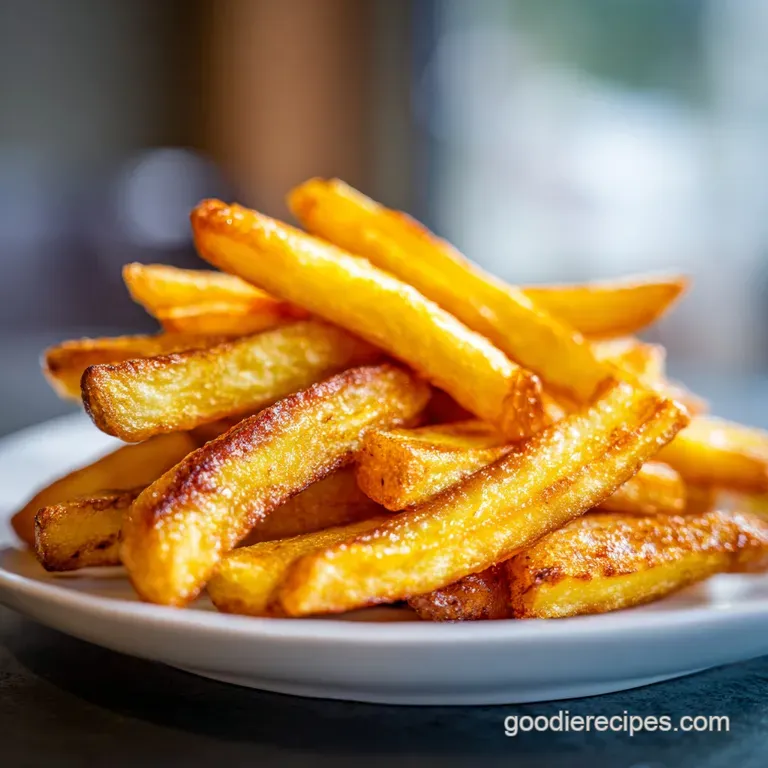
- Flavor/Texture Hook: Shatter crisp golden crust with a velvety center
- Perfect for: Weekend burger nights or family steak dinners
- Achieving The Crispiest Homemade French Fries Ever
- Essential Methods For Achieving That Signature Crunch
- Vital Stats For Your Potato Frying Success
- Component Analysis And Ingredient Roles
- Picking The Right Ingredients For Golden Results
- A Foolproof Guide To The Perfect Fry
- Expert Advice For Avoiding Common Frying Errors
- Smart Methods For Adjusting Batch Sizes
- Debunking Common Potato Frying Myths
- Smart Ways To Preserve And Reheat Fries
- Creative Presentation Ideas For Your Crispy Fries
- Recipe FAQs
- 📝 Recipe Card
Achieving The Crispiest Homemade French Fries Ever
That first hiss of a cold potato baton hitting 325°F oil is a sound I’ll never get tired of hearing. It’s a sharp, energetic sizzle that promises something special is happening under those bubbles.
I spent years settling for those limp, soggy sticks that come out of a frozen bag because I was terrified of deep frying at home. I thought you needed a professional kitchen or some magic chemical to get that specific restaurant crunch, but I was wrong.
My obsession started after a particularly disappointing dinner at a local pub where the fries were so greasy they actually left a puddle on the plate. I went home that night and vowed to figure it out myself. It wasn't easy.
I’ve had batches turn into brown mush, and I’ve had them come out looking perfect only to turn soft the second they hit the table. But through all those failures, I found the "holy trinity" of fry making: the right potato, the vinegar soak, and the double fry.
Trust me, once you hear that literal shatter when you bite into one of these, you're never going back to the bag.
We’ve all been there staring at a pile of potatoes wondering why the ones we make at home never quite hit the mark. This recipe isn't just about cooking; it's about chemistry. We’re going to strip away the excess starch and reinforce the potato’s structure so it can stand up to the heat.
We're keeping things budget friendly too, using simple Russet potatoes and basic pantry staples to create something that honestly tastes like it cost fifteen dollars at a bistro. It’s time to stop fearing the oil and start embracing the crunch.
Essential Methods For Achieving That Signature Crunch
Making French Fries is less about the heat and more about managing moisture and starch. If you just toss raw potatoes into oil, the outside burns before the inside cooks, and the moisture trapped in the middle eventually migrates outward, making the whole thing soggy.
We prevent this by attacking the potato from three angles.
- Pectin Reinforcement: Adding vinegar to the boiling water creates an acidic environment that slows the breakdown of pectin, keeping the fries intact while they soften.
- Starch Removal: Rinsing and boiling the potatoes washes away surface sugars that would otherwise burn and turn bitter in the hot oil.
- Surface Dehydration: The first low temperature fry creates a "skin" on the potato that acts as a barrier, preventing the second fry from making the interior greasy.
- Retrogradation: Letting the potatoes cool between fries allows the starches to realign, which results in a much sturdier and crispier final product.
The Pectin Starch Standoff
Adding vinegar to your par boil water isn't for flavor; it's a structural necessity. The acid keeps the potato batons from snapping or turning into mashed potatoes before they ever see the frying oil.
| Servings | Potato Quantity | Oil Required | Cook Time |
|---|---|---|---|
| 2 People | 1 lb Russets | 1 Quart | 20 mins |
| 4 People | 2 lbs Russets | 2 Quarts | 25 mins |
| 8 People | 4 lbs Russets | 4 Quarts | 40 mins |
Vital Stats For Your Potato Frying Success
When we talk about deep frying, precision is your best friend. You can't just "vibe" your way through oil temperatures. If the oil is too cool, the potato absorbs it like a sponge, leading to a heavy, oily mess. If it's too hot, the outside chars while the inside stays raw.
We use 2 lbs Russet potatoes for this specific batch because they have the highest starch content, which is exactly what we need for that fluffy internal texture.
The 1 tbsp White Vinegar is the secret weapon here. It’s a tiny amount that makes a massive difference in the structural integrity of your fries. We’re aiming for 4 servings, but honestly, in my house, 2 lbs of French Fries usually disappears between two people before the burgers are even off the grill.
Just keep an eye on your oil levels you want at least two inches of clearance from the top of your pot to prevent any dangerous boil overs.
Component Analysis And Ingredient Roles
| Ingredient | Science Role | Pro Secret |
|---|---|---|
| Russet Potatoes | High starch, low moisture | Always peel them for the most even, professional looking crunch. |
| White Vinegar | Pectin stabilizer | Don't skip this; it's what allows the fries to be handled without breaking. |
| Neutral Oil | Heat transfer medium | Use Peanut or Canola; they have high smoke points and won't flavor the fry. |
| Fine Sea Salt | Moisture drawer | Small grains stick better to the nooks and crannies of a hot fry. |
Picking The Right Ingredients For Golden Results
- 2 lbs Russet Potatoes: These are non negotiable for traditional fries. Why this? High starch content ensures a fluffy interior and a crispy, light exterior shell.
- Substitute: Yukon Gold potatoes (will be creamier but less shatter crisp).
- 1 tbsp White Vinegar: Added to the boiling water. Why this? Keeps the potato structure firm so they don't break during the first fry.
- Substitute: Lemon juice (provides the same acidity but might add a faint citrus note).
- 2 tsp Fine Sea Salt: For the initial seasoning. Why this? Fine grains dissolve and distribute more evenly than chunky kosher salt.
- Substitute: Table salt (use slightly less as it is more "salty" by volume).
- 2 Quarts Neutral Oil: For deep frying. Why this? High smoke point allows for the 400°F finish without the oil breaking down.
- Substitute: Beef tallow (adds incredible flavor but is much more expensive).
- 1 tsp Garlic Powder: For the final toss. Why this? Adds a savory depth that complements the natural sweetness of the potato.
- Substitute: Onion powder or smoked paprika for a different flavor profile.
A Foolproof Guide To The Perfect Fry
- Peel and cut the 2 lbs Russet Potatoes into 1/3 inch thick batons. Note: Try to keep them uniform so they cook at the same rate.
- Rinse the potatoes in a large bowl of cold water until the water runs clear. Note: This removes the surface starch that causes sticking and burning.
- Boil the water with 1 tbsp White Vinegar and 2 tsp Fine Sea Salt.
- Par cook the batons in the boiling water for 8 minutes until they are tender but not falling apart.
- Drain and dry the potatoes thoroughly on a wire rack or paper towels. Note: Moisture is the enemy of crispiness; they must be bone dry.
- Heat the oil in a heavy bottomed pot to 325°F (160°C).
- Blanch the fries in the oil for 5 minutes until they look pale and limp but have a slight "skin".
- Remove and drain the fries, letting them cool completely at room temperature. Note: This is the perfect time to prep your Buffalo Chicken Pizza recipe while you wait.
- Increase the heat of the oil to 400°F (200°C).
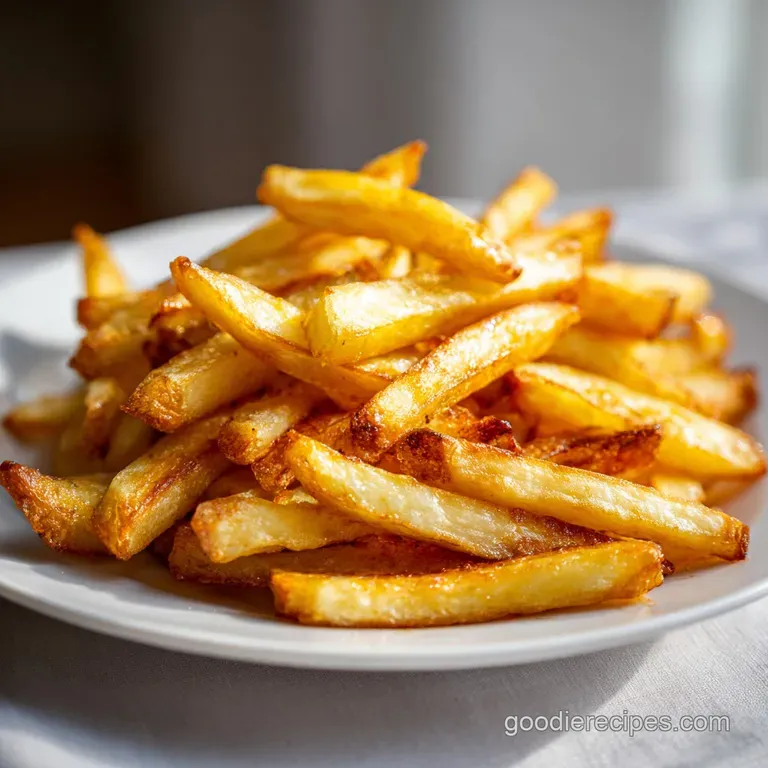
- Fry a second time for 3-4 minutes until they are deep golden brown and sound hollow when tapped.
- Toss immediately in a bowl with flaky sea salt and 1 tsp Garlic Powder while the oil is still wet.
Expert Advice For Avoiding Common Frying Errors
Why Your French Fries Are Soggy
If your fries come out limp, the culprit is almost always temperature or moisture. If you don't dry the potatoes perfectly after boiling, the steam stays trapped inside the oil, essentially "steaming" the fry rather than frying it.
On top of that,, if you crowd the pot, the oil temperature drops too fast, and the potatoes just soak up fat.
Managing Oil Temperature
The jump from 325°F to 400°F is the most important part of this recipe. The first fry cooks the potato through, but the second fry is what creates that crystalline, crispy shell. If you try to do it all at once at a medium temperature, you'll end up with a greasy stick.
| Problem | Root Cause | Solution |
|---|---|---|
| Dark Brown/Bitter | Oil too hot or too much starch | Lower heat and ensure you rinse the potatoes until water is clear. |
| Greasy/Oily | Oil temperature too low | Use a thermometer and don't add too many fries to the pot at once. |
| Breaking apart | Overboiled in water | Add the vinegar to the water and check tenderness at 7 minutes. |
Common Mistakes Checklist:
- ✓ Use a thermometer; "guessing" oil temp is the fastest way to ruin a batch.
- ✓ Pat potatoes completely dry before the first fry to prevent dangerous splattering.
- ✓ Don't skip the vinegar; it is the structural glue for the potato.
- ✓ Fry in small batches to keep the oil temperature stable.
- ✓ Season while the fries are screaming hot so the salt actually sticks.
Smart Methods For Adjusting Batch Sizes
If you are cooking for a crowd, don't just double everything and throw it in the pot. For a 2x or 4x batch, work in stages. You can par boil and do the first blanch fry for all the potatoes ahead of time. When you're ready to eat, do the over high heat second fry in smaller batches.
This keeps the fries hot and crispy for everyone.
When scaling down for a solo snack, you can reduce the oil to about 1 quart in a smaller saucepan. Just remember that smaller volumes of oil lose heat much faster, so you'll need to be even more vigilant with your thermometer.
For spices, don't just half them start with a pinch and season to your taste, as smaller batches can easily become over salted.
| Method | Time | Texture | Best For |
|---|---|---|---|
| Deep Fry | 25 mins | Shatter crisp | Authentic restaurant quality |
| Oven Baked | 40 mins | Chewy crisp | Lower fat, hands off cooking |
| Air Fryer | 20 mins | Dry crisp | Quick weekday cravings |
Debunking Common Potato Frying Myths
One major myth is that soaking potatoes in cold water for hours is the only way to get them crispy. While soaking helps remove starch, par boiling with vinegar is actually much more effective and faster.
The heat of the water draws out the starch more deeply than cold water ever could, and the vinegar does a better job of protecting the shape of the fry.
Another misconception is that you need to use "fresh" oil every time. In reality, slightly used oil often produces better fries because the broken down fat molecules help the heat transfer more efficiently to the food. I usually save my fry oil (strained, of course) for 2-3 uses before discarding it.
Just make sure it hasn't reached its smoke point or developed a fishy smell.
Smart Ways To Preserve And Reheat Fries
Storage: Store any leftovers in an airtight container in the fridge for up to 3 days. However, be warned: fries in the fridge will lose their crunch as the moisture from the center moves to the crust.
To freeze, lay the par fried (first fry only) batons on a baking sheet until solid, then transfer to a freezer bag for up to 3 months.
Zero Waste: Don't throw away those potato peels! Toss them with a little oil and salt and bake them at 400°F for 10 minutes for a crispy "chef's snack" while you wait for the main event.
If you have leftover fries that just won't crisp back up, chop them up and use them as the base for a breakfast hash the next morning.
Creative Presentation Ideas For Your Crispy Fries
Serving these in a brown paper bag or a wire basket lined with parchment paper isn't just for looks it actually helps absorb any residual oil so the fries stay crispy longer. If you're hosting a party, a "fry bar" with different dipping sauces is always a hit.
I love pairing these with a spicy aioli or even a truffle mayo for a little bit of luxury.
These fries are the ultimate companion to a big, juicy burger, but they also hold their own next to a warm French Bread Recipe if you're doing a spread of appetizers. Sometimes, the simplest way is the best: a big pile of fries in the middle of the table, a cold drink, and plenty of extra salt. Just make sure you serve them immediately the clock starts ticking the second they leave that oil!

Recipe FAQs
What is the secret to homemade french fries?
The dual fry method combined with a vinegar par-boil. The vinegar acidifies the water, reinforcing the potato structure (pectin) during the initial boil, and the two-stage frying ensures the interior cooks fully before the exterior crisps perfectly.
Do I have to soak potatoes before frying?
No, rinsing and boiling is superior to long cold soaks. While soaking removes starch, par-boiling in vinegar actively draws out starch more effectively and strengthens the cell walls simultaneously.
Should I boil potatoes before making homemade fries?
Yes, par-boiling is essential for a fluffy interior. Boil them briefly (about 8 minutes) in salted water spiked with white vinegar until just tender; this cooks the inside without making them mushy.
How to make french fries at home step-by-step?
Par-boil cut russets in vinegar water for 8 minutes until tender. Next, dry them completely, blanch fry in 325°F oil for 5 minutes, cool them, then fry again at 400°F until golden brown.
Why do my homemade french fries always turn out soggy?
Your oil temperature dropped too low or your potatoes weren't dry enough. If you crowd the pot, the oil cools rapidly, forcing the potato to absorb fat instead of frying; ensure they are completely dry after boiling.
Is it true that I must use only high smoke point oils like peanut oil?
No, this is not strictly necessary, but recommended for safety. While neutral oils like canola or peanut are ideal due to their high smoke points, you can use slightly used oil, as broken down fat molecules can actually enhance heat transfer.
What is the purpose of adding vinegar to the water when boiling potatoes?
The vinegar acidifies the water, stabilizing the pectin in the potato cell walls. This structural reinforcement prevents the fries from collapsing into mush during the initial boil and first fry, similar to how acid helps set structure in batters for recipes like our Fruit Tart Recipe.
Crispy Homemade French Fries
Ingredients:
Instructions:
Nutrition Facts:
| Calories | 334 calories |
|---|---|
| Protein | 4.5g |
| Fat | 18.3g |
| Carbs | 39.8g |
| Fiber | 4.5g |
| Sugar | 0.6g |
| Sodium | 375mg |
