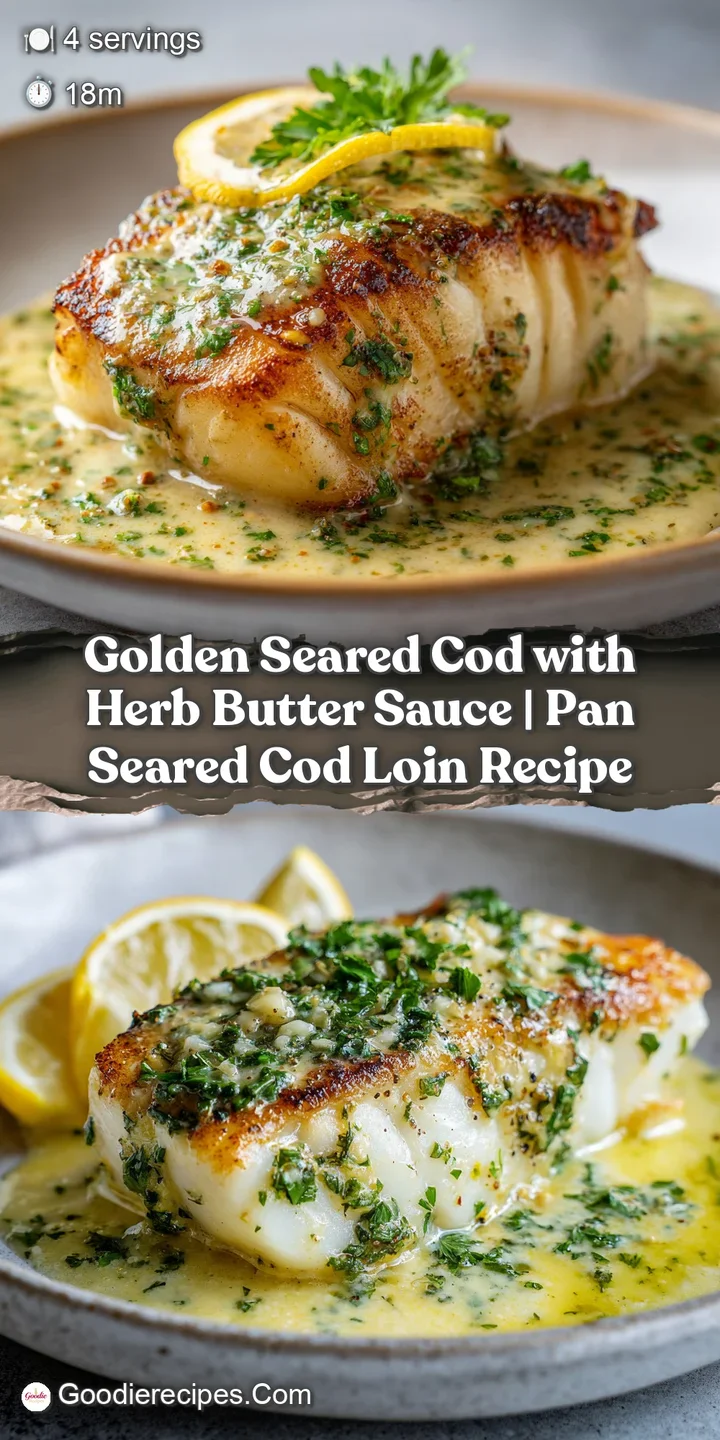
Golden Seared Cod with Herb Butter Sauce and Lemon
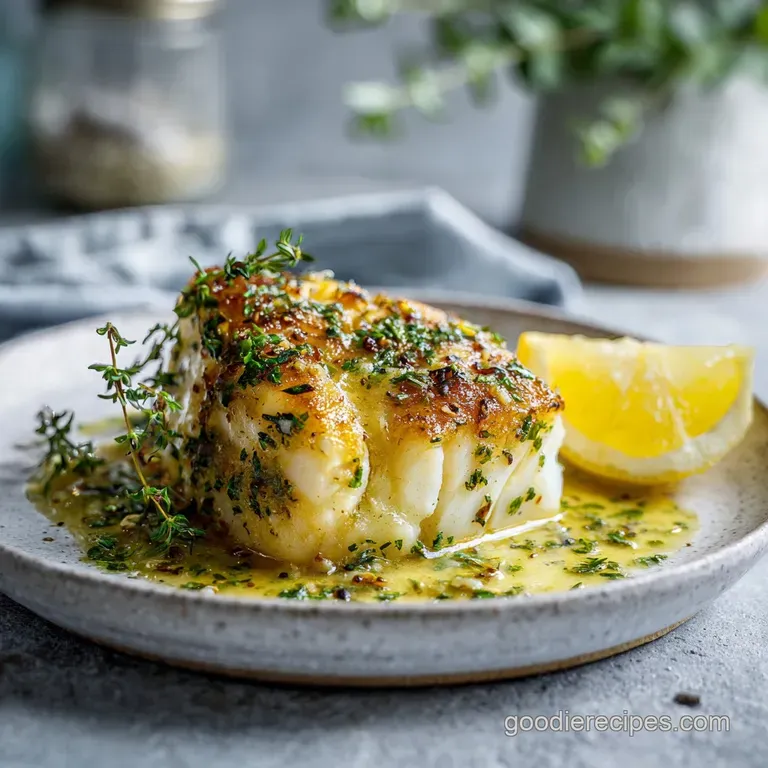
- Time: Active 10 minutes, Passive 10 minutes, Total 20 minutes
- Flavor/Texture Hook: Shatter crisp exterior with a velvety, lemon infused herb butter center.
- Perfect for: Quick weeknight dates or an impressive dinner for guests.
- Golden Seared Cod with Herb Butter Sauce and Lemon
- Key Techniques for Golden Seared Fish
- Component Analysis for Better Flavor
- Smart Shopping for Fresh Cod Loins
- Essential Tools for Faster Cooking
- Bringing the Golden Sear Together
- Pro Tips for Better Pan Searing
- Creative Twists and Easy Swaps
- Adjusting This Recipe for Large Crowds
- Common Myths About Cooking Fish
- Storing and Reusing Leftover Cod
- Best Side Dish Pairings
- High in Sodium (⚠️)
- Recipe FAQs
- 📝 Recipe Card
Golden Seared Cod with Herb Butter Sauce and Lemon
The sound of cold fish hitting a shimmering hot pan is probably my favorite kitchen symphony. You know that specific sizzle? It starts as a loud, aggressive crackle and slowly settles into a rhythmic hum as the proteins set.
Discover our signature recipe for Golden Seared Cod with Herb Butter Sauce and Lemon, a dish that looks like you spent hours over a stove but actually takes less time than boiling a pot of pasta.
I used to be terrified of cooking fish. I’d buy a beautiful piece of cod, throw it in a lukewarm pan, and watch in horror as it stuck to the bottom, eventually tearing into sad, grey shreds. It was heartbreaking and expensive.
But then I realized that the secret isn't some fancy culinary degree, it is all about heat management and one specific ingredient that most people overlook: avocado oil.
In this recipe, we are leaning into the budget smart way of doing things. You don't need the most expensive Chilean sea bass to have a high end experience. A good piece of cod, some pantry staples, and the right technique will give you a meal that rivals any steakhouse.
We're going to use a little flour to cheat our way to a better crust and some cold butter to make a sauce that coats the back of a spoon perfectly.
Key Techniques for Golden Seared Fish
Understanding why your food behaves the way it does is the fastest way to become a better cook. When we talk about searing fish, we are fighting two main enemies: moisture and temperature drops. Here is how we win that battle every single time.
- Moisture Elimination: Drying the fish with paper towels is the most important step. Water on the surface of the fish creates steam, and steam prevents browning. If the fish is wet, it will boil in its own juices rather than developing that shatter crisp golden crust.
- Smoke Point Strategy: We use avocado oil because it has a high smoke point (around 500°F/260°C). If you used butter or olive oil for the initial sear, they would burn and turn bitter before the fish was even halfway done. The oil allows us to get the pan ripping hot.
- Cold Butter Control: Adding cold, cubed butter at the very end is a classic French move. The cold temperature allows the butter to emulsify into a creamy, velvety sauce rather than just melting into a greasy puddle. It also drops the pan temperature just enough so the garlic and thyme can infuse without turning into charcoal.
- The Flour Buffer: A very light dusting of all purpose flour acts as a physical barrier and a browning agent. It absorbs any microscopic bits of moisture we missed and provides extra surface area for the fat to brown, giving us that mahogany color we want.
| Thickness of Loin | Internal Temp | Rest Time | Visual Cue |
|---|---|---|---|
| 1 inch (2.5 cm) | 145°F (63°C) | 3 minutes | Flakes easily with a fork |
| 1.5 inches (4 cm) | 145°F (63°C) | 5 minutes | Center is opaque and white |
| 0.5 inches (1 cm) | 140°F (60°C) | 2 minutes | Edges are golden and firm |
When you're working with fish like cod, the difference between "perfectly flaky" and "rubbery" is often just sixty seconds. I always tell my friends to look for the "flake." If you press your finger or a fork against the side of the fish and the layers start to slide apart, it is ready to come off the heat.
Remember that carryover cooking will finish the job while the fish rests on your plate.
Component Analysis for Better Flavor
Let's look at the "why" behind our shopping list. Choosing the right components ensures that your Golden Seared Cod with Herb Butter Sauce and Lemon turns out consistent every time you make it, whether it's a Tuesday night or a special anniversary.
| Ingredient | Science Role | Pro Secret |
|---|---|---|
| Cod Loins | Lean protein base | Use the "loin" (the thick middle part) for even cooking and better flakes. |
| Avocado Oil | over High heat vehicle | Its neutral flavor lets the herb butter shine later without adding its own heavy taste. |
| Cold Butter | Emulsifier | Cube it and keep it in the fridge until the second the fish is flipped for a thicker sauce. |
| Fresh Thyme | Aromatic infusion | Don't chop it; the whole sprigs release oils into the butter without burning into tiny black specks. |
The choice of cod loin over a standard fillet is a practical one. Fillets often have a very thin tail end that overcooks while the thick part is still raw. By choosing loins, you are getting a uniform thickness that makes the timing much easier to manage. If you are looking for a side that matches this level of luxury, my Potatoes Au Gratin recipe is the perfect cheesy companion for this flaky fish.
Smart Shopping for Fresh Cod Loins
Buying fish can be intimidating if you don't know what to look for. When I'm at the store, I always look for cod that is translucent and slightly "glistening." If it looks matte or dull, it’s likely been sitting there a bit too long. Also, give it the sniff test through the packaging if you can.
It should smell like the ocean, not like "fish."
- 4 (6 oz / 170g) cod loins: Look for pieces that are roughly the same thickness. Why this? Ensures they all finish cooking at the exact same moment.
- 1.5 tsp kosher salt: I prefer Diamond Crystal for its large flakes. Why this? Makes it harder to over salt while providing better coverage.
- 0.5 tsp freshly cracked black pepper: Use a coarse grind here. Why this? Adds a punch of heat that cuts through the rich butter.
- 2 tbsp avocado oil: Any high smoke point oil works, but this is my go to. Why this? Prevents the pan from smoking out your entire kitchen.
- 2 tbsp all purpose flour: Just a light dusting is all you need. Why this? Creates the "golden" part of our golden seared cod.
- 4 tbsp unsalted butter: Always use unsalted so you can control the seasoning. Why this? Allows the flavor of the fresh herbs to be the star.
- 3 cloves garlic: Smash them with the flat of your knife. Why this? Releases the juices without making them small enough to burn.
- 3 sprigs fresh thyme: Woodiness adds a beautiful earthy note. Why this? Infuses the basting butter with a subtle, professional aroma.
- 2 tbsp fresh Italian parsley: Flat leaf is best for flavor. Why this? Adds a pop of color and a fresh, grassy finish.
- 1 large lemon: You'll need half for juice and half for slicing. Why this? The acid balances the heavy fats of the butter sauce.
If you are on a budget, frozen cod is a fantastic option. Just make sure you thaw it completely in the fridge overnight and I cannot stress this enough pat it dry three times more than you think you need to. Frozen fish tends to hold onto more water, and that water is the enemy of a good sear.
Essential Tools for Faster Cooking
You don't need a kitchen full of gadgets, but a few specific items will make your life much easier when cooking seafood. Speed is the name of the game here, so having everything ready before you turn on the burner is key.
A heavy bottomed skillet is your best friend. I personally love a well seasoned cast iron skillet (like a Lodge) because it holds heat like a champ. When you put a cold piece of fish into a thin pan, the temperature drops immediately, and you lose your sear.
A heavy pan stays hot, giving you that mahogany crust we're chasing.
You'll also want a flexible fish spatula. These are thinner and more curved than standard spatulas, allowing you to get under the delicate fish without breaking it. If you don't have one, just use the thinnest turner you own. Finally, a large spoon is mandatory for the butter basting.
You want something with a deep bowl so you can scoop up that liquid gold and pour it right over the loins.
Bringing the Golden Sear Together
- Remove the cod from the refrigerator 15 minutes before cooking. Note: Taking the chill off ensures the center cooks at the same rate as the exterior.
- Use paper towels to press firmly onto all sides of the fish until bone dry. Note: This is the secret to a crust that doesn't stick or steam.
- Season the fish generously with salt and pepper, then lightly dust with all purpose flour.
- Heat a heavy bottomed skillet over medium high heat with the avocado oil until it shimmers and just begins to whisper smoke.
- Lay the cod loins into the pan away from you to avoid oil splatters.
- Press down lightly for the first 30 seconds until you hear a consistent, high pitched sizzle.
- Sear undisturbed for 4-5 minutes until the bottom is mahogany colored and the fish releases easily.
- Flip the fish carefully. Add the cold cubed butter, smashed garlic, and thyme sprigs to the pan.
- Tilt the pan so the foaming butter pools with the aromatics at the bottom edge.
- Use a spoon to continuously baste the top of the fish with the hot herb butter for 2-3 minutes until the fish is opaque and flaky.
- Finish with a squeeze of fresh lemon juice and chopped parsley. Serve immediately while the butter is still foaming and fragrant.
Pro Tips for Better Pan Searing
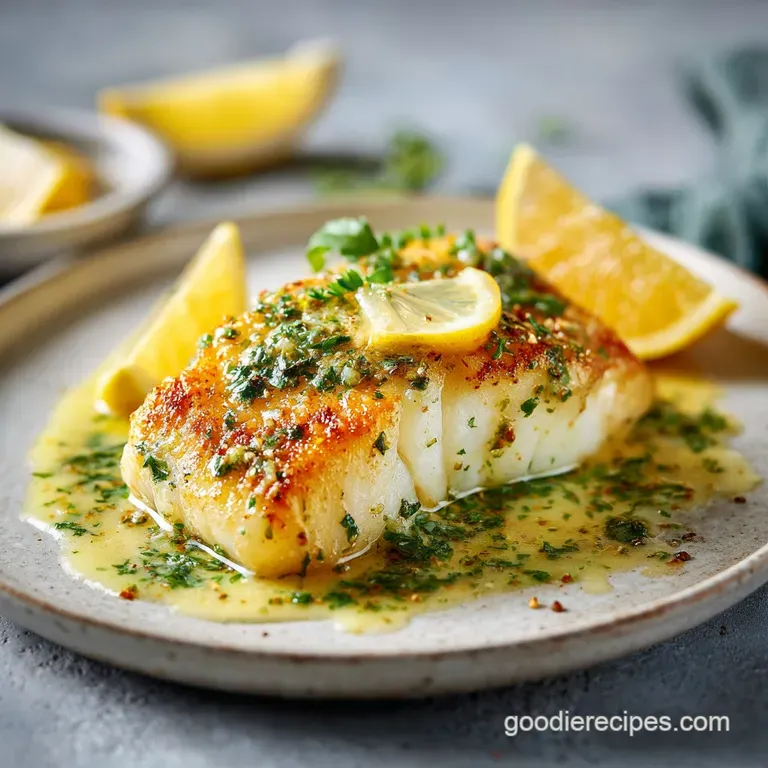
One mistake I once made was trying to flip the fish too early. If you try to lift the cod and it feels like it's "grabbing" the pan, stop! It isn't ready. The fish will naturally release itself once the proteins have browned and formed a crust. This is called "autolysis," and it is your best indicator of when to flip.
Trust the pan; it will tell you when it’s finished.
Preventing Fish from Sticking
If you find your fish is constantly sticking, it’s usually because the pan wasn’t hot enough or you didn't use enough oil. You want the oil to be "shimmering" it should look like it has tiny ripples moving across the surface. If the oil is static, it’s too cold.
Also, make sure you don't overcrowd the pan. If you put four large loins in a small pan, the temperature will plummet, and you’ll end up with a watery mess instead of a sear.
Maximizing the Butter Baste
The basting technique, often called arroser in French cooking, is what transforms this from a simple fish dish into a luxury meal. When the butter hits the pan, it will foam up. This foam is the water in the butter cooking off.
Once the foam subsides slightly and the butter turns a light golden brown, that’s when the flavor is peaking. Keep that butter moving! Spooning it over the fish cooks the top side gently while infusing it with garlic and thyme.
| Problem | Root Cause | Solution |
|---|---|---|
| Fish is grey/pale | Pan wasn't hot enough | Increase heat until oil whispers smoke before adding fish. |
| Butter is black/burnt | Heat was too high during basting | Lower the flame or pull pan off the heat while basting. |
| Fish is dry/tough | Overcooked | Use a thermometer; pull fish at 140°F and let it rest to 145°F. |
Common Mistakes Checklist
- ✓ Pat the fish bone dry on all sides (even the edges!) to ensure a crisp sear.
- ✓ Wait for the oil to shimmer before the fish even touches the pan.
- ✓ Don't move the fish for at least 4 minutes after the initial drop.
- ✓ Keep the butter cold until the moment it hits the pan to maintain a creamy sauce.
- ✓ Use a large spoon for basting to ensure even coverage and heat distribution.
Creative Twists and Easy Swaps
While this version is a classic, you can easily tweak it based on what you have in your pantry. If you find yourself out of cod, any firm white fish will work. Halibut is a bit more expensive but incredibly buttery, while pollock or haddock are great budget friendly alternatives.
Just keep an eye on the thickness, as thinner fillets will cook much faster.
For a different flavor profile, you could swap the thyme for rosemary or even a bit of sage. If you want a bit of heat, toss a pinch of red pepper flakes into the butter while you baste. If you are looking for a meat based alternative that uses similar creamy techniques, you should check out my Chicken Stroganoff recipe for a fast 30 minute meal that uses mushrooms and cream to hit those same comfort notes.
| Original Ingredient | Substitute | Why It Works |
|---|---|---|
| Cod Loins | Halibut Fillets | Similar texture but richer. Note: Usually more expensive than cod. |
| Avocado Oil | Grapeseed Oil | Both have high smoke points and neutral flavors for searing. |
| Fresh Thyme | Fresh Rosemary | Adds a stronger, more pine like aromatic to the butter sauce. |
| AP Flour | Cornstarch | Makes the crust even crispier and keeps the dish gluten-free. |
If you want a dairy-free version, you can use a high-quality vegan butter substitute. Just be aware that many plant based butters have a higher water content, so they might not brown as beautifully as traditional dairy butter.
You’ll still get a great flavor, but the "nutty" aroma of browned milk solids won't be as present.
Adjusting This Recipe for Large Crowds
Scaling this recipe is fairly straightforward, but you have to be careful with your pan space. If you're doubling the recipe to serve 8 people, don't try to cram all 8 loins into one skillet. You’re much better off working in two batches or using two separate pans simultaneously.
When scaling down for two people, you can simply halve everything. Use a smaller 8 inch or 10 inch skillet so the butter doesn't spread too thin and burn. When scaling up, I recommend keeping the amount of herbs and garlic at about 1.5x the original amount rather than doubling them completely.
Too much garlic can quickly overwhelm the delicate flavor of the fish.
If you are cooking for a large group and want to keep the first batch warm, put them on a wire rack over a baking sheet in a 200°F (95°C) oven.
The wire rack is crucial if you put the fish directly on a plate or a flat sheet, the bottom will get soggy from the trapped steam. We worked hard for that crust; let's keep it!
Common Myths About Cooking Fish
There is a lot of "old wives' tale" advice when it comes to seafood. One of the biggest myths is that you should only buy "fresh" fish from the counter. In reality, most fish at the counter was previously frozen and thawed.
"Flash frozen" fish, which is frozen right on the boat, is often higher quality and much more budget friendly. Don't be afraid of the freezer aisle!
Another myth is that you need to flip fish multiple times to ensure it's cooked through. Every time you flip a delicate protein like cod, you risk breaking it. The basting technique we use here actually cooks the top of the fish while the bottom sears, meaning you only need one single, clean flip.
This keeps the loin intact and looking professional on the plate.
Finally, people often think you have to "seal in the juices" by searing. Science tells us that searing doesn't actually create an impermeable barrier for moisture. Instead, searing creates flavor through a process of browning.
The real reason we sear is for that complex, savory taste and the contrast in texture between the crust and the flaky interior.
Storing and Reusing Leftover Cod
Cooked fish is always best eaten immediately, but if you have leftovers, they will keep in the fridge for up to 2 days. Store them in an airtight container with a slice of lemon to keep things fresh. When it comes to reheating, avoid the microwave at all costs!
It will turn your beautiful cod into a rubbery, fishy smelling disaster.
Instead, reheat it gently in a skillet over low heat with a tiny splash of water or more butter. Cover the pan for 2-3 minutes until it's warmed through. Alternatively, leftover cod makes the most incredible fish tacos.
Just flake the cold fish into a tortilla, add some crunchy cabbage slaw and a bit of lime, and you have a completely different meal that feels brand new.
To reduce waste, don't throw away those parsley stems or the lemon zest you didn't use. You can throw the stems into a bag in the freezer for making vegetable stock later. The lemon zest can be mixed with a bit of salt to create a citrus finishing salt that is amazing on roasted vegetables.
We're all about getting every penny's worth out of our ingredients!
Best Side Dish Pairings
This cod is the star of the show, but it needs a good supporting cast. Since the fish is rich and buttery, I usually lean toward sides that have a bit of acidity or a clean, earthy flavor to balance it out.
A simple bed of sautéed spinach with a little nutmeg is a classic choice that takes about three minutes to throw together.
If you want something more substantial, a light lemon risotto or a simple pilaf works wonders. The rice or grains soak up any of that extra herb butter sauce left on the plate, which is basically a crime to leave behind.
For a truly decadent pairing, you can serve this alongside some roasted asparagus or even a simple green salad with a sharp vinaigrette.
Honestly, the best part about this Golden Seared Cod with Herb Butter Sauce and Lemon is how versatile it is. You can serve it over mashed potatoes for a "comfort food" vibe or alongside some steamed broccolini if you're keeping things light. Whatever you choose, just make sure you have extra lemon wedges on the table.
That final hit of fresh acid right before you take a bite is what makes the whole dish sing. Enjoy your fast, fancy dinner!
High in Sodium (⚠️)
952 mg 952 mg of sodium per serving (41% 41% of daily value)
The American Heart Association recommends limiting sodium intake to less than 2,300mg per day, ideally striving for about 1,500mg for most adults.
Tips to Reduce Sodium
-
Drastically Reduce Added Salt-25%
The recipe calls for 1.5 tsp of kosher salt. Halve this to 0.75 tsp to significantly cut down on sodium. You can always add a pinch at the table if needed.
-
Maximize Lemon's Flavor
Use the fresh lemon generously! Its bright acidity can mimic the zestiness that salt often provides. Use the zest and juice to enhance the cod's flavor without extra sodium.
-
Embrace Fresh Herbs
Fresh herbs like thyme and parsley add wonderful aroma and flavor. Increase the amount of parsley and thyme, or add other low-sodium herbs like dill or chives, to boost taste.
-
Amplify Garlic's Pungency
Sautéing the garlic well before adding other ingredients will release more of its pungent flavor, which can help compensate for reduced salt. Consider roasting the garlic for an even deeper, sweeter flavor.
-
Introduce Other Spices
Incorporate other non-salty spices like paprika, onion powder (ensure it's pure), or red pepper flakes for a kick. These can add complexity and depth to the dish.
Recipe FAQs
How long do you cook cod in butter sauce for?
Cook for a total of 6 to 8 minutes. Sear the cod undisturbed for 4 5 minutes on the first side, then flip and baste with the herb butter for another 2 3 minutes until the fish is opaque and flakes easily.
How to make lemon and herb cod?
Press the cod bone dry with paper towels, season, and sear in a hot, oil-slicked skillet. Once flipped, add cold butter, smashed garlic, and thyme to the pan, tilting it to continuously spoon the foaming butter over the fish before finishing with fresh lemon juice and parsley.
What are common cod cooking mistakes?
Failing to dry the surface of the fish is the biggest error. If the cod is damp, it will steam instead of forming a mahogany colored crust. Always pat the fillets bone dry on all sides to ensure a clean, golden sear.
How to make lemon and butter sauce?
Add cold cubed butter to the skillet immediately after flipping your fish. As the butter melts and foams with the garlic and thyme, tilt the pan to collect the mixture and spoon it over the cod; finish with a squeeze of fresh lemon juice to brighten the emulsion. If you enjoy mastering this velvety emulsion technique, it is the same process used for restaurant style pasta sauces.
Can I use frozen cod for this recipe?
Yes, provided it is completely thawed and dried first. Any residual moisture from the thawing process will prevent the crust from forming, so use extra paper towels to ensure the fish is bone dry before it hits the pan.
Is it necessary to use flour on the cod?
No, it is optional. A light dusting of all-purpose flour helps achieve a more pronounced, crispy crust, but you can skip it if you prefer a lighter, gluten-free sear.
How should I reheat leftover cod?
Avoid the microwave entirely, as it will make the fish rubbery. Instead, place the cod in a skillet over low heat with a splash of water or a small piece of butter, covering the pan for 2 3 minutes until the fish is warmed through.
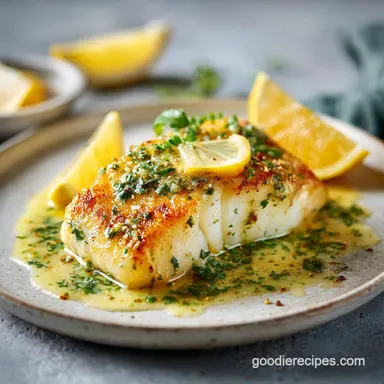
Golden Seared Cod
Ingredients:
Instructions:
Nutrition Facts:
| Calories | 325 calories |
|---|---|
| Protein | 31g |
| Fat | 19g |
| Carbs | 4g |
| Fiber | 1g |
| Sugar | 1g |
| Sodium | 952mg |
