Old Fashioned Beef Barley Soup
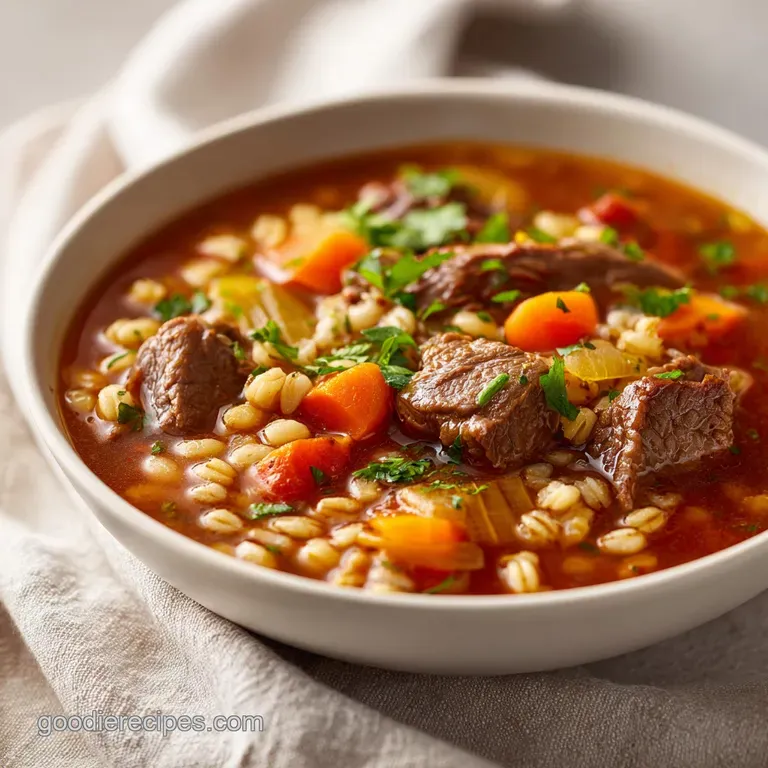
- Time: Active 20 minutes, Passive 1 hours 10 mins, Total 1 hours 30 mins
- Flavor/Texture Hook: Savory, velvety broth with chewy grains
- Perfect for: Cold weekend lunches or meal prep
Why This Recipe Works
- Maillard Reaction: Searing the 900g of beef chuck roast at high heat creates complex sugar protein bonds that provide the base for the entire soup's color and depth.
- Starch Gelatinization: As the pearl barley simmers, it releases amylose molecules into the broth, creating a natural thickening effect without needing a flour roux.
- Collagen Transformation: The long simmer at a gentle bubble converts the tough connective tissue in the chuck roast into silky gelatin, making the meat melt in-your mouth tender.
- Acidic Brightness: Using 120ml of dry red wine dissolves the sucro proteins (fond) stuck to the bottom of the pot, integrating those concentrated flavors back into the liquid.
| Element | Fresh Method | Shortcut Version |
|---|---|---|
| Beef | Seared chuck roast | Leftover roast beef |
| Broth | Beef bone broth | Water and bouillon |
| Grains | Raw pearl barley | Pre cooked grain pouch |
Choosing the right approach depends on your schedule, but the fresh method always yields a richer mouthfeel. If you are looking for more comfort food inspiration, you might enjoy my Pot Roast Recipe which uses similar slow cooking techniques to break down tough cuts of meat.
Essential Recipe Specs
| Thickness | Internal Temp | Rest Time | Visual Cue |
|---|---|---|---|
| 1.25 cm cubes | 71°C (Beef) | 5 minutes | Meat pulls apart easily |
| Liquid level | N/A | 10 minutes | Barley looks translucent |
| Veggie coins | N/A | N/A | Carrots are fork tender |
When you're aiming for that rich, dark base, the temperature of your pot is everything. You want the oil to be shimmering but not smoking before the first piece of beef touches the metal.
If the pot isn't hot enough, the meat will steam in its own juices rather than developing that beautiful brown crust we’re after.
Choosing Quality Ingredients
To get the most out of your Beef Barley Soup, focus on the quality of the beef and the freshness of the herbs. I always go for a well marbled chuck roast because the fat renders down into the broth, giving it a velvety finish that leaner cuts simply can't match.
- 2 lbs Beef Chuck Roast: Trimmed and cut into 1.25 cm cubes. Why this? Higher fat and collagen content for tenderness.
- 2 tbsp Neutral oil: For over high heat searing. Why this? Won't burn at the high temps needed for beef.
- 1 large Yellow Onion: Finely diced. Why this? Provides the aromatic sweetness base.
- 3 large Carrots: Sliced into thick coins. Why this? Holds shape during the long simmer.
- 2 stalks Celery: Diced. Why this? Adds essential savory depth (mirepoix).
- 4 cloves Garlic: Minced. Why this? For sharp, pungent aroma.
- 8 cups Beef Bone Broth: About 1.9 liters. Why this? Bone broth has more gelatin for body.
- 1 cup Pearl Barley: Rinsed well. Why this? The "pearl" version cooks faster than hulled.
- 1 tbsp Tomato paste: Concentrated flavor. Why this? Adds umami and a deep red hue.
- 2 tsp Fresh Thyme leaves: Stripped from the stem. Why this? Classic earthy pairing for beef.
- 2 Dried Bay Leaves: Whole. Why this? Infuses a subtle floral note.
- 1/2 cup Dry Red Wine: 120ml of Merlot or Cabernet. Why this? Acidity balances the heavy fats.
- 1 tbsp Worcestershire sauce: Liquid gold. Why this? Anchovy based punch of pure umami.
- 1 cup Frozen peas: Added at the end. Why this? Provides a pop of sweetness and color.
- 1 tsp Salt: To taste. Why this? Enhances all other flavor profiles.
- 0.5 tsp Black pepper: Freshly cracked. Why this? Adds a gentle back of-the throat heat.
- 2 tbsp Fresh parsley: Chopped fine. Why this? Cuts through the richness for serving.
| Ingredient | Science Role | Pro Secret |
|---|---|---|
| Pearl Barley | Starch thickener | Rinse until water is clear |
| Tomato Paste | Umami booster | Fry it until it turns dark |
| Red Wine | Solvent | Scrape the pot immediately |
The science behind the tomato paste is quite cool. When you fry it in the oil with the onions (a technique called pincé), the sugars caramelize and the raw metallic taste disappears, leaving behind a deep, sun dried sweetness. This is a trick I also use when making my Chicken Soup Recipe to give the broth a more robust character.
Minimal Tools Required
You don't need a kitchen full of gadgets for this. A heavy bottomed pot, like a 5 liter Dutch oven (I love my Lodge cast iron one), is your best friend here because it holds heat evenly. You will also need a sharp chef's knife for those carrots and a sturdy wooden spoon for scraping the bottom of the pot.
Right then, let's talk about the spoon. Use wood or high temp silicone. Metal spoons can scrape the seasoning off some pots, and more importantly, they don't have the "edge" needed to really get under that stuck on beef flavor during the deglazing step.
Trust me on this; that brown stuff on the bottom is where the magic lives.
From Prep to Plate
1. The over High heat Sear
Pat the 900g of beef cubes bone dry with paper towels. Heat the 30ml of oil in your pot over medium high heat until it shimmers and wisps of smoke appear. Add the beef in batches, ensuring they don't touch, and sear for 3 minutes per side until a dark brown crust forms.
Note: Crowding the pan drops the temperature and steams the meat instead of searing it.
2. Building the Aromatic Base
Remove the beef and set it aside on a plate. Lower the heat to medium and add the diced onion, carrots, and celery to the residual fat. Cook for 6 minutes until the onions are translucent and slightly golden.
Stir in the minced garlic and 15g of tomato paste, cooking for another 2 minutes until the paste turns a deep brick red.
3. Deglazing the Magic
Pour in the 120ml of dry red wine. Use your wooden spoon to vigorously scrape the bottom of the pot until all the brown bits are dissolved into the liquid. This is the secret to that professional, dark broth color.
4. The Main Simmer
Return the beef and any accumulated juices to the pot. Add the 1.9 liters of beef bone broth, rinsed barley, thyme, bay leaves, and Worcestershire sauce. Bring the mixture to a boil, then immediately turn the heat down to low.
Cover and simmer for 50 minutes until the beef is tender and the barley is plump.
5. The Final Flourish
Stir in the frozen peas and cook for 3 minutes until they are bright green and heated through. Remove the bay leaves. Taste the soup and add the salt and pepper as needed. Finish by stirring in the fresh parsley right before serving to keep the herb flavor vibrant.
Pro Tips and Pitfalls
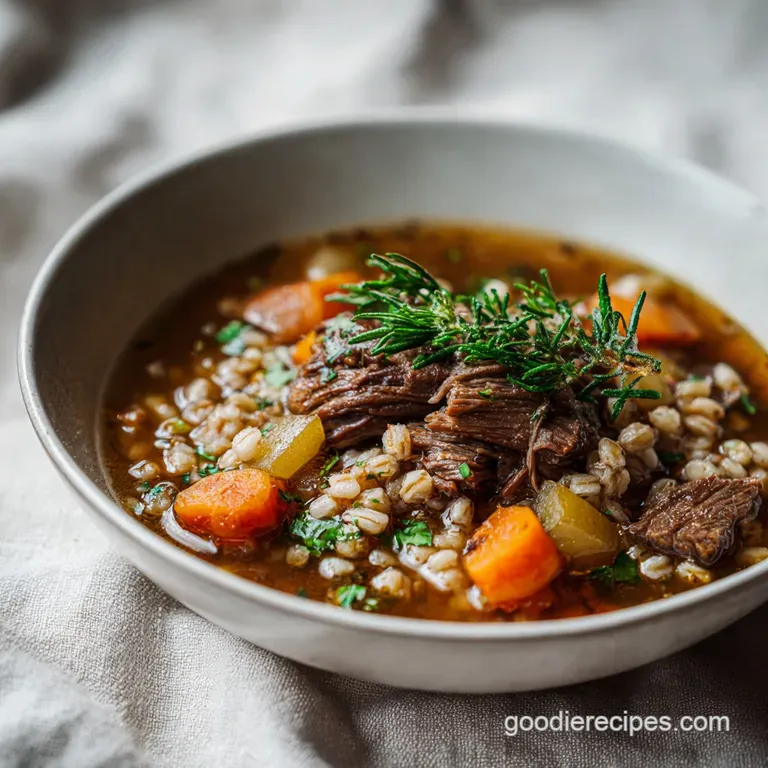
Fixing Tough Beef Texture
If your beef feels like rubber, it simply hasn't cooked long enough. Beef chuck is full of connective tissue that only breaks down after reaching a specific internal temperature for a sustained period.
| Problem | Root Cause | Solution |
|---|---|---|
| Chewy Beef | Under simmered | Cook for another 15 minutes |
| Invisible Barley | Over rinsed or overcooked | Add barley halfway through |
| Gray Broth | Skipped the sear | Add a drop of kitchen bouquet |
Common mistakes happen to the best of us, but they are easy to avoid if you know what to look for.
- ✓ Pat the beef completely dry before it hits the oil (moisture is the enemy of a good sear).
- ✓ Rinse the barley in a fine mesh sieve until the water runs clear to prevent a cloudy soup.
- ✓ Don't skip the deglazing step; those burnt looking bits are pure flavor.
- ✓ Let the soup sit for 10 minutes off the heat before serving to let the flavors meld.
- ✓ Use a heavy pot to prevent the bottom from scorching during the long simmer.
Simple Dietary Adaptations
If you need to swap things out, this recipe is pretty forgiving. Just keep the ratios similar so the liquid to solid balance stays correct.
| Original Ingredient | Substitute | Why It Works |
|---|---|---|
| Beef Chuck | Portobello Mushrooms | Provides a similar meaty umami. Note: Reduce simmer time to 20 mins. |
| Pearl Barley | Farro | Similar chewy texture and nutty flavor. |
| Red Wine | Beef Broth + 1 tsp Vinegar | Adds the necessary acidity without the alcohol. |
gluten-free Barley Alternatives
Since barley contains gluten, you can swap it for brown rice or buckwheat groats. If using brown rice, add it in the last 30 minutes of cooking so it doesn't turn into mush.
Buckwheat provides a very similar earthy vibe to barley but keep in mind it cooks much faster, usually in about 15 to 20 minutes.
Vegetarian Version Swaps
You can absolutely make this vegetarian by using a rich mushroom broth and swapping the beef for 500g of chunky roasted mushrooms. Use a splash of soy sauce instead of Worcestershire sauce to keep that deep, fermented savory note that usually comes from the anchovies.
Smart Preservation Secrets
Beef barley soup is famous for "growing" in the fridge. The barley continues to absorb liquid as it sits, turning your soup into a thick stew by the next morning.
- Fridge: Store in an airtight container for up to 4 days. You will likely need to add a splash of water or broth when reheating.
- Freezer: This freezes beautifully for up to 3 months. Leave about an inch of space at the top of your container because the liquid expands when frozen.
- Zero Waste: Don't throw away those celery leaves! Chop them up and mix them with the parsley for a more intense, peppery garnish. If you have leftover red wine that's been open a few days, that's actually better for the soup than a freshly opened bottle because the flavors have mellowed.
Professional Presentation Tips
To make this look like it came from a high end bistro, don't just ladle it into a bowl. Start by placing the larger chunks of beef and carrots in the center first, then pour the broth and barley around them. This prevents the "sunken treasure" look where all the good bits are hidden at the bottom.
Using Fresh Garnishes
The soup is very brown and beige, so color is your friend. A heavy hand with the fresh parsley makes a massive difference. You can also add a tiny swirl of extra virgin olive oil or a few cracks of very coarse black pepper right on top.
The Perfect Side
Serve this with a thick slice of toasted sourdough rubbed with a raw garlic clove. The crunch of the bread against the velvety broth is a texture match made in heaven. If you’re feeling extra, a small dollop of horseradish cream on top of the beef adds a sharp, cold contrast to the hot, rich soup.
Myths About Grains
Hulled vs Pearl Barley
Many people think hulled barley is just "healthier" pearl barley, but they behave very differently in the pot. Hulled barley still has its bran layer, meaning it takes nearly two hours to soften and will never quite give you that silky, thickened broth that pearl barley provides.
Searing Seals Juices
This is one of the oldest myths in the book. Searing meat does not "seal in" anything; in fact, the high heat actually causes the meat to lose a bit of moisture. The reason we do it is strictly for the Maillard reaction creating those deep, roasted flavors that a simple boil could never achieve.
Rinsing Grains Loses Flavor
Some worry that rinsing barley washes away the flavor, but the opposite is true. Rinsing removes excess surface starch and debris that can make your soup unpleasantly gummy. You want the starch that is inside the grain to release slowly during the simmer, not the dusty starch on the outside to thicken the soup instantly.

High in Sodium
985 mg mg of sodium per serving (43% of daily value)
The American Heart Association recommends limiting sodium intake to no more than 2,300mg per day for most adults.
Tips to Reduce Sodium in Your Beef and Barley Stew
-
Low-Sodium Broth-30%
Use low-sodium or no-salt added beef broth instead of regular beef bone broth. This will significantly reduce the sodium content without sacrificing flavor.
-
Reduce Added Salt-25%
Reduce the amount of added salt by at least half, or eliminate it entirely. Taste the stew before adding any salt at all, and add it gradually to control the sodium level. Remember, Worcestershire sauce also contains sodium!
-
Skip Worcestershire Sauce-20%
Eliminate the Worcestershire sauce completely. This sauce is very high in sodium and can be omitted or replaced with a tiny splash of balsamic vinegar for depth of flavor.
-
Rinse Pearl Barley Thoroughly-5%
Rinse the pearl barley thoroughly under cold water before adding it to the stew. While barley isn't a huge source of sodium, rinsing can remove any residual sodium from processing.
-
Boost Flavor Naturally
Enhance the stew's flavor using fresh herbs like thyme and parsley, and by browning the beef and vegetables well. These techniques create depth and reduce the need for salt.
-
Spice It Up
Experiment with sodium free spices and herbs to add flavor without the sodium. Garlic powder, onion powder, smoked paprika, and black pepper are all great options.
Recipe FAQs
What do you put in Beef Barley Soup?
Beef chuck roast, pearl barley, carrots, celery, onion, beef broth, red wine, and aromatics like thyme and bay leaf. The process involves searing the beef for flavor, sautéing the mirepoix, deglazing with wine, and then simmering everything until the meat is tender and the barley is plump.
Do you put canned tomatoes in Beef Barley Soup?
No, use tomato paste instead for intensity. Canned tomatoes often introduce too much liquid and acidity that disrupts the broth balance; tomato paste is fried first to concentrate umami and color.
Does beef and barley soup require soaking?
No, soaking is unnecessary for pearl barley. Pearl barley is processed to cook relatively quickly; simply rinsing it well before adding it to the pot is sufficient for the 50-minute simmer time.
Is beef barley healthy?
Yes, it is generally considered a nutritious, balanced meal. It offers lean protein from the beef, complex carbohydrates and fiber from the barley, and essential vitamins from the vegetables.
How do I get the broth rich and velvety instead of watery?
Achieve richness by searing the beef properly and using quality bone broth. The gelatin released from the connective tissue during the long, slow simmer is the primary natural thickener; mastering this slow breakdown is key, similar to how we manage collagen in a Crock Pot Roast recipe.
Why does my soup taste flat even after adding salt?
Flat flavor often means a lack of acid or deep umami complexity. Be sure you deglazed the pot thoroughly with red wine, as those fond bits provide depth; a splash of Worcestershire sauce also boosts umami significantly.
How to prevent the barley from turning mushy if I plan on eating leftovers?
Cook the barley separately or undercook it slightly if preparing for leftovers. Barley continues to absorb liquid as it cools; consider cooking the main broth without the grain, then reheating the grain separately before serving later.
Hearty Beef Barley Soup
Ingredients:
Instructions:
Nutrition Facts:
| Calories | 412 kcal |
|---|---|
| Protein | 31.8 g |
| Fat | 18.4 g |
| Carbs | 28.6 g |
| Fiber | 6.4 g |
| Sugar | 4.1 g |
| Sodium | 985 mg |
