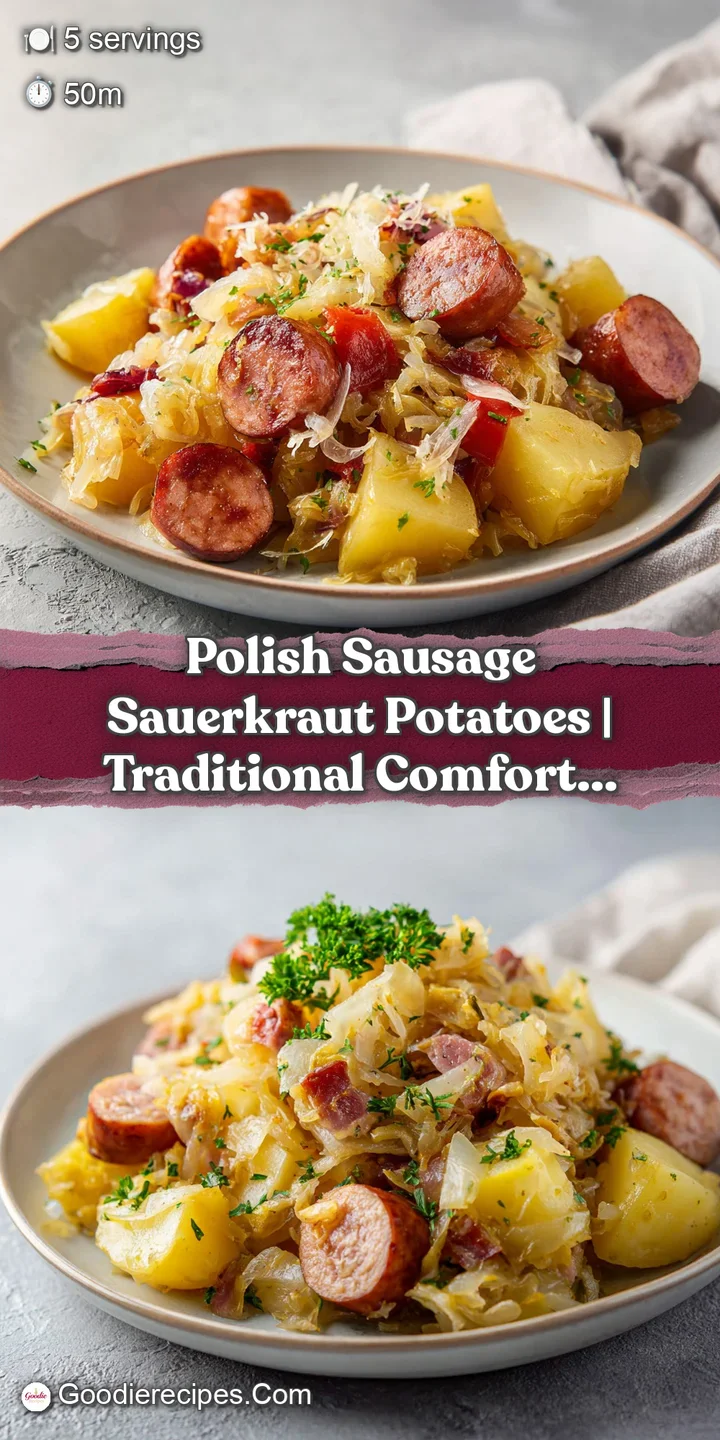
Sausage Sauerkraut Potatoes: Traditional Skillet Meal

- Time: Active 15 minutes, Passive 35 minutes, Total 50 minutes
- Flavor/Texture Hook: Crispy seared sausage and velvety gold potatoes
- Perfect for: Weeknight comfort or a fuss free family dinner
- Techniques for the Best Sausage Sauerkraut Potatoes
- Principles Behind This Savory Combination
- Component Analysis and Ingredient Roles
- Essential Components and Smart Ingredient Substitutions
- The Minimal Tools Required for Success
- Detailed Step-by-Step Cooking and Simmering Guide
- Troubleshooting Texture and Flavor Balance Issues
- Customizing Your Smoked Sausage Sauerkraut and Potatoes
- Storage Guidelines and Creative Leftover Ideas
- Serving Suggestions for a Classic Family Meal
- Myth: Sauerkraut is Always Sour
- Myth: Potatoes Must Be Boiled First
- Very High in Sodium
- Recipe FAQs
- 📝 Recipe Card
Techniques for the Best Sausage Sauerkraut Potatoes
The kitchen fills with that unmistakable, heavy sizzle the moment the sliced kielbasa hits the cast iron. It is a sound that immediately signals comfort, followed quickly by the aroma of garlic and wood smoke drifting through the house.
I remember my grandmother standing over a similar pan, her wooden spoon stained from years of stirring, coaxing out every bit of flavor from the simplest ingredients. There is something grounding about the way the fat renders out, turning clear and shimmering, ready to coat every cube of potato.
This dish is not about fancy footwork; it is about the patience to let things brown. When the kraut hits the hot pan, that first sharp puff of steam clears the sinuses and promises a meal that is both hearty and refreshing.
It is the kind of food that demands a seat at the table on a Tuesday night when the rain is hitting the windows and you need a win. We are looking for that specific contrast between the snap of the sausage casing and the buttery soft interior of a Yukon Gold.
We are aiming for a balance where the vinegar punch of the cabbage doesn't overwhelm the earthy sweetness of the onions. It is a classic for a reason, and once you see how the broth deglazes all those brown bits the fond from the bottom of the pan, you will understand why this method beats a slow cooker every time.
Let's get into the specifics of why these textures work so well together.
Principles Behind This Savory Combination
Fat Infusion: Rendering the sausage first provides a flavored cooking medium that seasons the potatoes from the inside out during the sauté phase.
Acid Management: Rinsing the sauerkraut removes the harsh, metallic brine notes while the final splash of fresh apple cider vinegar restores a bright, clean acidity.
Starch Selection: Yukon Gold potatoes contain a medium starch content that holds its shape during simmering while still releasing enough starch to lightly thicken the broth.
Aromatic Layering: Adding caraway seeds to the hot fat toasts the spice, releasing essential oils that provide a nutty, anise like depth to the cabbage.
| Method | Time | Texture | Best For |
|---|---|---|---|
| Stovetop Skillet | 50 minutes | Crispy sausage, firm potatoes | Maximum flavor and texture contrast |
| oven-roasted | 60 minutes | Shriveled kraut, charred edges | Hands off cooking with concentrated saltiness |
| Slow Cooker | 6 hours | Very soft, unified flavors | Ultimate tenderness and busy workdays |
Choosing the right cooking method depends entirely on your texture preference, though the stovetop version remains the gold standard for that "shatter" on the sausage edges. If you find yourself craving a different kind of potato comfort on another night, you might also enjoy a pot roast with potatoes which uses a similar simmering technique.
Component Analysis and Ingredient Roles
The success of any sausage sauerkraut and potatoes recipe depends on the quality of the pork and the preparation of the cabbage. Using a bone broth instead of plain water adds a velvety mouthfeel that water simply cannot provide.
| Ingredient | Science Role | Pro Secret |
|---|---|---|
| Polish Kielbasa | Provides primary fat and salt | Start in a cold pan to render more fat without burning the meat |
| Yukon Gold Potatoes | Absorbs cooking liquid and fat | Keep cubes uniform (2.5 cm) to ensure they reach fork tender status simultaneously |
| Sauerkraut | Acts as the acidic counterbalance | Rinse in a fine mesh sieve to control the salt levels of the final dish |
| Chicken Bone Broth | Deglazing agent and cooking liquid | Use low sodium versions to prevent the dish from becoming overly salty as it reduces |
Essential Components and Smart Ingredient Substitutions
To make this sausage sauerkraut and potatoes, you will need a few pantry staples and some fresh items from the butcher. Each element serves a purpose in the flavor profile.
- 1.5 lbs Polish Sausage (Kielbasa): Sliced into 1 cm rounds. Why this? The garlic and pimento notes in kielbasa are traditional and hold up to the kraut.
- Substitute: Smoked turkey sausage for a leaner, lighter option.
- 1 lb Sauerkraut: Rinsed and squeezed dry. Why this? Provides the essential fermented tang that cuts through the fatty sausage.
- Substitute: Shredded fresh cabbage with 2 extra tablespoons of vinegar if you dislike fermented flavors.
- 1.5 lbs Yukon Gold Potatoes: Cut into 2.5 cm cubes. Why this? They have a natural buttery flavor and a "velvety" texture when simmered.
- Substitute: Red potatoes work well, but avoid Russets as they may disintegrate into mush.
- 1 large Yellow Onion: Thinly sliced half moons. Why this? Onions provide a sweet base that bridges the gap between salty meat and sour cabbage.
- Substitute: Shallots for a more delicate, refined sweetness.
- 2 cloves Garlic: Minced.
- Substitute: 1/2 tsp garlic powder if fresh is unavailable.
- 1 cup Chicken Bone Broth: Low sodium.
- Substitute: Vegetable broth or even a dry white wine like Riesling.
- 1 tsp Caraway Seeds: The secret to "authentic" flavor.
- 1/2 tsp Smoked Paprika: Adds a subtle campfire depth.
- 1 tbsp Apple Cider Vinegar: For a final brightness.
- 0.25 tsp Black Pepper: Freshly cracked.
The Minimal Tools Required for Success
You don't need a kitchen full of gadgets to make a sausage sauerkraut and potatoes recipe work, but one specific pan makes a world of difference. A heavy bottomed 12 inch cast iron skillet or a 5 quart Dutch oven is your best friend here.
These tools hold heat evenly, which is crucial for getting that golden crust on the potatoes without them sticking or scorching.
Beyond the pan, a sturdy wooden spoon is essential for scraping the bottom of the skillet this is where the "fond" lives, those caramelized brown bits that contain all the concentrated flavor. If you find yourself making potato heavy meals often, like these creamy scalloped potatoes, a high-quality chef's knife will make the 15 minutes of prep time go by much faster. You'll also want a fine mesh strainer for rinsing the kraut; skipping the rinse is a mistake I once made that resulted in a salt bomb no one could finish.
Detailed step-by-step Cooking and Simmering Guide
- Place the 1.5 lbs of sliced sausage into a cold, large cast iron skillet. Turn the heat to medium high. Note: Starting cold allows the fat to liquefy gradually.
- Cook the sausage until the edges are crispy and deep brown, which usually takes about 5-7 minutes.
- Remove the sausage with a slotted spoon and set it aside on a plate, leaving all that golden oil in the pan.
- Add the sliced yellow onion and the 1.5 lbs of cubed Yukon Gold potatoes directly into the sausage fat.
- Sauté for 8–10 minutes, stirring occasionally, until the potatoes develop a golden exterior.
- Stir in the 2 cloves of minced garlic and 1 tsp of caraway seeds. Cook for exactly 60 seconds until the garlic is fragrant but not brown.
- Add the 1 lb of rinsed sauerkraut and pour in the 1 cup of chicken bone broth.
- Use your wooden spoon to vigorously scrape the bottom of the pan to lift the caramelized bits.
- Return the seared sausage to the pan along with the smoked paprika and black pepper.
- Cover the pan and lower the heat to medium low. Simmer for 15–20 minutes until the potatoes are fork tender and the liquid has mostly absorbed.
- Stir in the 1 tbsp of apple cider vinegar right before serving to wake up all the heavy flavors.
Troubleshooting Texture and Flavor Balance Issues

Sometimes the simplest dishes can throw a curveball. The most common hurdle people face with sauerkraut and potatoes is the texture of the spuds. If they are still hard when the liquid is gone, it usually means the heat was too high, causing the broth to evaporate before it could penetrate the potato starch.
Solving Mushy Potato Issues
If your potatoes are falling apart, you likely used a Russet potato or over stirred the pan during the simmering phase. Yukon Golds are sturdier, but even they have limits.
| Problem | Root Cause | Solution |
|---|---|---|
| Extremely salty dish | Kraut wasn't rinsed well | Add a peeled, halved potato for 10 mins to soak up salt, then discard it |
| Potatoes are hard | Cubes were too large | Add 1/4 cup extra broth, cover tightly, and simmer for another 5-7 minutes |
| Sausage is greasy | Heat was too low during searing | Sear on medium high to render fat and create a crisp "shatter" on the casing |
Common Mistakes Checklist
- ✓ Never skip the "cold pan" start for the sausage to ensure maximum fat rendering.
- ✓ Pat the potatoes dry with a kitchen towel after cubing to get a better sear.
- ✓ Don't overcrowd the skillet during the potato browning phase; work in batches if your pan is small.
- ✓ Always rinse the sauerkraut under cold running water to control the acidity.
- ✓ Wait until the very end to add the vinegar, as heat can dull its bright flavor.
Customizing Your Smoked Sausage Sauerkraut and Potatoes
This recipe is a canvas for whatever is in your fridge. If you want a "one pot polish sausage sauerkraut and potatoes" with a bit more sweetness, you can grate a small Granny Smith apple into the kraut during the simmering stage. The pectin in the apple helps create a thicker sauce while the sugar balances the vinegar.
For those looking for a bit of heat, swap the smoked paprika for a teaspoon of red pepper flakes or use a spicy Andouille sausage instead of the mild kielbasa. If you are cooking for a crowd, you can easily double the recipe.
Just remember that when scaling up, you should only increase the caraway seeds and paprika by 1.5x to avoid them becoming medicinal or overpowering. When doubling the liquids, reduce the total amount by about 10% because a larger volume of food creates more of its own steam and moisture.
Chef's Tip: If you want an even deeper color on your potatoes, toss them in a bowl with a pinch of turmeric and the smoked paprika before they hit the pan. It gives them a gorgeous, sun kissed look.
Storage Guidelines and Creative Leftover Ideas
This is one of those rare dishes that actually tastes better the next day. As it sits in the fridge, the caraway and garlic continue to permeate the potatoes.
- Fridge: Store in an airtight container for up to 4 days. The potatoes will continue to soften slightly, but the flavor will deepen.
- Freezer: You can freeze this for up to 3 months. However, be aware that potatoes can sometimes become a bit grainy after thawing. To mitigate this, reheat it slowly on the stovetop with a splash of fresh broth.
- Zero Waste Tip: If you have leftover sauerkraut brine from the jar, don't pour it down the drain! Use it as a marinade for chicken breasts or add a splash to a bloody mary for a probiotic kick. Any leftover sausage ends can be finely diced and tossed into an omelet the next morning.
Serving Suggestions for a Classic Family Meal
While this is a complete meal on its own, presentation can turn a "skillet mess" into a centerpiece. I like to serve this directly from the cast iron pan to keep it piping hot. A dollop of grainy Dijon mustard on the side is non negotiable in our house the sharp mustard seeds provide a textural pop against the velvety potatoes.
A crusty piece of rye bread or a thick slice of pumpernickel is the perfect tool for mopping up any leftover broth at the bottom of your bowl. If you want to lean into the German/Polish roots of the dish, a cold lager or a crisp Riesling pairs beautifully, cutting through the richness of the pork.
Just before bringing it to the table, a handful of fresh parsley or dill adds a burst of green that makes the rustic browns and golds of the dish really stand out. Trust me, once you master that initial sear, this will become your most requested rainy day recipe.
Myth: Sauerkraut is Always Sour
Actually, the level of sourness is entirely within your control. Many people think they hate sauerkraut because they've only had it straight from a jar. Rinsing the cabbage and then simmering it with onions and broth transforms it into a mild, savory vegetable that even picky eaters usually enjoy.
Myth: Potatoes Must Be Boiled First
Many older recipes suggest par boiling potatoes before adding them to a skillet, but this is a mistake for this dish. Sautéing raw potatoes in the rendered sausage fat allows the exterior to "shatter" when bitten, while the interior steams to perfection during the simmer.
You lose that texture if you boil them first.
Very High in Sodium
1185 mg 1185 mg (52% 52%)
The American Heart Association recommends limiting sodium intake to less than 2,300mg per day, with an ideal limit of 1,500mg for most adults.
Tips to Reduce Sodium in Your Kielbasa and Sauerkraut Recipe
-
Choose Lower Sodium Kielbasa-25%
The Polish sausage (kielbasa) is a significant sodium contributor. Look for brands specifically labeled 'low sodium' or compare sodium content per serving across different brands.
-
Rinse Sauerkraut Thoroughly-10%
While you're already rinsing, consider rinsing the sauerkraut under cold water for an additional minute. This helps to remove more of the natural brine, which contains sodium.
-
Use No-Salt Added Bone Broth-15%
Switch from low-sodium chicken bone broth to a no-salt added variety. This will directly reduce the sodium added through the broth.
-
Boost Flavor with Herbs and Spices
Enhance the taste profile using the existing spices and adding more fresh herbs. Fresh dill, parsley, or additional garlic can add depth without sodium.
-
Increase Acidity-5%
A touch more apple cider vinegar or even a squeeze of lemon juice at the end can brighten flavors and make the dish taste less reliant on salt.
Recipe FAQs
What goes with sauerkraut and polish sausage for dinner?
Pair this dish with crusty rye bread or a crisp green salad. The acidity of the sauerkraut and the richness of the sausage provide a complete meal that rarely needs heavy sides, though these options help balance the texture.
What is the difference between polish sausage and kielbasa?
They are essentially the same product. In many regions, the terms are used interchangeably to describe a smoked or fresh U-shaped sausage, with "kielbasa" simply being the Polish word for sausage.
Should I cook my sausage or potatoes first?
Always sear the sausage first to render the fat. By cooking the sausage initially and leaving those fats in the pan, you create a flavorful base that helps the Yukon Gold potatoes brown perfectly during the subsequent sauté step.
What meat is good with sauerkraut and potatoes?
Stick with high-quality smoked Polish sausage. The fat content and seasoning profile of this specific meat are designed to stand up to the tanginess of the sauerkraut, similar to how we use protein for flavor depth in our smoked queso dip.
How to prevent potatoes from remaining hard after cooking?
Maintain a consistent medium low simmer with the pan covered. If the heat is too high, your bone broth will evaporate before the heat can penetrate the potato centers, leaving them undercooked even after the liquid is gone.
Is it true I need to boil the potatoes separately before adding to the pan?
No, this is a common misconception. Cubing your potatoes to one-inch pieces and sautéing them in the rendered sausage fat allows them to cook through effectively once you add the broth and begin the simmer phase.
How to brighten the flavors if the dish tastes too heavy?
Stir in one tablespoon of apple cider vinegar at the very end. This final splash provides the necessary acidity to cut through the savory fat and highlights the aromatic caraway seeds and smoked paprika.
Polish Sausage Sauerkraut Potatoes

Ingredients:
Instructions:
Nutrition Facts:
| Calories | 551 kcal |
|---|---|
| Protein | 21.9 g |
| Fat | 38.1 g |
| Carbs | 32.5 g |
| Fiber | 5.2 g |
| Sugar | 4.8 g |
| Sodium | 1185 mg |
