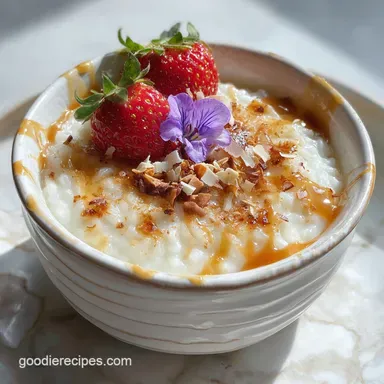
Authentic Rice Pudding with Whole Milk

- Time: 5 min active + 35 min cooking
- Flavor & Texture: Rich, creamy, and comforting
- Perfect for: A classic family dessert or a cozy snack
Authentic Rice Pudding with Tender Grains
Rubbery, undercooked grains or a burnt bottom are the two biggest fails with this dish. Most people struggle because they rush the heat or use the wrong pot, leading to a pudding that's either too thin or smells like scorched milk.
This method fixes those issues by focusing on a gentle simmer and a heavy pan. You get a velvety texture and rice that's soft all the way through. It is a reliable, comfort food classic that doesn't require any fancy tools.
Whether you want it warm from the pot or chilled from the refrigerator, this recipe delivers a consistent result. It's the kind of dish that tastes like home and works every time you need something soothing.
Quick Recipe Specs
This traditional rice pudding recipe is straightforward. It uses a few pantry staples to create a dense, creamy dessert. Since it's a stovetop method, you can keep a close eye on the thickness as it bubbles.
It's a simple rice pudding recipe that focuses on the quality of the grain and the fat in the milk. Because we use whole milk and butter, the mouthfeel is rich and satisfying.
The Essential Pantry List
Prior to beginning, ensure you are using a short-grain rice. Long-grain varieties do not release as much starch, which means your pudding won't achieve the desired thickness.
What Each Ingredient Does
| Component | Purpose | Substitute Notes |
|---|---|---|
| Short-grain Rice | Adds structure and creaminess | Arborio: A close match; start with less milk and adjust |
| Whole Milk | Forms the creamy foundation | Coconut milk: Comparable fat content with tropical notes |
| Unsalted Butter | Provides richness and a glossy finish | Coconut oil: Works well, though the flavor changes |
| Granulated Sugar | Sweetens and adds shine | Maple syrup: Use 1:1, but the consistency will be thinner |
Ingredients
- 1/2 cup (100g) short-grain white rice Why this? High starch levels ensure a dense, creamy consistency
- 4 cups (950ml) whole milk Why this? The fat content keeps the pudding from feeling watery
- 1/4 tsp (1.5g) fine sea salt Why this? Cuts the sweetness and lifts the vanilla notes
- 1/3 cup (65g) granulated sugar Why this? Dissolves to create a shimmering finish
- 2 tbsp (28g) unsalted butter Why this? Contributes to a velvety, rich texture
- 1 tsp (5ml) pure vanilla extract Why this? Provides a warm, aromatic fragrance
- 1/2 tsp (1g) ground cinnamon Why this? A traditional accompaniment for rice puddings
Basic Kitchen Tools
You only need a few items. The most important piece is a heavy bottomed saucepan. Thin pots create "hot spots" that burn the milk in seconds.
I suggest a stainless steel or enameled cast iron pot. A silicone spatula or a wooden spoon is great for stirring, as they allow you to scrape the bottom edges effectively.
Cooking Steps

Preparing the Grains
Rinse the short-grain white rice under cold water for 30 seconds and drain. Note: This washes away excess dust for a cleaner flavor. Place the rice and 1.5g fine sea salt into a heavy-bottomed saucepan.
The Slow Simmer
Add 950ml whole milk and bring to a gentle simmer over medium heat. As soon as small bubbles appear around the edges, reduce the heat to low.
Partially cover the pot and simmer for 20–25 minutes. Stir every 5 minutes until the grains are translucent and the liquid is creamy; this ensures the rice doesn't adhere to the pan.
The Final Thickening
Mix in 65g granulated sugar and 28g unsalted butter. Continue to cook over low heat for another 5 minutes, stirring frequently, until the sugar is melted and the pudding is glossy.
Remove the pan from the heat and stir in 5ml pure vanilla extract. Note: Adding vanilla at the end preserves its flavor profile. Serve warm or chilled, then garnish with 1g ground cinnamon.
Troubleshooting the Texture
If your pudding feels off, it's usually a matter of moisture or heat. Rice continues to absorb liquid as it sits, so the texture you see in the pan isn't the final result.
If the rice is still hard, you likely simmered it too fast, evaporating the milk before the grain could soften. If it's too thin, you might have stirred too little, which prevents the starch from releasing.
Fixing Stiff Pudding
If it becomes too dense after cooling, stir in 1-2 tablespoons of warm milk. This loosens the grains without making it watery.
Dealing with Hard Rice
If the grains are still firm, add a splash of milk and simmer for another 5 minutes on low. Keep the lid on to trap the steam.
Handling Scorched Milk
If you smell burning, do not scrape the bottom. Carefully pour the good pudding into a new pot, leaving the burnt layer behind.
| Problem | Root Cause | Solution |
|---|---|---|
| Too thick/stiff | Overcooked or chilled too long | Stir in warm milk or cream |
| Grains are hard | Not enough simmer time | Simmer 5 more mins with a lid |
| Burnt taste | Heat was too high | Transfer to a new pot; don't scrape |
Flavor Swaps
You can easily change the profile of this dish. I like a zest of lemon added at the end for a brighter taste.
For a fruitier version, stir in diced sautéed apples during the final 5 minutes of cooking. If you want a dairy-free option, use full-fat coconut milk. It's not an exact match for cow's milk but gives a rich, nutty result.
For a fully dairy-free result, also replace the unsalted butter with the same weight (28g) of a plant-based butter.
Since this is a stovetop method, it differs from other styles.
| Method | Texture | Total Time |
|---|---|---|
| Stovetop | Creamy and smooth | 40 minutes |
| Baked | Custard-like with a skin | 2-3 hours |
Freshness and Storage
Store the pudding in a sealed tub in the refrigerator. It stays fresh for 3 to 5 days.
Because the rice keeps absorbing moisture, the pudding will thicken significantly in the cold. To reheat, use a microwave in 30 second bursts, stirring between intervals, until it is steaming hot throughout and reaches 165°F/74°C in the center.
Stir in a splash of milk between intervals to bring back the creamy texture.
I don't recommend freezing this. The starch structure breaks down in the freezer, and you'll end up with a grainy, separated mess once it thaws.
Ways to Serve
This dish is versatile. I prefer it warm in a bowl with a heavy dusting of cinnamon.
For a fancy presentation, spoon it into small glass ramekins and top with fresh raspberries or a drizzle of honey. If you're serving it chilled, a few slices of almond on top add a nice crunch to the soft grains.
How the Pudding Thickens
Heavy Pot: A thick-bottomed pan distributes heat evenly, preventing the milk from scorching at the bottom.
Low Heat: Simmering gently allows the rice to release starch gradually, creating a thick consistency without needing a cornstarch slurry.
Post-Heat Vanilla: Stirring in the extract after the heat is off stops the flavor from evaporating, keeping the aroma fresh.
Recipe FAQs
What type of rice is best for making rice pudding?
Short-grain white rice is the ideal choice. Its higher starch content creates the creamy, thick consistency needed for a traditional pudding.
How to ensure the grains are tender?
Simmer the rice over low heat for 20–25 minutes under a partial cover. Stir every 5 minutes to prevent sticking and ensure the grains absorb the milk evenly.
What are the ingredients for Old-Fashioned rice pudding?
This classic version uses short-grain white rice, whole milk, granulated sugar, unsalted butter, fine sea salt, vanilla extract, and ground cinnamon.
Why did my rice pudding turn out too thin?
You might have stirred the pot too little during the simmering process. Regular stirring helps release the starches from the rice to thicken the liquid.
Can I use a different cooking method?
Slow cookers can be used for this dish. This method differs by utilizing a very low, steady heat over a longer duration than the stovetop approach.
What common mistakes lead to hard rice grains?
Simmering the mixture too quickly is a frequent error. This evaporates the milk before the rice has enough time to soften properly.
How to store leftovers?
Keep the pudding in the refrigerator. Use a sealed container to maintain freshness.
Can this be served warm?
Yes, it is delicious served warm immediately after cooking. You can also chill it before serving if you prefer a colder dessert.
Authentic Rice Pudding for 4 Servings