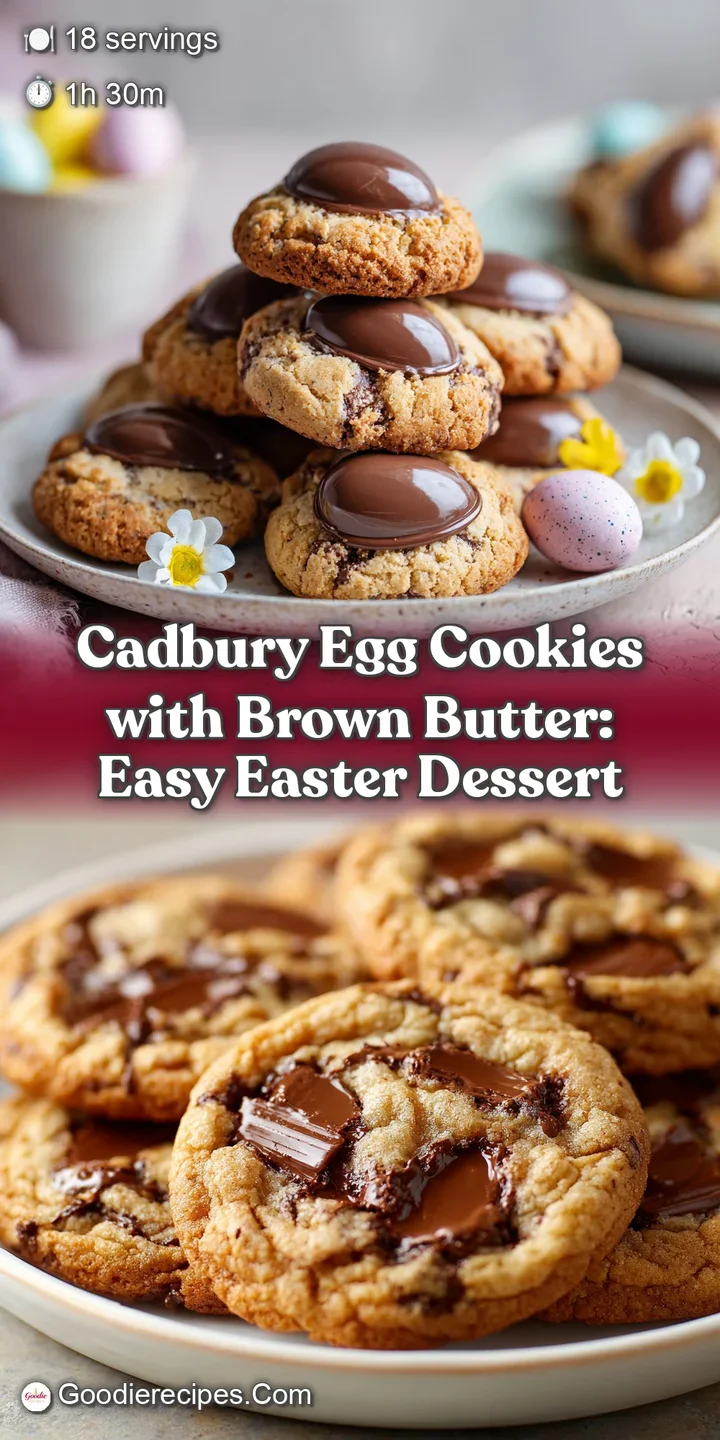
Brown Butter Cadbury Egg Cookies
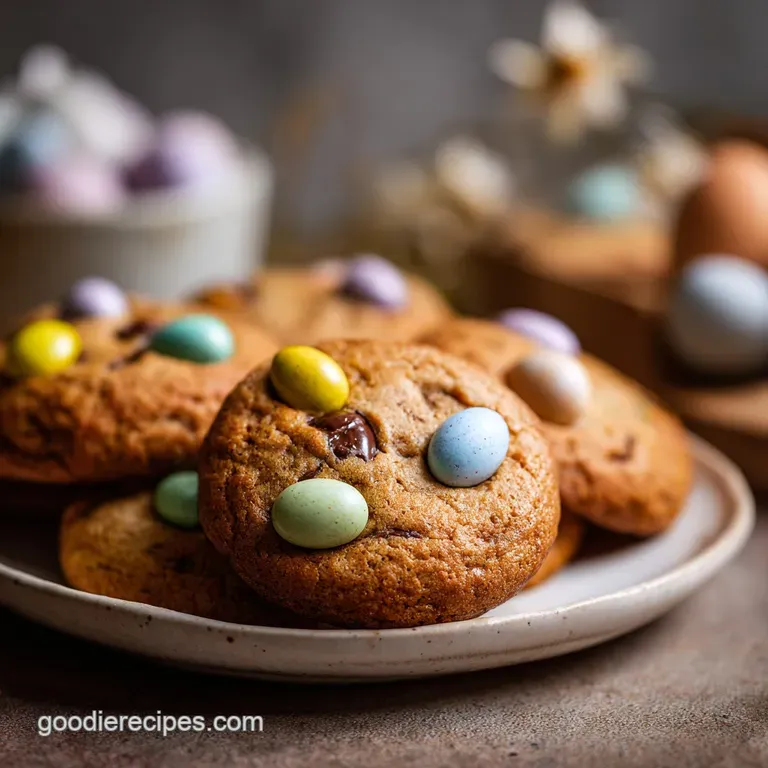
- Time: Active 20 mins, Passive 1 hours 10 mins, Total 1 hours 30 mins
- Flavor/Texture Hook: Buttery rich with a satisfying candy shell shatter
- Perfect for: Easter celebrations, spring bake sales, or weekend family projects
- Mastering the Best Cadbury Egg Cookies
- The Science of the Crunch
- Analyzing the Core Ingredients
- Essential Components and Clever Swaps
- Tools for Professional Results
- The Step-by-Step Method
- Solving Your Baking Struggles
- Simple Flavor Customizations
- Adjusting the Batch Size for Any Occasion
- Debunking Traditional Baking Beliefs
- Fresh Storage and Zero Waste
- Serving and Pairing Suggestions
- Recipe FAQs
- 📝 Recipe Card
Mastering the Best Cadbury Egg Cookies
The first time I tried making these, I didn't respect the butter. I figured "room temperature" was just a suggestion and threw everything into the bowl while the butter was still a bit too firm. The result? A crumbly, sandy mess that didn't hold those precious mini eggs.
I watched through the oven door as my expensive Cadbury eggs rolled off the sloping sides of the dough mounds like little colorful boulders. It was heartbreaking, but it taught me everything about the importance of fat emulsification.
Now, when I make this Cadbury egg cookies recipe, the kitchen fills with the scent of toasted hazelnuts and vanilla before the tray even hits the oven. You hear that distinct clack clack clack of the knife hitting the cutting board as you roughly chop the eggs.
Some pieces turn into fine dust, others stay in big, chunky halves. That’s the secret. When you bite in, you get that velvety dough followed immediately by the sharp shatter of a sugar shell.
It is pure comfort in every mouthful, and honestly, your family won't let you make "regular" cookies ever again after they taste these.
We’ve all seen those flat, greasy cookies that look like they gave up halfway through baking. We aren't doing that here. By using dark brown sugar and an extra egg yolk, we’re aiming for a heavy, chewy crumb that stands up to the weight of the candy.
This isn't just a snack; it's a project that rewards patience. Trust me, the wait while the dough chills is the hardest part, but it’s what keeps your cookies from turning into thin pancakes.
The Science of the Crunch
Maillard Reaction: Browning the butter creates toasted milk solids that provide a savory, nutty backbone to balance the intense sweetness of the candy.
Enzymatic Tenderizing: The cornstarch interferes with gluten development, ensuring the cookie remains soft and tender rather than bready or tough.
Sucrose Crystallization: Using dark brown sugar introduces molasses, which attracts moisture and results in a fudgier, more flexible center after the bake.
Thermal Insulation: Keeping the mini eggs cold before mixing prevents the chocolate centers from melting too early, which would otherwise streak the dough.
| Thickness | Internal Temp | Rest Time | Visual Cue |
|---|---|---|---|
| 1 inch | 175°F (80°C) | 10 mins | Edges are golden; center looks slightly underdone |
| 1.5 inch | 180°F (82°C) | 12 mins | Surface shows small cracks; matte finish on top |
| 0.5 inch | 170°F (77°C) | 5 mins | Crisp, darkened rim; firm enough to lift with spatula |
Choosing between the traditional method and a shortcut can change your entire afternoon. While I always advocate for the deep flavor of browning your own butter and chopping eggs by hand, sometimes you just need a treat on the table fast. If you're doing a full holiday spread, these go so well alongside my Easter Sugar Cookies recipe.
| Feature | Fresh & Handmade | Shortcut Version |
|---|---|---|
| Butter | Browned (Nutty/Deep) | Softened (Creamy/Light) |
| Eggs | Hand chopped (Varied texture) | Whole eggs (Uniform/One note) |
| Dough | Chilled 1 hour (Thick/Chewy) | No chill (Thinner/Crispy) |
Analyzing the Core Ingredients
| Ingredient | Science Role | Pro Secret |
|---|---|---|
| Dark Brown Sugar | Humectant (adds moisture) | Pack it tight to remove air pockets for accurate weight |
| Egg Yolk | Emulsifier and Fat source | Use room temp yolks to prevent the butter from seizing |
| Cornstarch | Protein Buffer | Whisk it into the flour thoroughly to avoid "chalky" clumps |
| Mini Eggs | Texture Contrast | Freeze them for 15 mins before chopping to get cleaner breaks |
Selecting high-quality vanilla extract is one of those small things that makes a massive difference. You want that floral, woody aroma to cut through the sugar. This dough base is actually a tweak on my favorite The Chocolate Chip recipe, but the addition of the candy shells requires a slightly sturdier structure.
Essential Components and Clever Swaps
To get the most out of your Cadbury mini egg dessert, pay attention to the measurements. Using a scale (grams) is always better than cups, but if you’re using cups, spoon the flour in and level it off.
- Unsalted Butter (1 cup):Why this? Allows you to control the salt levels perfectly for a balanced finish.
- Substitute: Salted butter (reduce added sea salt to a pinch).
- Dark Brown Sugar (1 cup):Why this? The higher molasses content creates a deeper color and chewier texture.
- Substitute: Light brown sugar mixed with 1 tsp molasses.
- Granulated Sugar (0.5 cup):Why this? Provides the structural support and helps the edges get crispy.
- Substitute: Raw cane sugar (will add a slight crunch).
- Large Egg + 1 Yolk:Why this? The extra yolk adds fat for a velvety, rich mouthfeel.
- Substitute: 2 whole eggs (results in a slightly puffier, more cake like cookie).
- Pure Vanilla Extract (1 tbsp):Why this? A generous amount bridges the gap between the cocoa and the butter.
- Substitute: Vanilla bean paste for those beautiful black specks.
- All Purpose Flour (2.25 cups):Why this? The middle ground protein content gives the perfect "snap."
- Substitute: 1 to-1 gluten-free baking flour.
- Cornstarch (1 tsp):Why this? Keeps the cookies soft for days by inhibiting gluten strands.
- Substitute: Arrowroot powder.
- Baking Soda (1 tsp):Why this? Reacts with the acidic brown sugar to provide lift and browning.
- Substitute: 3 tsp baking powder (but the texture will be much cakier).
- Cadbury Mini Eggs (1.5 cups):Why this? The milk chocolate and hard shell provide the signature Easter flavor.
- Substitute: Chopped malted milk balls or candy coated chocolate buttons.
- Semi Sweet Chocolate Chips (0.5 cup):Why this? Adds a darker chocolate note to balance the sweet milk chocolate eggs.
- Substitute: Dark chocolate chunks (60% cacao or higher).
- Sea Salt (0.5 tsp) & Flaky Salt:Why this? Sharpens all other flavors and prevents sugar fatigue.
- Substitute: Kosher salt.
Tools for Professional Results
You don't need a professional bakery to get these right, but a few specific tools make the process much smoother. A heavy bottomed saucepan is vital for browning the butter without burning the milk solids.
If the pan is too thin, the heat won't distribute evenly, and you'll end up with bitter black flecks instead of golden brown goodness.
I also highly recommend a sturdy stand mixer or a powerful hand mixer. The creaming process where you beat the butter and sugars together is what creates the tiny air pockets that the baking soda will later expand. Doing this by hand is a workout you probably don't want.
Finally,, grab a cookie scoop (about 2-3 tablespoons in size). Uniform cookies aren't just for looks; they ensure every single cookie in the batch finishes baking at exactly the same time.
The step-by-step Method
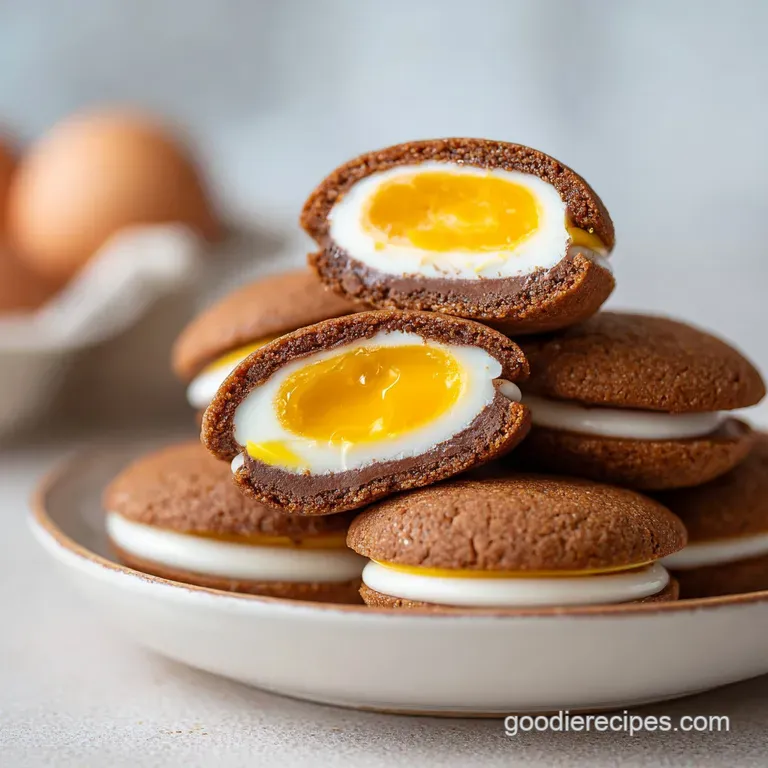
- Brown the butter. Melt the 1 cup of butter in a light colored saucepan over medium heat until it foams and smells nutty. Note: Watch for brown bits at the bottom; don't let them turn black.
- Cool the liquid gold. Transfer the browned butter to a bowl and let it sit for 15 minutes until it is no longer steaming.
- Cream the fats and sugars. Combine the cooled butter with 1 cup dark brown sugar and 0.5 cup granulated sugar in a large bowl. Beat for 2-3 minutes until the mixture looks like wet sand.
- Emulsify the eggs. Add the large egg, the egg yolk, and 1 tbsp vanilla. Mix until the dough becomes pale and silky.
- Whisk the dry ingredients. In a separate bowl, stir together 2.25 cups flour, 1 tsp cornstarch, 1 tsp baking soda, and 0.5 tsp sea salt.
- Combine gently. Slowly add the dry ingredients to the wet. Mix until just a few streaks of flour remain. Note: Over mixing here leads to tough, bready cookies.
- Fold in the treasures. Stir in 1.5 cups chopped mini eggs and 0.5 cup chocolate chips. Use a spatula to ensure they are evenly distributed until the dough is thick and chunky.
- The big chill. Cover the dough and refrigerate for at least 1 hour. Note: This prevents the cookies from spreading too thin.
- Prepare for heat. Preheat your oven to 350°F (180°C) and line two baking sheets with parchment paper.
- Scoop and bake. Form 2 tablespoon balls of dough and place them 2 inches apart. Bake for 10 minutes until the edges are set and golden.
- The finishing touch. Remove from the oven and immediately sprinkle with flaky sea salt. Let them rest on the pan for 10 minutes until they firm up.
Chef's Tip: If your cookies come out of the oven looking a bit wonky in shape, grab a large circular glass or a biscuit cutter. Place it over the hot cookie and gently "scoot" it in a circular motion. This pulls the edges in and creates a perfectly round, professional looking cookie.
Solving Your Baking Struggles
The most common issue I hear about with these Easter Cadbury egg cookies is the "greasy puddle" effect. This usually happens when the butter was too hot when the sugars were added, or the dough wasn't chilled long enough.
If the fat is already in a liquid state and hasn't had time to soak into the flour, it will just leak out onto the parchment paper the moment it hits the heat.
Another frustration is the candy shells cracking and leaking. While some cracking is normal (it adds to the rustic look!), excessive leaking usually means the eggs were chopped too finely. You want a mix of "dust" and "chunks." The dust flavors the dough, while the chunks provide the visual and textural pop.
| Problem | Root Cause | Solution |
|---|---|---|
| Cookies are flat and greasy | Butter was too hot or no chill time | Chill dough for a full hour; ensure butter is merely warm, not piping hot |
| Dough is crumbly and won't ball | Too much flour or cold eggs | Use a scale for flour; let eggs sit in warm water for 5 mins before using |
| Candy shells melted completely | Eggs were not chilled before chopping | Freeze mini eggs for 15 minutes before adding to the dough |
Common Mistakes Checklist
- ✓ Don't skip the extra egg yolk; it’s the difference between "okay" and "velvety."
- ✓ Ensure your baking soda is fresh (less than 6 months old) for proper lift.
- ✓ Avoid over chopping the Cadbury eggs; you want recognizable pieces.
- ✓ Never place cold dough onto a hot baking sheet from a previous batch.
- ✓ Let the cookies rest on the pan; they finish "setting" through carryover heat.
Simple Flavor Customizations
If you want a different vibe for your easy Cadbury egg cookies, try swapping the semi sweet chips for white chocolate. It makes the whole experience much creamier and mimics the "milk" flavor of the eggs.
Alternatively, if you're a fan of that salty sweet combo, adding 0.5 cup of crushed pretzels along with the eggs adds an incredible crunch that cuts through the sugar.
For those who want to try something even more decadent, check out my Gooey Rolo Cookies recipe. The technique is similar, but the caramel center offers a completely different sensory experience.
If you want X, do Y:
- If you want a crisper cookie: Replace the dark brown sugar with light brown sugar and bake for an extra 2 minutes.
- If you want a thicker, "bakery style" cookie: Increase the flour by 2 tablespoons and chill the dough overnight.
- If you want a deeper chocolate flavor: Replace 1/4 cup of the flour with high-quality unsweetened cocoa powder.
Adjusting the Batch Size for Any Occasion
When scaling down to a half batch (9 cookies), things get tricky with the eggs. The best way is to crack one large egg into a small bowl, whisk it well, and then use exactly half of it by weight or volume. For the extra yolk, just use a small yolk or half of a large one.
You'll want to use a smaller bowl for mixing to ensure the beaters can properly cream the smaller amount of butter and sugar.
Scaling up to a double batch (36 cookies) is much simpler, but don't just double everything blindly. For the salt and baking soda, use 1.5x the amount instead of a full double to avoid a metallic or overly salty aftertaste. Also, work in batches when baking.
Don't try to cram three sheets into the oven at once, as the airflow will be restricted, leading to uneven browning and soggy bottoms.
Debunking Traditional Baking Beliefs
One myth that drives me crazy is that you "must" use room temperature butter for cookies. While true for some recipes, this specific brown butter method proves that starting with a liquid (but cooled) fat can actually result in a much denser, chewier cookie.
The air incorporated during creaming is different, but the flavor payoff from the browning process is far superior to standard creaming.
Another common misconception is that "more candy equals a better cookie." If you overstuff the dough with mini eggs, there won't be enough "glue" (the dough itself) to hold the structural integrity. The cookies will shatter when you try to pick them up.
Stick to the 1.5 cup measurement for the best ratio of dough to crunch.
Fresh Storage and Zero Waste
These cookies stay soft and chewy for about 4 to 5 days if kept in an airtight container at room temperature. A little trick I learned from my grandmother: put a single slice of white bread in the container with them.
The cookies will actually pull the moisture out of the bread, keeping them from turning into hockey pucks.
If you find yourself with leftover crushed egg bits at the bottom of the bag, don't throw them away! Those tiny shards of chocolate and sugar are gold. I save them in a jar in the freezer and sprinkle them over vanilla ice cream or fold them into my morning oatmeal for a festive surprise. You can also use the leftover egg dust to top a 3 Ingredient Peanut recipe for a quick flavor mashup.
- Fridge: Up to 5 days in a sealed container.
- Freezer: Up to 3 months. Freeze individual dough balls on a tray first, then move to a bag. Bake straight from frozen (add 2 minutes to the time).
- Reheating: 10 seconds in the microwave makes them taste like they just came out of the oven.
Serving and Pairing Suggestions
When it comes to serving these, keep it simple. A cold glass of whole milk is the classic choice because the fat in the milk helps cleanse the palate of the heavy cocoa butter in the eggs.
If you're hosting a brunch, these are phenomenal served alongside a tart fruit platter think raspberries or sliced green apples to provide a bright acidity that balances the richness.
For the adults, a cup of dark roast coffee or even a spicy chai latte pairs beautifully with the brown butter notes. The bitterness of the coffee highlights the caramelization in the sugar, making the cookie taste even more complex.
If you’re feeling particularly indulgent, crumble one of these over a bowl of salted caramel gelato. The mix of cold cream and the snap of the frozen candy shells is something you won't soon forget.
Recipe FAQs
Why did they discontinue Cadbury eggs?
No definitive public reason exists. Discontinuations often relate to shifting market demand, ingredient sourcing costs, or seasonal production focus by the parent company.
What makes Cadbury egg cookies so good?
The textural contrast is key. The recipe relies on a rich, chewy, browned butter dough base contrasting sharply with the sugary snap of the chopped candy shells.
How to make mini egg cookies?
Chill the dough for at least one hour before scooping. Cream together cooled browned butter and sugars, mix in eggs, then slowly incorporate dry ingredients before folding in the chopped mini eggs.
What is the powder on mini eggs?
It is primarily a thin layer of confectioner’s glaze or shellac. This food grade wax keeps the shells from sticking together during packaging and provides a slight sheen.
Is it true I can substitute butter with oil in this recipe?
No, this is highly discouraged for texture. Oil will result in a flatter, greasier cookie because it remains liquid at room temperature, unlike butter which provides necessary structure when creamed.
How long should I bake Cadbury egg cookies for a chewy center?
Bake for 10 to 12 minutes at 350°F (175°C). The edges should look set and golden brown, but the center should appear slightly underdone when you remove them from the oven.
Can I freeze the cookie dough for later use?
Yes, freezing the dough balls works very well. Roll dough into balls, freeze them solid on a tray, then transfer them to a sealed bag; add about 2 minutes to the baking time when cooking from frozen.
Brown Butter Cadbury Egg Cookies
Ingredients:
Instructions:
Nutrition Facts:
| Calories | 322 kcal |
|---|---|
| Protein | 3.2 g |
| Fat | 15.3 g |
| Carbs | 42.8 g |
| Fiber | 1.1 g |
| Sugar | 29.2 g |
| Sodium | 188 mg |
