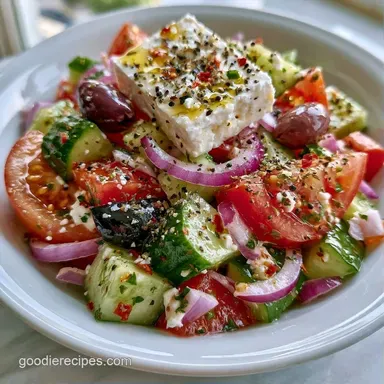
Classic Greek Salad with Feta Cheese

- Time:15 minutes active
- Flavor/Texture Hook: Zesty, crisp, and briny
- Perfect for: Quick summer lunches or a fresh side dish
That sharp, vinegary zing hits your nose the second you mix the dressing, and it's an instant wake up call. I used to think a Greek salad needed a bed of romaine to feel like a full meal, but that's a total myth. Real Horiatiki is just the raw, bold vegetables and a huge chunk of cheese.
I remember trying this at a small taverna where the tomatoes actually tasted like sunshine and the cucumbers snapped loudly. Once you ditch the lettuce, the vegetables release their own juices, which mix with the olive oil to create a natural sauce.
You can expect a vibrant, chunky mix that tastes like a Mediterranean vacation. This Classic Greek Salad relies on a few high-quality items, so don't skimp on the olive oil.
The Real Classic Greek Salad
The Feta Slab: Leaving the cheese in one piece stops it from clouding the dressing and keeps the texture distinct.
Acid Balance: Red wine vinegar cuts through the fat of the olive oil and feta, making the vegetables taste brighter.
Freshness is the only way to go here. While some people use pre cut mixes to save time, those often lose their crunch and bleed water into the bowl.
| Fresh Version | Shortcut Version | Result |
|---|---|---|
| Hand-cut Roma tomatoes | Pre diced tomatoes | Fresh has more structure |
| Block Feta | Crumbled Feta | Block stays creamier |
| Freshly whisked oil/vinegar | Bottled Greek dressing | Fresh is less sugary |
The red wine vinegar draws out the moisture from the cucumbers, which actually helps the other flavors stick to the vegetables.
Essential Recipe Specs
This recipe is all about speed and raw ingredients. There is no cooking involved, just a bit of chopping.
- Prep time: 15 minutes
- Cook time: 0 minutes
- Total time: 15 minutes
- Servings: 6 people
Chef's Note: Soak your sliced red onions in ice water for 10 minutes if you find their raw bite too aggressive. It keeps the crunch but removes the sting.
The Best Ingredients
Prioritize the quality of your oil for this recipe. A cold-pressed extra virgin olive oil provides a peppery depth that grounds the entire dish.
- 600g English cucumber, chunky dice Why this? Thinner skin and fewer seeds than standard cucumbers
- 600g Roma tomatoes, chopped Why this? Meatier walls and less liquid
- 150g red onion, thinly sliced Why this? Gives a sharp, spicy contrast
- 150g green bell pepper, chopped Why this? Adds a bright, grassy note
- 100g Kalamata olives, pitted Why this? Traditional salty, vinegary profile
- 200g block of Feta cheese Why this? Authentic salty creaminess
- 60ml extra virgin olive oil Why this? The foundation for the dressing
- 30ml red wine vinegar Why this? Classic Mediterranean tang
- 2g dried oregano Why this? Earthy, aromatic notes
- 3g sea salt Why this? Enhances the taste of the vegetables
- 1g cracked black pepper Why this? Introduces a light spice
- 8g fresh flat leaf parsley, chopped Why this? Crisp, herbal finish
- 0.5g dried oregano (for garnish)
Substitutes for common items:
| Original Ingredient | Substitute | Why It Works |
|---|---|---|
| Red Wine Vinegar | Lemon Juice | Similar acidity. Note: Offers a lighter, citrusy flavor |
| Feta Cheese | Halloumi (Grilled) | Still salty and firm. Note: Adds a warm, chewy element |
| Kalamata Olives | Castelvetrano | Butterier and milder. Note: Less briney than Kalamata |
Tools You'll Need
No specialized equipment is necessary. To keep the vegetables from bruising or crushing, ensure you're using a sharp knife.
- Large mixing bowl
- Small glass jar (for the dressing)
- Chef's knife
- Cutting board
- Salad tongs or a large spoon
Simple Assembly Steps

The key is the order of operations. You want the vegetables coated before the cheese goes on so the feta doesn't break.
- Cut the cucumbers, tomatoes, and bell peppers into uniform, bite-sized chunks. Slice the red onion into thin half moons. Place all vegetables and the Kalamata olives into a large mixing bowl. Note: Keep the chunks rustic for a better mouthfeel.
- In a small jar, combine the extra virgin olive oil, red wine vinegar, dried oregano, salt, and pepper. Shake vigorously or whisk until the mixture is smooth and glossy.
- Pour the dressing over the vegetables and toss gently until every piece is thinly coated. Listen for the crisp snap of the cucumbers as you mix.
- Carefully place the entire 200g block of feta cheese on top of the salad.
- Sprinkle the final pinch of oregano and the fresh parsley over the cheese.
The smells should be a mix of fresh cut pepper and the pungent aroma of the oregano hitting the oil.
Fixing Salad Issues
A Classic Greek Salad is simple, but a few things can go sideways if the timing is off.
Managing Excess Liquid
If you see a pool of water at the bottom, it's usually because the salt drew out the moisture from the tomatoes too quickly. This happens often with very ripe summer tomatoes. To stop this, dress the salad right before you put it on the table.
Balancing Sharp Acid
Sometimes the vinegar can feel too aggressive. This is usually a result of using a very high acidity vinegar or not enough oil. A tiny pinch of sugar or a bit more olive oil can mellow the tang.
Preventing Sogginess
Tossing the salad too hard can bruise the tomatoes. Use a light hand. If you're making a Classic Greek Salad for a party, keep the dressing on the side until the last second.
| Problem | Root Cause | Solution |
|---|---|---|
| Watery bottom | Salt added too early | Dress immediately before serving |
| Overpowering onion | Onion slices too thick | Slice into thin half moons or soak in water |
| Bland flavor | Low quality olive oil | Use extra virgin, cold pressed oil |
Customizing Your Bowl
While the Horiatiki is a tradition, you can tweak the Classic Greek Salad to fit your mood.
- Add Protein? → Fold in some crispy salmon patties on the side for a full dinner.
- Extra Tang? → Add 1 tsp of lemon zest to the dressing.
- Creamier finish? → Crumble half the feta into the mix and leave the other half as a slab.
- Vegan version? → Swap feta for marinated tofu blocks and use a pinch of nutritional yeast in the dressing.
The Classic Greek Salad is great as a side, but adding chickpeas or grilled shrimp turns it into a meal.
Keeping It Fresh
Because salt breaks down the cell walls of the vegetables, this Classic Greek Salad doesn't stay fresh for very long.
Storage Guidelines: Store the salad in a glass container. It remains palatable for around 2 days, though the vegetables will lose their crispness. If prepping ahead of time, keep your chopped veggies and dressing in separate containers.
Reducing Waste: Keep the tomato cores and cucumber ends. Store them in a freezer bag with other vegetable scraps to simmer into a homemade stock later. Red onion skins can be composted or added to a stock pot for a rich, golden color.
Serving Suggestions
The Classic Greek Salad features punchy flavors, making it a perfect match for sides that can absorb the remaining vinaigrette.
The Traditional Pairing: Serve this alongside warm, crusty sourdough or try homemade flour tortillas for a creative twist. Bread is a must-have for soaking up the delicious oil and vinegar at the bottom of the dish.
The Main Course Complement: This salad offers a refreshing counterpoint to heavier proteins. It pairs beautifully with roasted chicken or grilled lamb chops, as the acidity helps cut through the richness of the meat.
Just before serving, add a final drizzle of olive oil to the feta slab. This creates a glossy finish that mirrors the bold taste of the salad.
Recipe FAQs
What goes into a traditional Greek salad?
It features English cucumbers, Roma tomatoes, red onion, green bell pepper, Kalamata olives, and a block of feta cheese. These are tossed with olive oil, red wine vinegar, and oregano.
Which dressing is traditionally used?
A simple mixture of extra-virgin olive oil and red wine vinegar is the standard. Adding dried oregano, salt, and pepper creates that signature zesty flavor.
How to prepare this salad quickly at home?
Cut the cucumbers, tomatoes, and bell peppers into uniform chunks and slice the red onion. Toss them with olives and the whisked dressing before placing the feta block on top.
Is it true that traditional Greek salads contain lettuce?
This one's false: Authentic Horiatiki skips the lettuce entirely to let the vegetable juices mingle with the oil. This creates a more concentrated, savory flavor profile.
What makes this different from a general Mediterranean salad?
The specific combination of Kalamata olives and a solid slab of feta defines the Greek version. Other Mediterranean salads often incorporate a wider variety of greens or grains.
Why is this considered a healthy choice?
It is rich in heart-healthy fats from olive oil and essential vitamins from raw vegetables. These ingredients provide nutrients without any added refined sugars.
Use what method to get a smooth dressing?
Shake the oil and vinegar vigorously in a small jar until the mixture is smooth and glossy. If you liked the flavor balancing of acid and salt here, see how we balance zesty notes in our homemade green salsa.
What is the recommended serving size?
One serving is approximately 1/6th of the total recipe. This portion size contains about 258 calories.
Classic Greek Salad in 15 Minutes