Classic French Bread Recipe
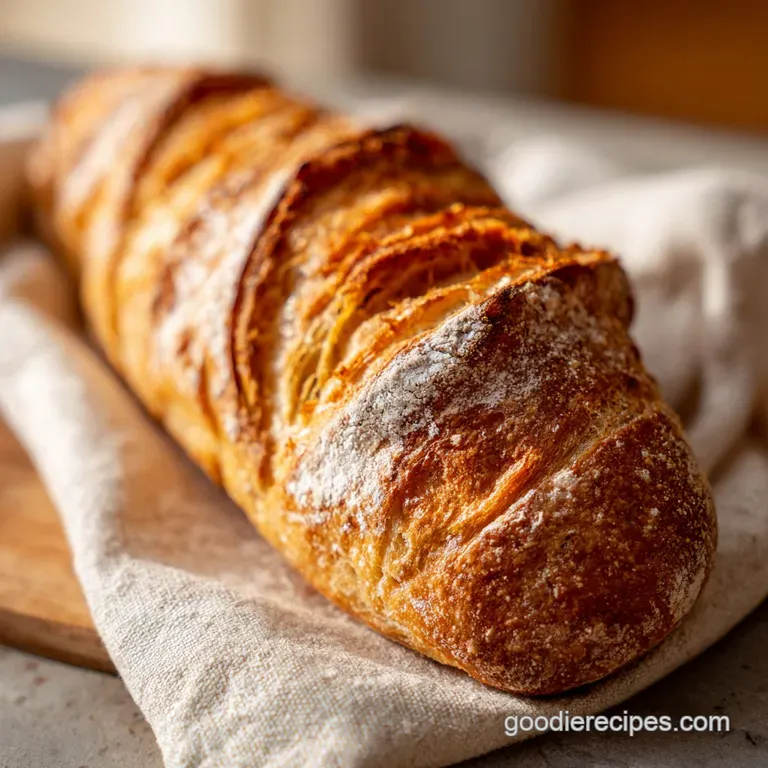
- Time: Active 25 mins, Passive 2 hours 50 mins, Total 3 hours 15 mins
- Flavor/Texture Hook: Shatteringly crisp exterior with a velvety, chewy center
- Perfect for: Family Sunday dinners or weekend meal prep
Why This Loaf Stays Crispy
The magic of this specific french bread recipe lies in how we manage moisture and heat. It isn't just about mixing ingredients; it's about the environment we create inside that oven to transform simple dough into something extraordinary.
I spent months wondering why my bread was always "tough" instead of "crusty," and the answer was all in the science of the bake.
- Steam Gelatinization: Introducing boiling water into a hot pan creates a steam heavy environment that keeps the dough's surface moist for the first few minutes, allowing the bread to expand fully before the crust sets.
- Protein Matrix: Using bread flour with a higher protein content (about 12-13%) creates a stronger gluten network that traps carbon dioxide, resulting in those beautiful, irregular air pockets.
- Sugar Yeast Synergy: A small amount of granulated sugar provides immediate energy for the yeast, ensuring a vigorous initial rise even before the enzymes start breaking down the flour starches.
- Starch Retrogradation Control: The inclusion of olive oil subtly coats the starch granules, which slows down the staling process and keeps the crumb velvety for an extra day.
| Method | Time | Texture | Best For |
|---|---|---|---|
| Baking Sheet | 25 mins | Thin, even crust | Everyday sandwiches |
| Dutch Oven | 30 mins | Thick, rustic crust | Hearty soups and stews |
| Pizza Stone | 22 mins | Very charred bottom | Restaurant style appetizers |
The choice of baking surface actually changes the physics of the rise. While a baking sheet is accessible and produces a classic loaf, a Dutch oven traps the bread's own moisture so effectively that the crust becomes almost glass like. If you're looking for something sweet after a savory bake, you might find my Moist Banana Bread recipe uses a similar moisture retention principle but with a much denser, cake like result.
Components for the Perfect Crumb
Understanding what each player brings to the field is the secret to moving from "following a recipe" to "knowing how to bake." Bread is a living thing, and these ingredients are its ecosystem.
I always tell people to buy the best flour they can find because, with so few ingredients, there’s nowhere for poor quality to hide.
| Ingredient | Science Role | Pro Secret |
|---|---|---|
| Bread Flour (500g) | Provides structural gluten | Weigh it! Volume measurements vary by up to 20% |
| Active Dry Yeast (2.25 tsp) | Biological leavening agent | Keep it in the freezer to extend its lifespan |
| Fine Sea Salt (2 tsp) | Regulates yeast & strengthens gluten | Never pour it directly onto the yeast pile |
For this french bread recipe, you'll need to gather: 1.5 cups warm water (355ml) Why this? Hydrates flour and activates yeast at 40-45°C. 2.25 tsp active dry yeast Why this? Provides the lift and classic fermented aroma. 1 tbsp
granulated sugar Why this? Jumps starts the yeast for a faster first rise. 4 cups bread flour (500g) Why this? High protein ensures the bread doesn't collapse. 2 tsp fine sea salt Why this? Tightens the gluten strands for a better
"chew." 1 tbsp olive oil Why this? Adds a hint of richness and improves shelf life. 1 tbsp cornmeal Why this? Prevents sticking and adds a rustic bottom crunch. 1 cup boiling water Why this? Creates the essential steam for a
crispy crust.
Tools for Better Baking Results
You don't need a high tech lab, but a few specific pieces of gear make the "french bread recipe" much easier to execute. I remember trying to score dough with a dull kitchen knife; it just dragged and tore the surface, ruining the rise. Investing in a few basics changed everything for me.
For the Perfect Crumb Structure
A sturdy stand mixer like a KitchenAid is a lifesaver for the 8 minute knead, but your hands work just as well if you're looking for a workout. The key is consistent tension. You'll also want a large glass bowl, lightly greased with the olive oil, to let the dough expand without sticking to the sides.
For a Mahogany Colored Crust
The most important "tool" is actually a shallow metal pan (like an old broiler pan) that you'll place on the bottom rack of your oven. This holds the boiling water. For the loaves themselves, a perforated baguette pan is nice, but a standard rimmed baking sheet lined with parchment paper works beautifully.
For Maximum Surface Tension
A "lame" (a fancy word for a razor blade on a stick) is what professionals use to cut those iconic slashes. If you don't have one, a brand new box cutter blade or an incredibly sharp paring knife will do. You need to cut deep and fast don't hesitate, or the dough will stick to the blade.
Steps to a Golden Loaf
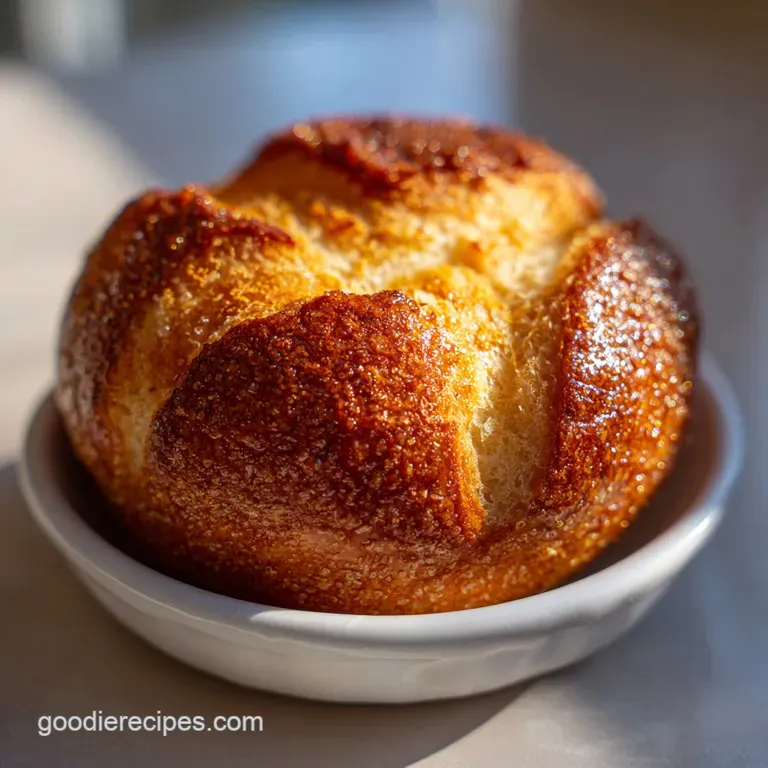
This timeline is designed to be low stress. We spend about 25 minutes actually working, and the rest of the time the yeast is doing the heavy lifting while you go about your day.
- Bloom the yeast. Combine 355ml warm water (40-45°C), 1 tbsp sugar, and 2.25 tsp yeast in your mixer bowl. Wait 5-10 minutes until the mixture looks foamy and smells like beer.
- Mix the dough. Add 1 tbsp olive oil, 2 tsp sea salt, and 500g bread flour. Use the dough hook on low speed until a shaggy mass forms and no dry flour remains.
- Knead for strength. Increase speed to medium. Knead for 8 minutes until the dough is silky, elastic, and clears the sides of the bowl. Note: If it’s still very sticky after 5 mins, add flour 1 tbsp at a time.
- The primary rise. Shape the dough into a ball and place in a greased bowl. Cover with a damp cloth and leave in a warm spot for 1 hour 30 mins until it has doubled in size.
- Degas and divide. Gently press the air out of the dough. Divide it into two equal portions.
- Shape the loaves. Roll each portion into a 12 inch rectangle, then roll it up tightly like a sleeping bag. Pinch the seam shut.
- The second rise. Place loaves on a baking sheet sprinkled with cornmeal. Cover and let rise for 1 hour until they look puffy and slightly translucent.
- Preheat and prep. Set your oven to 200°C (400°F). Place an empty metal pan on the bottom rack. Pour 1 cup boiling water into the pan just before sliding the bread in.
- Score and bake. Use a sharp blade to make 3-4 diagonal slashes 1cm deep. Bake for 25 minutes until the crust is deep golden and the loaves sound hollow when tapped.
- The cool down. Transfer to a wire rack immediately. Resist the urge to cut! Let it rest for at least 20 minutes until the internal steam stabilizes the crumb.
| Fresh Dough | Frozen Dough (Shortcut) | Outcome Difference |
|---|---|---|
| Made from scratch | store-bought frozen loaf | Fresh has much larger air pockets |
| Active fermentation | Dormant yeast | Scratch bread has a complex, yeasty tang |
| Total control | High sodium/preservatives | Homemade is 100% natural |
If you find yourself with extra time while the bread rises, it's a great moment to prep a dessert. I often find that a Cookie Delight Recipe is the perfect follow up to a rustic bread dinner because it offers a creamy contrast to the crunchy loaf.
Fixing Common Bread Baking Issues
Even with a reliable french bread recipe, variables like humidity or a cold kitchen can throw things off. I once tried to bake bread during a thunderstorm, and the dough just refused to rise properly because the air was so heavy. Don't panic if your loaf doesn't look like a magazine cover the first time.
Why did my bread turn out dense?
This is almost always a yeast or kneading issue. If your water was too hot, the yeast died. If it was too cold, the yeast is just "sleeping." Also, if you don't knead long enough, the gluten doesn't form a strong enough "balloon" to hold the air.
It should pass the "windowpane test" you should be able to stretch a small piece of dough thin enough to see light through it without it tearing.
My loaf spread sideways instead of rising up.
This is called "pancaking," and it usually happens because of over proofing or weak shaping. If the dough rises for too long, the air bubbles get too big and pop, causing the loaf to collapse.
To fix this, make sure you roll the dough tightly during shaping to create "surface tension" that forces the bread to grow up, not out.
| Problem | Root Cause | Solution |
|---|---|---|
| Pale crust | Not enough steam or low temp | Use boiling water bath; check oven temp |
| Gummy interior | Sliced too early | Wait 20 mins for starches to set |
| Sour smell | Over proofed | Reduce second rise time by 15 mins |
Common Mistakes Checklist
- ✓ Always test your yeast in warm water first; if it doesn't foam, stop and get new yeast.
- ✓ Don't skip the salt; it's not just for flavor, it controls the fermentation speed.
- ✓ Use a thermometer for the water (40-45°C) to ensure a perfect yeast environment.
- ✓ Steam is mandatory for the "shatter" crust; don't skip the water pan!
- ✓ Let the oven preheat for a full 30 minutes to ensure even radiant heat.
Flour and Yeast Alternative Options
While I swear by this classic french bread recipe, I know sometimes the pantry is bare or you want to experiment. I’ve tried many swaps over the years, some successful and some... well, some were better suited for birdseed.
| Original Ingredient | Substitute | Why It Works |
|---|---|---|
| Bread Flour (4 cups) | All Purpose Flour (4 cups) | Lower protein. Note: Results in a softer crust and tighter crumb. |
| Granulated Sugar (1 tbsp) | Honey (1 tbsp) | Natural sugar. Note: Adds a floral note and browns the crust faster. |
| Active Dry Yeast (2.25 tsp) | Instant Yeast (2 tsp) | Faster acting. Note: Can skip the 10 minute bloom and mix directly with flour. |
If you want to vary the experience: If you want a rustic twist, swap 1 cup of bread flour for whole wheat flour. If you want a cheesy kick, fold in 50g of grated parmesan during the final kneading stage.
If you want a softer crust, brush the hot loaves with melted butter as soon as they exit the oven.
Keep Your Bread Fresh Longer
Homemade bread doesn't have the preservatives of store-bought loaves, so it has a shorter lifespan. But honestly, in my house, a loaf rarely lasts past sunset. If you do have leftovers, they make the base for a killer French Toast Muffins recipe.
Storage Guidelines Once the bread is completely cool, store it in a paper bag for the first 24 hours to keep the crust crisp. If you put it in plastic too soon, the trapped moisture will turn that beautiful crust soft and leathery.
After 24 hours, you can move it to a sealed plastic bag, but you'll likely need to toast it to bring back the crunch.
Freezing and Zero Waste This bread freezes beautifully. Slice the loaf first, then wrap it tightly in foil and place it in a freezer bag for up to 3 months. You can pop a frozen slice directly into the toaster. If you have stale ends, don't throw them away!
Pulse them in a food processor for the best breadcrumbs you've ever had, or cube them for croutons sautéed in olive oil and garlic.
Serving Your Homemade Loaves
The way you present this french bread recipe can turn a simple meal into an event. I love placing the whole loaf on a wooden board with a serrated knife and letting everyone hack off their own thick slices. There’s something so communal and warm about breaking bread together.
For a "wow" factor, try different scoring patterns. One long slash down the center creates a wide, rustic opening, while many small diagonal cuts look like a classic baguette from a Parisian boulangerie.
You can even dust the top with a little extra flour before scoring to create a beautiful white on-gold contrast after it bakes.
If you’re serving this as an appetizer, pair it with a small bowl of high-quality olive oil, a splash of balsamic vinegar, and a pinch of dried oregano. The velvety interior of the bread will soak up the oil perfectly, while the crust provides that essential shatteringly crisp texture.
It's comfort food at its most classic, and once you realize how simple it is to make at home, you'll never look at a supermarket loaf the same way again. Trust me, your kitchen is about to become everyone's favorite place to be.

Recipe FAQs
What is the secret of French bread?
Steam injection during the initial bake. Introducing boiling water into a hot pan creates steam, keeping the dough surface moist so it can expand fully before the crust sets.
What is the best flour for French bread?
Bread flour with 12-13% protein content is recommended. Higher protein creates a stronger gluten network capable of trapping the gas needed for that airy, open crumb structure.
What is the difference between regular bread and French bread?
French bread relies primarily on flour, water, yeast, and salt with minimal fat or sugar. This simple formula, combined with high heat and steam, produces a crisp crust and chewy interior, unlike enriched sandwich loaves.
What is the hardest bread to make at home?
Baguettes are generally the hardest due to size and steam requirements. Achieving the thin, perfectly crisp crust without a professional deck oven requires meticulous temperature and moisture control.
How to ensure my French bread crust is shatteringly crisp?
Bake at a high temperature (200°C/400°F) with a pan of boiling water underneath. This steamy environment maximizes oven spring before the crust hardens, leading to a fragile, crispy shell.
Can I use instant yeast instead of active dry yeast in this recipe?
Yes, use slightly less instant yeast and mix it directly with the dry ingredients. Instant yeast doesn't require pre-activation in water, which speeds up the initial mixing phase. If you enjoyed mastering this quick substitution, see how we adapt similar speed techniques in our High Protein Cottage recipe.
How to prevent the bottom of the loaf from becoming too thick or soggy?
Use a pizza stone or a dedicated baguette pan for baking. These methods allow heat to circulate evenly around the bottom surface, preventing direct contact scorching while promoting crispness.
Simple French Bread Recipe
Ingredients:
Instructions:
Nutrition Facts:
| Calories | 103 kcal |
|---|---|
| Protein | 3.3 g |
| Fat | 1.1 g |
| Carbs | 19.6 g |
| Fiber | 0.7 g |
| Sugar | 0.6 g |
| Sodium | 234 mg |
