Spreadable Cinnamon Roll Icing Recipe
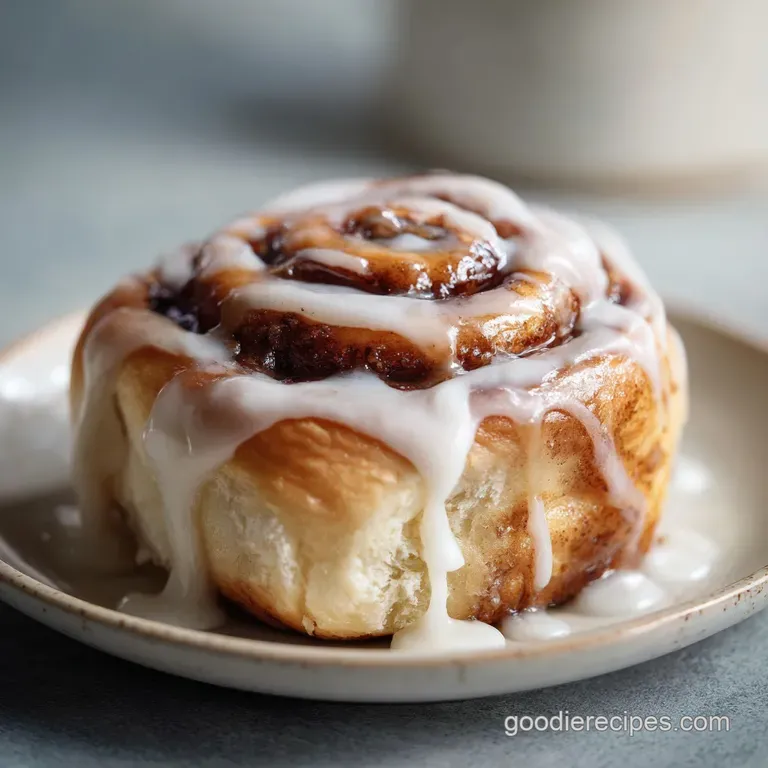
- Time: Active 5 minutes, Passive 0 minutes, Total 5 minutes
- Flavor/Texture Hook: Velvety and tangy with a high gloss sheen
- Perfect for: Weekend brunch, holiday mornings, or boosting store-bought dough
- The Perfect Silky Cinnamon Roll Icing
- The Science of Fat Stabilization
- Choosing Your Application Method
- Component Analysis of Every Ingredient
- Essential Elements and Smart Swaps
- Tools for a Smooth Finish
- Instructions for a Velvety Result
- Solving Common Topping Problems
- Personalize Your Sweet Flavor Profile
- Debunking Icing Misconceptions
- Storage and Leftover Guidelines
- Beautiful Presentation Strategies
- Recipe FAQs
- 📝 Recipe Card
The Perfect Silky Cinnamon Roll Icing
The scent of yeast and toasted cinnamon is a total siren song in my house. There is nothing quite like that moment you pull a tray of golden buns out of the oven, the heat radiating off them in waves. But for years, I struggled with the finish.
I would spend hours on the dough only to ruin it with a watery, cloying glaze that just soaked into the bread, leaving the top looking naked and sad.
I remember one specific Christmas morning when I tried to rush it. I threw cold cream cheese into a bowl with some melted butter, thinking the mixer would do the heavy lifting. Instead, I got a lumpy, broken mess that looked like curdled milk. I ended up scraping it off and starting over while the family waited.
That was the day I realized that the secret isn't just the ingredients, but the temperature and the order of operations.
Now, this is the version I swear by. It’s thick enough to sit proudly on those swirls, but it has enough "give" to melt slightly into the center of the roll. It creates that classic, bakery style finish where the icing is both a topping and a gooey filling.
We are going for a texture that is absolutely velvety, not just "sweet." Trust me, once you try this balance of salt and tang, you will never go back to the little plastic tubs that come in the pre packaged cans.
The Science of Fat Stabilization
Emulsification Mastery: The high fat content in the cream cheese and butter acts as a stabilizer, surrounding the sugar crystals to prevent them from feeling gritty on the tongue. This creates a structural matrix that resists breaking even when exposed to the residual heat of a fresh baked roll.
- Temperature Synergy: Using room temperature fats allows the molecules to bond easily, creating a smooth emulsion rather than a separated, greasy mess.
- Acidic Balance: The lactic acid in the cream cheese doesn't just add flavor; it physically tightens the protein structure, helping the icing hold those beautiful peaks.
- Sucrose Saturation: Sifting the confectioners' sugar ensures the tiny particles distribute evenly throughout the fat, preventing the dreaded "sugar clumps" that ruin the mouthfeel.
- Sodium Contrast: A tiny pinch of sea salt works on a molecular level to suppress bitterness and enhance the perception of the vanilla and butter notes.
Choosing Your Application Method
| Method | Timing | Resulting Texture | Best For |
|---|---|---|---|
| Warm Roll | 5 mins out of oven | Semi melted, glazed look | Maximum gooeyness and deep penetration |
| Room Temp | 20 mins out of oven | Thick, frosting like layer | Beautiful photos and "bakery" look |
| Reheated | Just before serving | Soft and runny | Quick morning treats or leftovers |
Choosing the right time to apply your Cinnamon Roll Icing depends entirely on how you like your rolls. If you want that icing to seep into the spirals like a warm hug, go for the warm method. However, if you love a thick layer that you can actually bite into, patience is your best friend. Wait for the rolls to cool slightly so the icing doesn't lose its structure entirely. This technique is actually quite similar to how we top a Cupcake Recipe with velvety frosting, where temperature control is the difference between a masterpiece and a disaster.
Component Analysis of Every Ingredient
| Ingredient | Science Role | Pro Secret |
|---|---|---|
| Cream Cheese | Structural Base | Use full fat blocks only; tubs contain too much air and water. |
| Unsalted Butter | Flavor Carrier | European style butter has less water, leading to a richer finish. |
| Confectioners' Sugar | Volume & Texture | Sift it twice to incorporate air for a fluffier, lighter spread. |
| Pure Vanilla | Aromatic Depth | Use bean paste if you want those gorgeous little black speckles. |
Essential Elements and Smart Swaps
To get that classic result, you need 4 oz cream cheese, 0.25 cup unsalted butter, 1.5 cups confectioners' sugar, 1 tsp pure vanilla extract, 1.5 tbsp whole milk, and a pinch of fine sea salt. These simple pantry staples transform into something extraordinary when handled correctly.
- Cream Cheese (4 oz): The tangy heart of the recipe.
- Substitute: Mascarpone for a milder, even creamier finish. Why this? It provides the essential fat and tang that balances the sugar.
- Unsalted Butter (0.25 cup): Adds richness and a melt in-your mouth quality.
- Substitute: Salted butter (just omit the extra pinch of salt). Why this? Butter creates the "short" texture that makes the icing feel indulgent.
- Confectioners' Sugar (1.5 cups): Provides sweetness and the necessary bulk.
- Substitute: Granulated sugar blitzed in a blender with cornstarch. Why this? The fine grind allows it to dissolve instantly into the fats.
- Whole Milk (1.5 tbsp): The liquid that controls the flow.
- Substitute: Heavy cream for a much richer, thicker result. Why this? It thins the fats to a spreadable, pourable consistency.
- Pure Vanilla (1 tsp): The primary flavor enhancer.
- Substitute: Maple extract for a cozy, autumnal twist. Why this? It bridges the gap between the tangy cheese and the sweet sugar.
Chef's Tip: If you really want to take the flavor to a new level, brown your butter in a small pan first. Let it cool back to a soft solid state before mixing. It adds a nutty, toasted note that is absolutely incredible with the cinnamon.
Tools for a Smooth Finish

You don't need a professional kitchen, but a few specific tools make this much easier. A handheld electric mixer is my favorite for this because a stand mixer can feel like overkill for a small batch. You want to be able to feel the resistance as the icing thickens up.
A fine mesh sieve is non negotiable for me. Even if the sugar looks fine, there are always little nuggets of compacted powder that won't disappear with just a whisk. Also, a flexible silicone spatula is your best friend for scraping the sides of the bowl to ensure every bit of cream cheese is incorporated.
I also like to use a small offset spatula for the actual spreading. It gives you much better control than a butter knife and allows you to create those beautiful "swooshes" on top of each roll.
Instructions for a Velvety Result
- Soften the fats. Leave your cream cheese and butter on the counter for at least 2 hours until they are soft enough to leave a deep thumbprint. Note: Using cold fats is the number one cause of lumpy icing.
- Cream the base. Beat the softened cream cheese and butter together in a medium bowl until the mixture is pale and completely smooth.
- Sift the sugar. Use a fine mesh strainer to sift the confectioners' sugar directly over the creamed fats. Note: This prevents lumps and incorporates air for a fluffier texture.
- Incorporate the sweetener. Mix on low speed at first to avoid a sugar cloud, then increase to medium until the sugar is fully absorbed and no white streaks remain.
- Add the aromatics. Pour in the pure vanilla extract and add that tiny pinch of fine sea salt.
- Slowly add liquid. Drizzle in the 1.5 tbsp of whole milk one tablespoon at a time until you reach a thick, pourable consistency.
- Whip it up. Increase the mixer speed to high and beat for another 60 seconds until the icing looks glossy and light.
- Test the flow. Lift the whisk; the icing should fall in a thick ribbon that holds its shape for 2 seconds before disappearing.
- Apply to rolls. Spread the mixture over warm (not hot) cinnamon rolls until they are generously coated in a shimmering layer.
- Final rest. Let the rolls sit for 5 minutes before serving to allow the icing to "set" slightly.
Solving Common Topping Problems
Why Your Icing is Lumpy
This is almost always a temperature issue. If the butter or cream cheese is even slightly chilled, they won't emulsify with the sugar. They stay as tiny, solid grease beads that are impossible to smooth out later.
To prevent this, never trust a microwave to "soften" them it usually melts the outside and leaves the inside hard.
Why Your Icing is Too Thin
Adding too much milk too fast is the usual culprit. It only takes a tiny amount of liquid to change the viscosity of sugar. If you find yourself with a soup, don't panic. You just need to add more sugar, but do it a tablespoon at a time to avoid over correcting.
| Problem | Root Cause | Solution |
|---|---|---|
| Gritty mouthfeel | Sugar wasn't sifted or fully dissolved | Beat on high for 2 minutes or add 1 tsp of warm milk |
| Separated / Oily | Butter was too warm or melted | Chill the bowl for 10 mins, then re whip vigorously |
| Too Sweet | Lack of acidity or salt | Add a tiny squeeze of lemon juice or another pinch of salt |
Common Mistakes Checklist
- ✓ Always use room temperature ingredients to ensure a smooth emulsion.
- ✓ Sift the confectioners' sugar to eliminate stubborn lumps.
- ✓ Add liquid slowly; it is much easier to thin a glaze than to thicken it.
- ✓ Use full fat cream cheese for the best structural integrity and flavor.
- ✓ Beat the mixture long enough to incorporate air for a velvety finish.
Personalize Your Sweet Flavor Profile
If you want to deviate from the classic path, it is very easy to do without breaking the recipe. For a zesty citrus twist, add the zest of one orange and swap the milk for fresh orange juice. This creates a bright, morning appropriate flavor that cuts through the heavy dough perfectly.
For those who love a bit of a kick, you can add half a teaspoon of ground cardamom or ginger. This works particularly well if your rolls are filled with fruit like apples or raisins. If you are serving these as part of a larger dessert spread, maybe alongside my Rice Pudding recipe, you might want to keep the flavors consistent by sticking to the classic cinnamon and vanilla profile.
Scaling the BatchDown (½ Batch): Use 2 oz cream cheese and 2 tablespoons of butter. Reduce milk to 2 teaspoons and add it drop by drop. Up (2x-4x Batch): Double all ingredients but keep the salt to just 1.5x the original amount.
Use a large stand mixer to ensure even distribution of the fats.
Debunking Icing Misconceptions
Many people believe that melting the butter and cream cheese together on the stove is a shortcut to a smooth glaze. In reality, melting the fats changes their molecular structure. Once fat is melted, it can no longer hold onto air bubbles or sugar particles in the same way, resulting in a thin, greasy sauce rather than a fluffy icing.
Another myth is that "light" or "low-fat" cream cheese works just as well. low-fat versions often have higher water content and chemical thickeners. These additives can make the icing feel gummy or cause it to "weep" liquid after an hour or two on the rolls.
Stick to the full fat block for that professional, bakery style finish.
Storage and Leftover Guidelines
Storage: You can keep this Cinnamon Roll Icing in an airtight container in the fridge for up to 5 days. Because it contains dairy, it shouldn't sit out at room temperature for more than 2 hours.
When you are ready to use it again, let it come to room temperature on the counter for about 30 minutes, then give it a quick whisk to restore the fluffiness.
Freezing: This icing actually freezes surprisingly well! Place it in a freezer safe bag, squeeze out the air, and it will stay fresh for up to 2 months. Thaw it overnight in the fridge before using.
Zero Waste: If you have leftover icing, don't throw it out. It makes an incredible dip for fresh apple slices or a spread for graham crackers. You can even dollop a spoonful into your morning coffee for a "cinnamon roll latte" experience that is truly indulgent.
Beautiful Presentation Strategies
For that "wow" factor, don't just glob the icing on. Use a piping bag with a large round tip to create a perfect spiral that follows the shape of the roll. This ensures every bite has an equal amount of topping.
If you want a more rustic, cozy look, use a spoon to create deep swirls and "valleys" in the icing where extra cinnamon sugar can be sprinkled.
If you are looking for more baking inspiration, the velvety texture of this icing is very similar to the crumb you'll find in my Chocolate Chip Muffins recipe, where the balance of fat and sugar is key. For a more formal event, you can even top the icing with toasted pecans or a drizzle of salted caramel. The contrast between the white icing and the dark caramel makes for a stunning visual on any brunch table. Finish with a light dusting of cinnamon through a fine sieve right before serving for that final professional touch.

Recipe FAQs
What is the icing that goes on cinnamon rolls?
It is typically a cream cheese based frosting or a simple powdered sugar glaze. The classic version uses softened cream cheese, butter, confectioners' sugar, and vanilla extract to achieve a thick, tangy, and spreadable topping.
What is the white thing on top of cinnamon rolls?
The white coating is icing or frosting, usually made primarily from powdered sugar. A true bakery style icing achieves its body and slight tang from the inclusion of full fat cream cheese and butter.
How to make icing for cinnamon buns without cream cheese?
Substitute the cream cheese with mascarpone or plain full fat Greek yogurt. Mascarpone yields an even creamier result, while yogurt provides a sharper tang similar to cream cheese but requires slightly more powdered sugar to thicken the consistency.
How to make your own icing sugar?
Blend 1 cup of granulated sugar with 1 tablespoon of cornstarch in a high speed blender. Process until the mixture is completely fine and powdery, resembling traditional confectioners' sugar.
Why is my cinnamon roll icing lumpy?
Your fats (butter and cream cheese) were too cold when mixing. Cold fats do not emulsify properly with the sugar, leaving small, undissolved clumps that create a gritty texture.
Can I use an electric mixer instead of a stand mixer for this icing?
Yes, a handheld electric mixer works perfectly for this small batch recipe. If you enjoyed mastering the proper mixing speed to prevent sugar clouding here, use the same lower speed setting initially with your handheld mixer to incorporate dry ingredients.
What happens if I put the icing on the rolls when they are too hot?
The icing will completely melt and turn into a thin, transparent glaze. Wait about 10 minutes after removing the rolls from the oven; this allows the heat to soften the icing without destroying its structure.
Spreadable Cinnamon Roll Icing

Ingredients:
Instructions:
Nutrition Facts:
| Calories | 126 kcal |
|---|---|
| Protein | 0.6 g |
| Fat | 7.0 g |
| Carbs | 15.7 g |
| Fiber | 0 g |
| Sugar | 15.1 g |
| Sodium | 43 mg |
