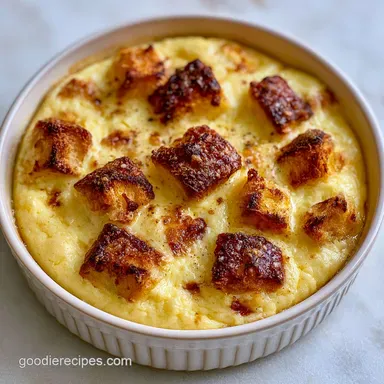
Baked French Toast Casserole: Failure-Proof
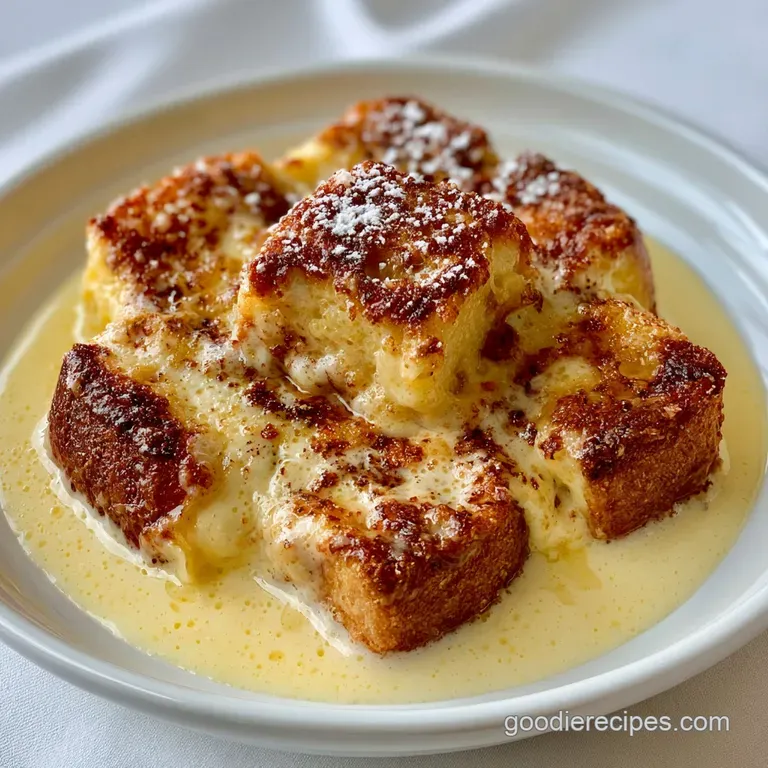
- Time: 15 min active + 8 hours chilling = Total 9 hours
- Flavor/Texture Hook: Velvety interior with a shatter crisp mahogany crust
- Perfect for: Holiday brunches, lazy Sundays, or Make-ahead hosting
- Baked French Toast Casserole
- The Secret to Bread Texture
- Component Analysis
- Gathering Your Essentials
- Necessary Kitchen Gear
- From Prep to Plate
- Solving Common Bake Issues
- Troubleshooting Common Issues
- Customizing Your Casserole
- Adjusting For Crowd Size
- Truths About Toast
- Storage and Leftover Ideas
- Best Sides for Brunch
- Recipe FAQs
- 📝 Recipe Card
Baked French Toast Casserole
That smell of cinnamon and melted butter hitting the oven air is enough to wake up anyone in the house. I remember one Christmas morning a few years back when I tried to be the "hero" by making individual slices of French toast for ten people. It was a complete disaster.
I was sweating over a frying pan, burning the edges of some slices while others were raw, and by the time the last person got their plate, the first person's breakfast was cold and sad. I spent the whole morning stressed out instead of actually hanging out with my family.
That's when I realized that the "individual slice" method is a trap. You don't need to spend your morning flipping bread. The real secret is moving everything into one pan. People often think you need a fancy, expensive artisan loaf from a boutique bakery to make a high end brunch, but that's just not true.
You can use a standard store-bought brioche or even a thick cut white loaf as long as you handle the moisture correctly.
This Baked French Toast Casserole changes the whole vibe of the morning. You do the hard work the night before, slide it in the oven, and then go back to your coffee. You get that same velvety, custard filled center and a crunchy, sugary top without the panic.
It's a classic, family style approach that actually lets you enjoy your own food.
The Secret to Bread Texture
Right then, let's talk about why this actually works. Most people just throw bread in a pan and hope for the best, but there's a specific reason this version doesn't turn into a soggy mess.
The Bread Sponge: Brioche has a higher fat content from butter, which creates a structural barrier. This allows the bread to soak up the liquid without completely disintegrating into mush.
Custard Stabilization: The ratio of eggs to cream and milk creates a stable protein network. As it bakes, the eggs set, turning the liquid into a soft, pudding like consistency.
Sugar Crust: The brown sugar topping doesn't just add sweetness. It binds with the melted butter to create a barrier that browns and crisps, providing a contrast to the soft center.
The Long Soak: Giving the bread 8 hours to sit ensures the custard reaches the very center of each cube. Without this, you get "dry pockets" of bread in the middle of your bake.
Depending on what you have in your pantry, you might choose a different bread approach. Some people love the convenience of pre cubed bread, while others swear by fresh loaves. Here is how they stack up.
| Bread Type | Prep Effort | Texture Result | Best For |
|---|---|---|---|
| Fresh Brioche | Medium | Velvety and rich | Special occasions |
| Stale Sliced Bread | Low | Firmer, holds shape | Budget friendly meals |
| Pre cubed Loaf | Very Low | Consistent soak | Quick assembly |
When you're working with a budget smart approach, you don't need the most expensive ingredients, but you do need to understand what they're doing in the pan.
Component Analysis
I've spent way too much time experimenting with these ratios, and these are the ones that actually hold up under pressure.
| Ingredient | Science Role | Pro Secret |
|---|---|---|
| Brioche | Structural Base | Use slightly stale bread for a better soak |
| Heavy Cream | Fat/Richness | Don't swap for skim milk or it won't set |
| Eggs | Binding Agent | Beat them well to avoid "eggy" streaks |
| Cinnamon | Flavor Profile | Toast it slightly for a deeper aroma |
For those who want to keep things affordable, you can easily swap a few items without ruining the dish. Just keep in mind that fat equals flavor here, so don't go too lean.
Gathering Your Essentials
Here is everything you need to get this on the table. I've listed these exactly as they should go into your bowl.
For the Bread Base
- 1 lb brioche loaf, cubed into 1 inch pieces Why this? High butter content for a rich, sturdy texture
- 2 tbsp unsalted butter, melted Why this? Prevents the bread from sticking to the dish
- Substitute: Challah bread (Similar richness and structure)
For the Cinnamon Custard
- 4 large eggs Why this? Provides the lift and sets the custard
- 1 cup heavy cream Why this? Essential for that velvety mouthfeel
- 1 cup whole milk Why this? Thins the custard for better penetration
- 1/4 cup granulated sugar Why this? Subtle sweetness that doesn't overpower
- 1 tbsp ground cinnamon Why this? The classic warm, woody flavor
- 1 tsp vanilla extract Why this? Adds floral depth to the dairy
- 1/4 tsp salt Why this? Balances the sugar and enhances cinnamon
- Substitute: Half and half (Use 2 cups total to replace cream and milk)
For the Brown Sugar Topping
- 1/2 cup brown sugar, packed Why this? Molasses notes create a deep caramel crust
- 4 tbsp unsalted butter, melted Why this? Binds the sugar and nuts
- 1 tsp ground cinnamon Why this? Reinforces the spice on top
- 1/4 cup pecans, finely chopped Why this? Adds a nutty, shatter crisp contrast
- Substitute: Walnuts (Provides a slightly more bitter, earthy crunch)
Necessary Kitchen Gear
You don't need a professional kitchen for this, but a few specific tools make it a lot easier.
- 9x13 inch ceramic baking dish: Ceramic holds heat evenly, which prevents the corners from burning while the middle is still raw.
- Large mixing bowl: You need plenty of room to whisk the eggs and cream without splashing.
- Spatula: A silicone one is best for pressing the bread cubes down into the liquid.
- Aluminum foil: This is non negotiable for the overnight soak to prevent the top from drying out in the fridge.
- Whisk: To ensure the granulated sugar and cinnamon are fully integrated.
From Prep to Plate
Right then, let's get into the actual making. Trust me on the soaking time - don't try to rush it or you'll end up with dry bread.
Preparing the Base
- Grease your 9x13 inch ceramic baking dish thoroughly with melted butter. Note: Use a paper towel to ensure every corner is coated.
- Arrange the brioche cubes evenly across the pan.
- If you're using very fresh bread, toast the cubes in a 300°F oven for 10 minutes first until they feel slightly dry to the touch. This prevents the casserole from becoming too mushy.
Whisking the Custard
- Beat the eggs in a large bowl until smooth.
- Slowly whisk in the heavy cream, whole milk, granulated sugar, 1 tablespoon of cinnamon, vanilla extract, and salt until the mixture is fully integrated.
Assembling for the Soak
- Pour the custard evenly over the bread cubes.
- Use your spatula to gently press the bread down, ensuring every single piece is submerged.
- Cover the dish tightly with aluminum foil and refrigerate for at least 8 hours or overnight. Note: This is where the magic happens; the bread needs time to absorb the custard to the core.
Baking to Golden Perfection
- Preheat your oven to 350°F.
- In a small bowl, mix the brown sugar, 4 tablespoons of melted butter, 1 teaspoon of cinnamon, and chopped pecans.
- Sprinkle the topping evenly over the soaked bread.
- Bake uncovered for 45–60 minutes until the center is set and the top is a deep mahogany brown.
Chef's Note: To check if the center is set, gently press the middle with a spoon. It should feel like a firm custard or a dense cake, not like a sponge filled with liquid.
If you love a bit of extra decadence, you can drizzle this with some brown butter caramel sauce right before serving. The saltiness of the butter cuts through the sugar perfectly.
Solving Common Bake Issues
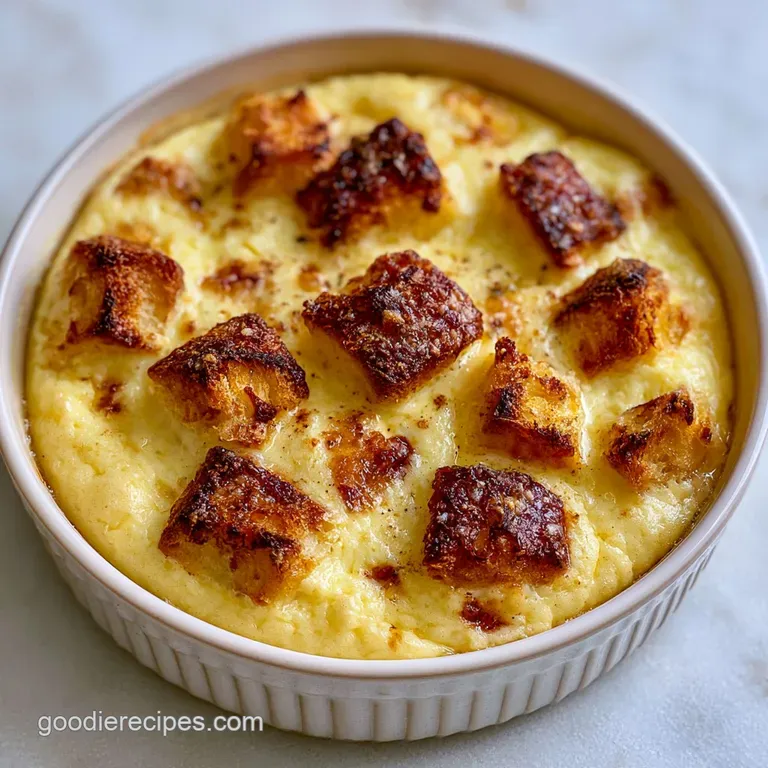
Even with a simple recipe, things can go sideways. Most of the time, it's a moisture or temperature issue.
Troubleshooting Common Issues
| Issue | Solution |
|---|---|
| Why Your Center Is Soggy | If you pull the dish out and the middle feels like porridge, it's usually because the bread wasn't dried enough or the oven temperature was too low. The custard hasn't had enough heat to set the egg p |
| Why The Edges Are Burnt | This usually happens in metal pans or if the oven has "hot spots." Ceramic is much more forgiving, but if you see the edges darkening too quickly, tent the sides with foil. |
| Why The Top Isn't Crispy | If the top is soft, you might have used too much butter in the topping or didn't bake it long enough. The sugar needs to reach a specific temperature to caramelize and "shatter." |
Common Mistakes Checklist
- ✓ Did you grease the pan? (Prevents sticking and adds flavor)
- ✓ Is the foil tight? (Prevents the custard from evaporating)
- ✓ Did you wait 8 hours? (Crucial for a consistent texture)
- ✓ Is the center set? (Avoids the "pudding" effect)
Customizing Your Casserole
This is a very flexible recipe. Once you have the base down, you can play around with the flavors to suit your mood.
Adding Fresh Fruit If you want a Baked French Toast Casserole with apples, simply peel and dice two Granny Smith apples. Toss them in a bit of cinnamon and sugar, then scatter them among the brioche cubes before pouring the custard.
The tartness of the apple balances the richness of the brioche beautifully.
Switching the Bread While brioche is the gold standard, you can use sourdough for a tangier profile. According to King Arthur Baking, sourdough has a stronger gluten structure, which means it can handle an even longer soak without falling apart. If using sourdough, I recommend adding an extra tablespoon of sugar to the custard to balance the acidity.
Reducing the Sugar If you prefer a less sweet breakfast, you can cut the granulated sugar in the custard by half. However, don't cut the brown sugar in the topping too much, as that's what creates the necessary crust.
Adjusting For Crowd Size
Whether you're feeding a small family or a whole neighborhood, you can scale this.
Scaling Down (Half Batch) Use an 8x8 inch square pan. Reduce the bake time by about 20% (check at 35 minutes). Since you can't easily halve an egg, beat one egg in a cup and use half of the liquid.
Scaling Up (Double Batch) Use two 9x13 pans. Don't just double the cinnamon and salt; increase them by 1.5x to avoid an overpowering taste. If you're putting both pans in the oven at once, lower the temperature to 325°F (160°C) and extend the bake time by 10-15 minutes to ensure even heat circulation.
If you're planning a full dessert spread and want something besides breakfast, this pairs well with other baked classics. For a different kind of morning treat, you might try Homemade Donuts as a side.
Truths About Toast
There are a few things people tell you about French toast that just aren't true. Let's clear those up.
Myth: You must use stale bread. While stale bread is helpful, it's not a requirement. As long as you toast fresh cubes in the oven for 10 minutes, you get the same result. You don't need to leave your loaf on the counter for three days.
Myth: Heavy cream is optional. Some people suggest using only milk. While it "works," you lose the velvety texture. The fat in the cream prevents the eggs from tasting too "omelet like" and gives the dish its characteristic richness.
Myth: Flipping the bread adds flavor. In a casserole, you aren't flipping, but you're still getting the Maillard reaction (the browning) on the top and the sides of the pan. You get all the flavor of a griddle with none of the work.
Storage and Leftover Ideas
Don't let any of this go to waste. This dish actually keeps surprisingly well.
Storage Guidelines Store leftovers in an airtight container in the fridge for up to 4 days. Because of the high dairy content, don't leave it sitting on the counter for more than 2 hours.
Freezing Tips You can freeze the baked casserole! Slice it into individual squares, wrap them tightly in foil and plastic wrap, and freeze for up to 2 months. To reheat, just pop a slice in the toaster oven at 350°F for 10 minutes.
Zero Waste Ideas If you have leftover brioche ends or crusts that weren't used in the casserole, don't toss them. Toss them with melted butter, cinnamon, and sugar, then bake them at 300°F until crisp to make "brioche croutons" for your next bowl of vanilla ice cream.
Best Sides for Brunch
A Baked French Toast Casserole is quite rich, so you want sides that provide a sharp or salty contrast.
Salty Pairings Crispy bacon or maple glazed sausage links are the obvious choices. The saltiness cuts right through the cinnamon sugar profile. I also love adding a side of soft scrambled eggs with chives to bring some savoriness to the plate.
Fresh Pairings A bowl of fresh berries (blueberries, raspberries, and strawberries) with a squeeze of lime juice adds a brightness that prevents the meal from feeling too heavy. A simple arugula salad with a lemon vinaigrette also works surprisingly well.
Drink Pairings Strong, black coffee is the best way to balance the sweetness. If you're feeling fancy, a mimosa with a splash of pomegranate juice adds a tart, bubbly element that cleanses the palate between bites of the rich brioche.
Recipe FAQs
What are common mistakes when making French toast casserole?
Under drying the bread or using a low oven temperature. This often results in a porridge like center because the custard fails to set properly.
Does French toast casserole have to soak overnight?
Yes, for the best texture. Refrigerate for at least 8 hours to ensure the custard fully penetrates the brioche; if you enjoyed mastering the moisture balance here, see how we manage dough hydration in our homemade cinnamon rolls.
Can diabetics have French toast?
Generally no, unless modified. This specific recipe contains significant amounts of granulated sugar, brown sugar, and refined brioche.
How to prevent French toast casserole from getting soggy?
Toast brioche cubes in a 300°F oven for 10 minutes before adding custard. This step dries the bread, allowing it to absorb the liquid without collapsing.
Is it true that metal pans are better than ceramic for this dish?
No, this is a common misconception. Ceramic is much more forgiving, while metal pans are prone to burning the edges due to oven hot spots.
How to reheat leftover casserole?
Place individual slices in a toaster oven at 350°F for 10 minutes. This method restores the mahogany brown crust without overcooking the center.
What is the best way to store leftovers?
Keep them in an airtight container in the fridge for up to 4 days. Because of the heavy cream and milk, do not leave the dish at room temperature for more than 2 hours.
Baked French Toast Casserole