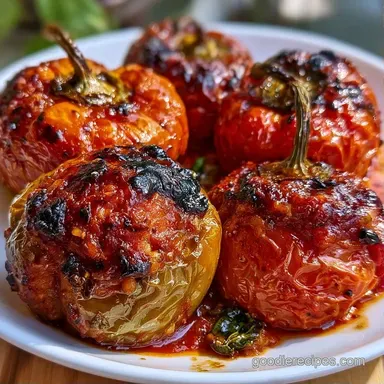
Traditional Greek Stuffed Peppers with Beef
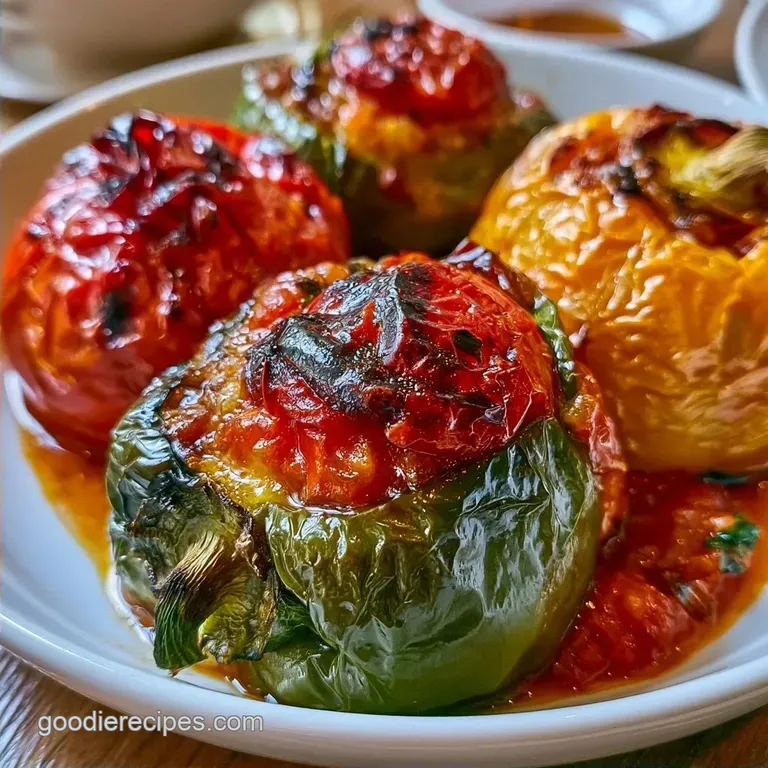
- Time: 20 min active + 75 min baking
- Flavor/Texture Hook: Charred pepper skins with tender, minty rice
- Perfect for: Sunday family dinners or meal prep
Hearty Greek Stuffed Peppers Recipe
The aroma of browning beef and fresh mint hitting a hot skillet is truly special. It brings back memories of my childhood, where the oven was always warm and the house smelled of roasted tomatoes. I used to think you had to pre-cook the rice for these, but that's actually a mistake.
Pre-cooking the rice often results in a mushy center that lacks depth. Using raw rice allows it to act as a sponge, soaking up the beef fats and pepper juices as they roast, making the filling rich and cohesive.
The final dish is savory, with a tangy note from the feta and charred edges. These Greek Stuffed Peppers aren't about being fussy; they're about slow roasting flavors together until everything is tender.
Why This Method Works
Searing the Beef: Browning the meat beforehand develops rich, savory flavors that raw beef simply cannot match.
Raw Rice Absorption: Using uncooked rice ensures the grains soak up the vegetable juices and fats throughout the 75 minute bake.
| Method | Time | Texture | Best For |
|---|---|---|---|
| Oven Roast | 95 mins | Charred & tender | Family meals |
| Stovetop | 60 mins | Steamed & soft | Faster weeknights |
This technique utilizes the oven's dry heat to caramelize the vegetable exteriors while the internal moisture steams the rice. This creates a distinct roasted skin flavor you won't find with other methods.
Needed Ingredients and Swaps
For the filling, we use 80/20 ground beef for the fat content. If you use lean beef, the rice can end up dry. You could swap it for ground lamb if you want a more traditional, gamey flavor. The medium grain white rice is ideal because it holds its shape better than long grain but stays softer than arborio.
The vegetables are the star here. Large bell peppers provide the structure, and plum tomatoes add a bright acidity. Yukon Gold potatoes are used as "fillers" in the pan. They are great because they don't fall apart and they soak up the tomato paste sauce.
The List: 6 large bell peppers (approx. 1200g) Why this? Holds filling well and chars beautifully 4 large plum tomatoes (approx. 900g) Why this? Less watery than beefsteak tomatoes 2 medium Yukon Gold potatoes (approx.
340g) Why this? Starchy enough to absorb sauce 3 tbsp extra virgin olive oil (for sautéing) 1 lb ground beef (80/20) Why this? Fat keeps the rice moist 1 cup medium grain white rice, uncooked Why this? Absorbs juices without getting mushy 1 medium yellow onion, finely diced 3 cloves garlic, minced 1/2 cup feta cheese, crumbled Why this? Adds salt and tang 1/4 cup fresh parsley, chopped 2 tbsp fresh mint, chopped Why this? Key for authentic Greek flavor 1 tsp salt 1/2 tsp black pepper 2 tbsp tomato paste Why this? Thickens the roasting liquid 1 cup water 2 tbsp extra virgin olive oil (for sauce) 1/2 tsp dried oregano
Substitutions:
| Original Ingredient | Substitute | Why It Works |
|---|---|---|
| Ground Beef | Ground Lamb | Traditional flavor. Note: Much richer and oilier |
| Feta Cheese | Ricotta + Lemon | Creamy texture. Note: Less salty, needs extra salt |
| White Rice | Quinoa | High protein. Note: Cooks faster, may need less water |
I've found that using a high-quality olive oil makes a difference in the sauce. A cheap oil can leave a greasy film on the potatoes, while a good extra virgin oil blends into the tomato paste.
Equipment Needed
Basic kitchen gear is all you need for this recipe. You will only need a large skillet for the meat and a 9x13 inch baking dish. I typically reach for a durable stainless steel pan, like an All Clad, to sear the beef properly, but cast iron is a great alternative.
A sharp paring knife is useful for hollowing out the tomatoes. Using a melon baller is a fast way to remove the centers without breaking through the walls, though a small spoon is just as effective.
I also suggest opting for heavy duty aluminum foil. Since these Greek Stuffed Peppers bake for an extended period, thin foil may tear, which allows steam to escape and can leave the rice undercooked.
Cooking Steps for Gemista
Phase 1: Preparing the Vessels
- Remove the pepper tops and clear out the seeds and membranes.
- Cut the tops off the tomatoes and scoop out the centers with a spoon, leaving a 1/4 inch shell. Finely chop the reserved tomato flesh. Note: Keep the pulp, it's the moisture source for the rice.
Phase 2: Sautéing the Filling
- Brown the ground beef in a pan over medium high heat until deep brown. Drain any excess fat.
- Stir in the diced onion and garlic, cooking until translucent.
- Mix in the uncooked rice for 2 minutes until edges are translucent. Note: Toasting the rice prevents it from clumping.
- Take the pan off the heat and fold in the chopped tomato pulp, crumbled feta, parsley, mint, salt, and pepper.
Phase 3: Assembly & Roasting
- Spoon the filling into the vegetables, leaving 1/2 inch of space at the top. Note: The rice expands as it cooks.
- Place the stuffed peppers and tomatoes upright in a 9x13 inch baking dish and pack potato slices tightly between them.
- Whisk together tomato paste, water, olive oil, and oregano. Pour the liquid evenly around the base of the vegetables.
- Cover with foil and bake at 375°F (190°C) for 45 minutes. Remove the foil and bake for another 30 minutes until the vegetables are charred and the rice is tender.
Chef's Note: If the pepper tops brown too quickly after the foil is removed, just loosely tent them with a piece of foil. This prevents them from burning while the rice finishes.
Why You'll Love This Recipe
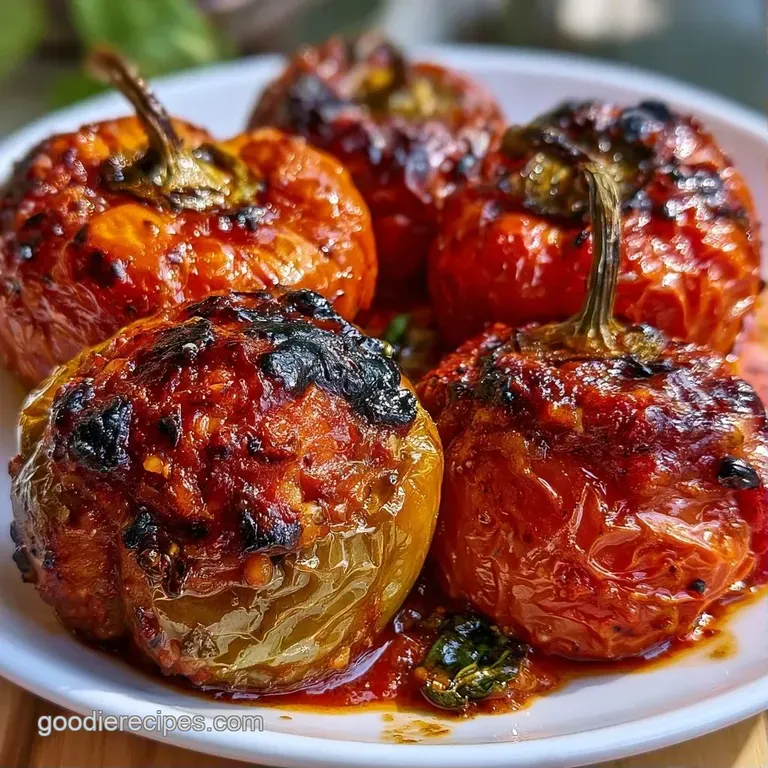
The beauty of these Greek Stuffed Peppers is how they combine three different cooking methods in one pan: braising, roasting, and steaming. The vegetables at the bottom are essentially braised in the tomato sauce, while the tops are roasted.
I love that this recipe is a "one pan wonder." You get your protein, your starch, and your vegetables all in one go. Plus, the potatoes become the best part of the meal because they soak up the drippings from the beef and the acidity from the tomatoes.
It's a comforting, rustic dish that doesn't require precise measurements or high end tools. Trust me, the charred skin of the peppers adds a smoky depth that you just can't get from any other method.
Fixing Common Problems
When I first started making Greek Stuffed Peppers, I often ended up with rice that was still hard in the center. This usually happens because the moisture escaped the pan too early. Keeping the foil tight for the first 45 minutes is non negotiable.
Another common issue is the "soggy bottom." If you add too much water to the sauce, the peppers will boil rather than roast. The liquid should reach about halfway up the pepper, not cover them completely.
Fixing Hard Rice
If you pull the peppers out and the rice is still chalky, don't panic. Add 1/4 cup of water to the pan, cover it tightly again, and pop it back in for 10-15 minutes.
Preventing Soggy Peppers
Ensure you drain the beef properly before adding the rice. Too much grease in the filling can prevent the rice from absorbing the tomato sauce, leading to a greasy, wet texture at the bottom.
Avoiding Burnt Tops
If your oven runs hot, the pepper skins might blacken before the rice is done. Keep an eye on them at the 60 minute mark.
| Problem | Root Cause | Solution |
|---|---|---|
| Hard Rice | Steam escaped or too little liquid | Add water and re cover with foil |
| Soggy Bottoms | Too much sauce in the pan | Use less water in the braising liquid |
| Burnt Skins | High oven temp or too long uncovered | Tent with foil for the final 15 mins |
Dealing with these issues is easy once you know the cues. If you're craving another hearty meal, my crispy salmon patties are a great alternative for a quicker dinner.
Scaling Your Batch
To prepare this Greek Stuffed Peppers recipe for just two people, you can easily cut the ingredients in half. Use 3 peppers and an 8x8 inch baking dish. Shorten the baking time by 20%, though you should still verify that the rice is tender. If you use a binder, whisk one egg in a bowl and use half of it.
When doubling the recipe for a crowd, be mindful of the seasoning. I only increase the salt and oregano by 1.5x rather than 2x, as these flavors can become too dominant in larger portions. Distribute the peppers between two 9x13 inch pans instead of using one oversized roast.
For these larger batches, I recommend dropping the oven temperature by 25°F (to roughly 350°F) and increasing the cook time. This allows the heat to reach the center of the crowded pan without scorching the edges.
| Goal | Change | Result |
|---|---|---|
| Zesty Twist | Mix in 1 tsp lemon zest | Brighter flavor |
| More Hearty | Add 1/2 cup cooked lentils | More fiber/bulk |
| Spicier | Add 1/2 tsp red pepper flakes | Mild heat |
Cooking in batches is preferable to overcrowding the pan. If the peppers are packed too tightly, the sides won't roast properly, and you will lose that charred effect.
Storing and Reheating
These Greek Stuffed Peppers often improve after a day in the fridge as the rice soaks up more of the sauce's flavor. Store them in an airtight glass container for up to 3 days.
To freeze, ensure the peppers have cooled entirely. Wrap each pepper in foil and store them in a freezer safe bag for a maximum of 2 months. Thaw them in the refrigerator overnight before serving.
Skip the microwave when reheating, as it tends to make the pepper skins rubbery. For the best texture, put them in a baking dish with a bit of water, cover with foil, and warm at 350°F (175°C) for 20 minutes.
Minimize waste by using the remaining tomato pulp or pepper tops in a simple pasta sauce or soup. Don't toss the potato bits from the pan; mash them into the rice to add a creamy touch.
Customizing Your Dish
If you want to go the Greek Stuffed Peppers Vegetarian route, swap the beef for a mix of cooked lentils and chopped mushrooms. Mushrooms provide the same savory "umami" flavor as beef. You may need to add an extra 1/2 cup of water to the sauce since lentils absorb more liquid than beef.
For a low carb version, replace the rice with cauliflower rice. Since cauliflower rice doesn't absorb liquid the same way, reduce the water in the sauce by half and bake for 20 minutes less.
If you like a more intense flavor, try adding 2 tablespoons of tomato paste to the meat mixture itself, not just the sauce. This creates a thicker, richer filling. You could also add a handful of kalamata olives to the filling for a salty, briny kick.
Best Pairing Ideas
These Greek Stuffed Peppers are quite filling on their own, so I usually pair them with something light and fresh. A simple Greek salad with cucumbers, red onion, and more feta is the classic choice. The cold, crisp vegetables balance the roasted richness of the dish.
Tzatziki is another must. A big dollop of cool yogurt and cucumber sauce on top of the hot pepper adds a creamy contrast. If you want something a bit more substantial, a side of lemon garlic sautéed spinach works wonders.
For dessert, something fruity and light is the way to go. A strawberry poke cake is a wonderful way to end the meal with something sweet and refreshing.
Right then, you're all set. Just remember to be patient with the roast. Let those Greek Stuffed Peppers take their time in the oven, and you'll have a meal that tastes like it came straight from a family kitchen in Athens. Trust me on the raw rice it's the only way to go.
Recipe FAQs
What's in Greek stuffed peppers?
Beef, rice, and feta. The filling blends browned ground beef, uncooked white rice, onion, garlic, and crumbled feta with fresh parsley and mint.
Do gemista only use bell peppers?
Actually, no. Traditional gemista often include both bell peppers and hollowed out plum tomatoes to create a variety of flavors and textures.
How to prevent the rice from overflowing?
Leave a half inch gap at the top. This space allows the uncooked white rice to expand as it absorbs moisture during the 75-minute baking process.
Is it true these must be cooked only in the oven?
No, this is a common misconception. While roasting at 375°F is essential for the charred finish, peppers can be simmered or steamed in other Mediterranean styles.
Why do my stuffed peppers come out rubbery when reheated?
Avoid using a microwave. High intensity microwave heat toughens the skins; instead, reheat in a baking dish with a splash of water and foil.
Can I use different vegetables for stuffing?
Yes, tomatoes work great. This recipe uses both bell peppers and plum tomatoes as vessels for the beef and rice filling.
Which mistakes cause the filling to be dry?
Forgetting the tomato paste sauce. Pouring the water, olive oil, and tomato paste mixture around the base ensures the rice steams and remains tender.
Could a side dish help balance this meal?
A crisp Greek salad is a perfect pairing. Its bright, tangy flavors balance the hearty beef and feta. For another savory comfort option, try our crispy sourdough sandwich.
Greek Stuffed Peppers