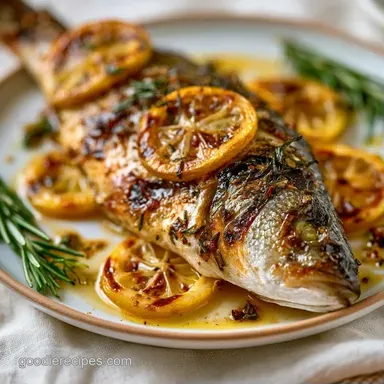
Grilled Whole Sea Bass with Caramelized Lemon

- Time: 10 min active + 20 min grilling + 5 min resting
- Flavor & Texture: Charred, citrusy skin with tender, flaky meat
- Perfect for: A classic family dinner or outdoor hosting
The most annoying part of grilling fish is when the skin fuses to the grates. You go to flip it, and half the fish stays behind, leaving you with a shredded mess. It usually happens because the skin was too damp or the grill wasn't hot enough to create an immediate sear.
This method fixes that. By patting the skin bone dry and using a high heat medium-high setting, the fish releases naturally from the metal. You get a mahogany colored crust that contrasts with the white, flaky meat.
Cooking a Whole Sea Bass feels impressive, but it's actually easier than doing fillets. The bone protects the flesh from overcooking, so you get a juicy result. It's a classic Mediterranean style that tastes like a coastal vacation.
Grilling a Whole Sea Bass
High Heat: Searing at medium-high heat creates a crust quickly. This limits moisture loss from the surface while the inside cooks.
Skin Scoring: Those diagonal cuts let the oil and salt reach the meat. It also stops the skin from curling up as it shrinks from the heat.
Citrus Char: Grilling the lemon slices first changes the flavor. The heat mellows the sharp acid into a sweet, jammy glaze.
What Each Ingredient Does
| Ingredient | Role | If You Don't Have It |
|---|---|---|
| Extra Virgin Olive Oil | Conducts heat and prevents sticking | Grapeseed oil (neutral flavor) |
| Coarse Sea Salt | Draws out surface moisture for a better sear | Kosher salt |
| Fresh Lemon | Adds acidity to cut through the fat | Lime (slightly more tropical) |
| Fresh Parsley | Adds a bright, grassy finish | Fresh cilantro |
The Ingredient List
- 1 whole sea bass, scaled and gutted (2½ lbs)
- 5 tbsp extra virgin olive oil
- 1 tsp coarse sea salt
- 1/2 tsp freshly cracked black pepper
- 4 cloves garlic, thinly sliced
- 1 lemon, sliced into rounds
- 1/4 cup fresh parsley, chopped
- 1 tbsp fresh lemon juice
Chef: Use a heavy duty grill or a cast-iron grill pan if you're indoors. The goal is consistent, high heat across the entire surface.
How to Make It

Preparing the Fish
- Use paper towels to ensure the sea bass skin is entirely moisture-free. Note: Any remaining moisture will cause the skin to steam instead of searing.
- Create 3-4 shallow diagonal scores on both sides of the skin.
- Coat the inside and outside of the fish with 3 tbsp extra virgin olive oil.
- Apply a generous amount of 1 tsp coarse sea salt and 1/2 tsp freshly cracked black pepper.
- Fill the cavity with two lemon rounds and 4 thinly sliced garlic cloves.
The Grilling Process
- Set the grill to medium-high heat.
- Grill the extra lemon slices for 2-3 minutes on each side until they reach a deep, charred golden hue, then set them aside.
- Lay the fish on the hot grates and cook for 7-9 minutes per side, resisting the urge to move it.
- Carefully flip and continue grilling until a meat thermometer reads 145°F (63°C) at the thickest point and the fish flakes easily with a fork.
- Transfer the fish from the heat and let it rest for 5 minutes.
The Finishing Touch
- Blend together 1/4 cup chopped parsley, 1 tbsp fresh lemon juice, and the remaining 2 tbsp extra virgin olive oil.
- Spoon the parsley oil over the rested fish and garnish with the charred lemon slices.
Fixing Common Grill Issues
When the fish feels like it's glued to the grates, don't panic. It's usually a sign that the proteins haven't fully seared yet. If you tug too early, you'll tear the skin. Wait another minute, and it will release on its own. For a different flavor profile, my garlic herb fish uses a similar grilling technique to ensure a clean release.
Skin Sticking to Grates
This happens if the grill is too cool or the fish was damp. Ensure you use plenty of oil on the skin.
Flesh Too Rubbery
Rubbery fish is a sign of overcooking. Use a meat thermometer to hit 145°F exactly.
Uneven Browning
This occurs when the fish isn't making full contact with the grates. Use a fish basket if your grill has uneven gaps.
| Problem | Root Cause | Solution |
|---|---|---|
| Skin tears on flip | Flipped too early | Wait for the fish to release naturally |
| Burnt garlic | Garlic was too thin | Slice garlic slightly thicker |
| Dry interior | Overcooked | Pull at 145°F and let carryover heat finish it |
Flavor Twists and Swaps
If you want more heat, try this spicy sea bass version by adding crushed red pepper to the oil rub. For a more Mediterranean vibe, stuff the cavity with kalamata olives and a sprig of fresh oregano.
You can also swap the parsley for a mix of dill and chives. This creates a more pungent, earthy finish that pairs well with the charred lemon. If you don't have a grill, this recipe works in a 400°F oven on a parchment lined sheet pan, though the skin won't be as crispy.
| Original Choice | Budget Alternative | Result |
|---|---|---|
| Extra Virgin Olive Oil | Vegetable Oil | Lacks the peppery taste but sears just as well |
| Fresh Parsley | Dried Parsley (4 tsp) | Less bright flavor, but still adds color |
| Sea Bass | Red Snapper | Similar texture, slightly sweeter taste |
Storage and Leftovers
Place any remaining fish in a sealed tub and keep it in the fridge for up to 2 days. Keep in mind that the crispy skin will soften once it cools and sits in the fridge.
Avoid the microwave for reheating, as it makes the fish rubbery. Instead, place the fish in a baking dish with a splash of water or olive oil, cover with foil, and heat in an oven at 300°F (150°C) until the thickest part of the fish reads 165°F (74°C) on a meat thermometer.
This gently warms the meat without drying it out.
Pairing Ideas
I like serving this with a side of blistered cherry tomatoes and asparagus, grilled right next to the fish. A simple wild rice pilaf or some crusty sourdough bread works well to soak up the parsley and lemon oil. For a drink, a chilled sparkling water with a lime wedge keeps the meal feeling light and fresh.
Recipe FAQs
How to cook European sea bass?
Grill the fish on medium-high heat for 7-9 minutes per side. Ensure the internal temperature reaches 145°F (63°C) and the flesh flakes easily.
Can I grill sea bass on a cedar plank?
Yes, using a cedar plank is a common alternative that adds a smoky flavor to the meat. It differs from direct grilling because the wood protects the fish from the direct flame.
Do you bake seabass in foil?
Yes, baking in foil is a valid method that steams the fish in its own juices. This results in a more moist texture compared to the charred skin achieved on a grill.
What are some easy ways to grill sea bass?
Stuff the cavity with garlic and lemon before grilling over medium-high heat. Seasoning with olive oil, sea salt, and pepper keeps the process simple and flavorful.
Is there a way to cook sea bass fillets?
You can pan-sear or grill fillets, which cook much faster than a whole fish. This method focuses on getting a crispy skin on the smaller cuts.
Where should leftover grilled sea bass be kept?
Store any leftover fish in a sealed container and keep refrigerated for 2 days. Note that the skin will lose its crispness once cooled.
Grilled Whole Sea Bass for 4 Servings