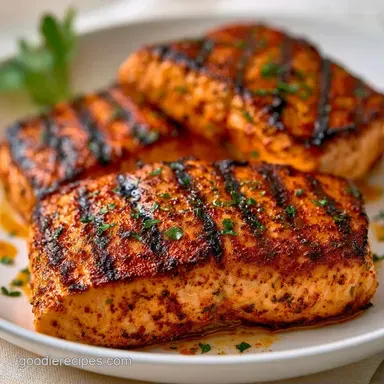
Easy Grill Pan Salmon in 18 Minutes
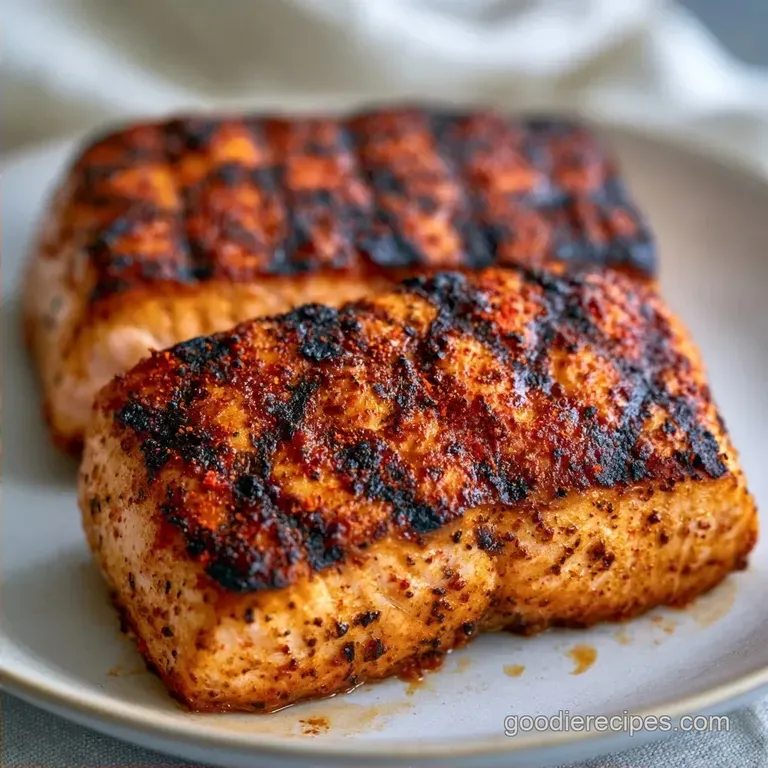
- Time: 5 min active + 10 min cook
- Flavor/Texture Hook: Smoky char with a moist, flaky center
- Perfect for: A fast weeknight dinner that feels fancy
- Easy Grill Pan Salmon
- Why Dry Fish Works
- Fast Versus Classic Methods
- What Each Ingredient Does
- Gathering Your Essentials
- The Right Tools
- Cooking The Salmon
- Fixing Common Problems
- Troubleshooting Common Issues
- Changing The Flavors
- Adjusting The Batch
- Storing Your Salmon
- Serving Ideas
- Debunking Salmon Myths
- Recipe FAQs
- 📝 Recipe Card
Easy Grill Pan Salmon
Sizzle. That is the sound of a hot cast iron pan hitting a piece of bone dry fish. If you have ever tried this and ended up with rubbery fillets or a piece of salmon that basically fused to your pan, you are not alone.
I used to fight with my grill pan every single time, usually ending up with a shredded mess when I tried to flip the fish.
The fix is actually pretty simple, and it comes down to moisture control and temperature. Most people just throw the fish in, but if you want those distinct grill marks and a center that doesn't taste like cardboard, you have to change your prep.
This Easy Grill Pan Salmon approach focuses on speed and reliability. We are talking about a meal that goes from the fridge to the plate in under 20 minutes. It is a straightforward method that gives you a high end result with very little cleanup.
Why Dry Fish Works
You might think a little moisture helps, but it actually ruins the sear. When water hits a hot pan, it turns into steam, which creates a barrier between the fish and the metal. Instead of browning, your salmon just boils.
Paper Towels: Patting the fillets until they are bone dry allows the oil to bond directly to the protein. This ensures the fish browns in about 4 minutes instead of steaming for 8.
Pan Heat: A scorching pan causes the proteins to sear and release. If the pan is too cool, the flesh sticks to the ridges, and you will tear the fillet when you try to move it.
Fast Versus Classic Methods
I usually choose the grill pan for weeknights because it is so much faster than a full oven roast. Here is how it stacks up against the traditional method.
| Method | Time | Texture | Best For |
|---|---|---|---|
| Grill Pan | 15 mins | Charred & flaky | Quick weeknight meals |
| Oven Bake | 25 mins | Uniform & soft | Large crowds |
| Poaching | 20 mins | Tender & moist | low-fat diets |
Right then, you can see why the Easy Grill Pan Salmon is my go to. It gives you that smoky, charred flavor in a fraction of the time.
What Each Ingredient Does
I keep the seasoning simple so the fish can actually taste like fish. Each part of this mix has a job to do.
| Ingredient | What It Does | Best Swap |
|---|---|---|
| Olive Oil | Conducts heat and prevents sticking | Avocado oil (higher smoke point) |
| Kosher Salt | Draws out moisture and seasons deep | Sea salt |
| Garlic Powder | Adds a savory, toasted base | Onion powder |
| Smoked Paprika | Mimics the taste of a real grill | Cumin (for an earthy vibe) |
Gathering Your Essentials
You don't need a long list of ingredients for Easy Grill Pan Salmon. Just stick to the basics and focus on the quality of the fillets.
- 4 (6 oz) center cut salmon fillets, skin on Why this? Center cuts have uniform thickness for even cooking
- 2 tbsp olive oil Why this? High heat stability and neutral flavor
- 1 tsp kosher salt Why this? Coarser grains are easier to distribute evenly
- 1/2 tsp cracked black pepper Why this? Adds a sharp, woody heat
- 1/2 tsp garlic powder Why this? Won't burn as fast as fresh minced garlic
- 1/4 tsp smoked paprika Why this? Adds that "outdoor grill" aroma and color
If you are out of smoked paprika, you can use regular paprika, but you'll lose that charred depth. Trust me on this, the smoked version is what makes it feel like it came off a BBQ.
The Right Tools
You can use a standard skillet, but a grill pan is what makes this Easy Grill Pan Salmon work. The ridges lift the fish away from the excess fat, allowing the flesh to sear while the fat drains.
I prefer a heavy cast iron grill pan because it holds heat better than aluminum. You will also want an instant read thermometer. Checking the internal temperature is the only way to stop the fish from becoming rubber.
Chef's Note: If you have a meat mallet, give the fillets a very light press before seasoning. This evens out the thickness so the thin end doesn't overcook while the thick part stays raw.
Cooking The Salmon
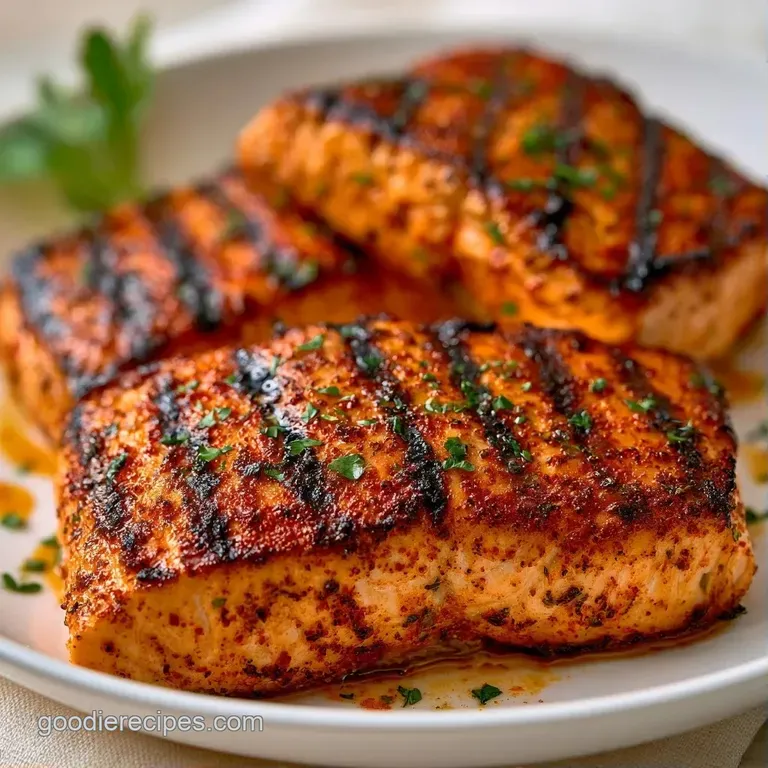
Let's crack on with the process. Follow these steps and don't rush the heat.
- Pat each salmon fillet completely dry on all sides with paper towels. Note: Any moisture here will stop the searing process
- Rub 1/2 tbsp of olive oil onto each fillet.
- Mix the salt, pepper, garlic powder, and smoked paprika in a small bowl.
- Sprinkle the seasoning evenly over the flesh side of the salmon.
- Place the grill pan over medium high heat for 3–5 minutes. Wait until a drop of water evaporates instantly.
- Place fillets on the pan, flesh side down. Press down gently for 5 seconds to ensure the fish hits the ridges.
- Grill for 4–5 minutes without moving the fish until the edges turn opaque and the fish releases naturally from the pan.
- Turn the fillets over to the skin side.
- Grill for another 3–4 minutes.
- Use a thermometer to check the center. According to recommends, the FDA recommends cooking fish to an internal temperature of 145°F. I personally pull mine at 135°F for medium rare and let it carry over.
- Remove from the pan and let the salmon rest for 3 minutes.
Fixing Common Problems
Even with a simple recipe, things can go sideways. Usually, it's a temperature issue.
Troubleshooting Common Issues
| Issue | Solution |
|---|---|
| Why Your Salmon Sticks | If the fish clings to the ridges, the pan wasn't hot enough or the fish was too wet. When the proteins sear, they naturally pull away from the metal. If you have to tug at it, give it another minute. |
| Why the Outside Burns First | High heat is great, but if your fillets are too thick, the outside will char before the middle cooks. Lower the heat slightly and use a lid for the last 2 minutes to trap heat. |
| How to Stop Overcooking | Salmon continues to cook after you take it off the heat. This is why the 3 minute rest is mandatory. Pull the fish when it is 5 degrees below your target temperature. |
Changing The Flavors
This Easy Grill Pan Salmon is a blank canvas. Once you have the technique down, you can play with the rubs. I adapted the base of my approach from Ina Garten, though I swapped her marinade for a dry rub to get a better crust.
If you want something brighter, try a lemon garlic version. Just skip the paprika and add a squeeze of fresh lemon and some minced garlic after the fish comes off the pan. For those who love a bit of tang, my Sauce in 15 Min recipe is a great way to add a punchy finish to this dish.
For a sweeter vibe, brush on a mixture of honey and soy sauce during the last 2 minutes of cooking. Just be careful, as sugar burns quickly on a hot grill pan.
Adjusting The Batch
You don't always need four fillets. Here is how to handle different amounts.
Scaling Down: If you are just cooking for one or two, use a smaller pan. If you use a massive pan for one fillet, the oil will spread too thin and you'll lose the sear. Reduce your total cook time by about 20% since the pan stays hotter with less cold fish in it.
Scaling Up: Do not crowd the pan. If you try to fit 8 fillets in one go, the temperature will drop and the salmon will steam instead of grill. Work in batches. Season all the fish at once, but cook them in two groups.
Baking Alternative: If you have to do 12 fillets for a party, move them to the oven at 400°F (200°C). You can still sear them in the pan first for 2 minutes per side, then finish them in the oven for 8-10 minutes.
Storing Your Salmon
Leftover Easy Grill Pan Salmon is actually great cold in a salad, but reheating can be tricky.
Fridge: Store in an airtight container for up to 3 days. To reheat, avoid the microwave, which makes the fish rubbery. Instead, put it in a pan over low heat with a teaspoon of water and a lid for 2-3 minutes.
Freezer: You can freeze cooked salmon for up to 2 months. Wrap it tightly in foil and then a freezer bag. Thaw in the fridge overnight before reheating.
Zero Waste: Don't toss the skin if it falls off in the pan. Those crispy bits are flavor gold. I often toss them into a quick stock or use them as a garnish for a bowl of rice. If you have extra fillets, try making an Fish in 15 Min recipe to switch up the profile.
Serving Ideas
The beauty of this Easy Grill Pan Salmon is that it pairs with almost anything. Because it has a smoky profile, it needs something fresh to balance it out.
I love serving this with steamed asparagus or a quick cucumber salad. If you want something heartier, a bed of quinoa or wild rice works well. The juices from the resting fish act as a natural sauce, so don't let them go to waste on the cutting board.
For a little extra pop, top the fish with a dollop of Greek yogurt mixed with dill and lemon zest. It cuts through the richness of the salmon and makes the whole plate feel lighter.
Debunking Salmon Myths
There are a few things people say about grilling fish that just aren't true.
Searing does not "lock in" the juices. No matter how hard you sear, moisture is lost during cooking. The sear is about flavor and texture, not about creating a waterproof seal.
You don't have to remove the skin to get a good sear. In fact, keeping the skin on protects the flesh from the direct heat of the pan, meaning you can get a great crust without overcooking the center.
Recipe FAQs
Can you cook salmon in a grill pan?
Yes, a grill pan is an excellent choice. It creates professional char marks and allows excess fat to drip away from the fillets for a cleaner finish.
What should I put on salmon before grilling?
Rub the fillets with olive oil and a blend of salt, pepper, garlic powder, and smoked paprika. This creates a flavorful crust and prevents the fish from sticking.
Do you grill salmon in foil or not?
No, avoid using foil. Foil prevents the fish from making contact with the pan ridges, which ruins the sear. If you've mastered avoiding these common pitfalls here, you'll find that same precision helps when making our pumpkin pie.
How to stop salmon from sticking to the grill?
Pat the fillets completely dry and ensure the pan is medium high heat. When the proteins sear properly, the fish will naturally release from the metal ridges.
How long should salmon rest before serving?
Rest the fillets for 3 minutes. This short pause allows the juices to redistribute, ensuring the meat stays moist and tender.
What's the best and easiest way to grill salmon?
Sear flesh side down for 4 5 minutes, then flip and grill for 3 4 minutes. Use an instant read thermometer to reach 135°F for medium rare or 145°F for medium.
How to cook salmon for a diabetic?
Focus on using the olive oil and dry spice rub provided in this recipe. This method avoids the added sugars and refined carbohydrates often found in commercial glazes.
Easy Grill Pan Salmon