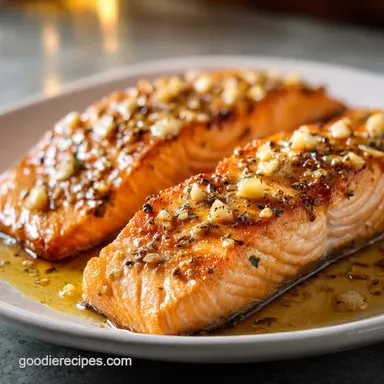
Our Favorite Easy Oven Baked Salmon: Buttery Garlic Crust
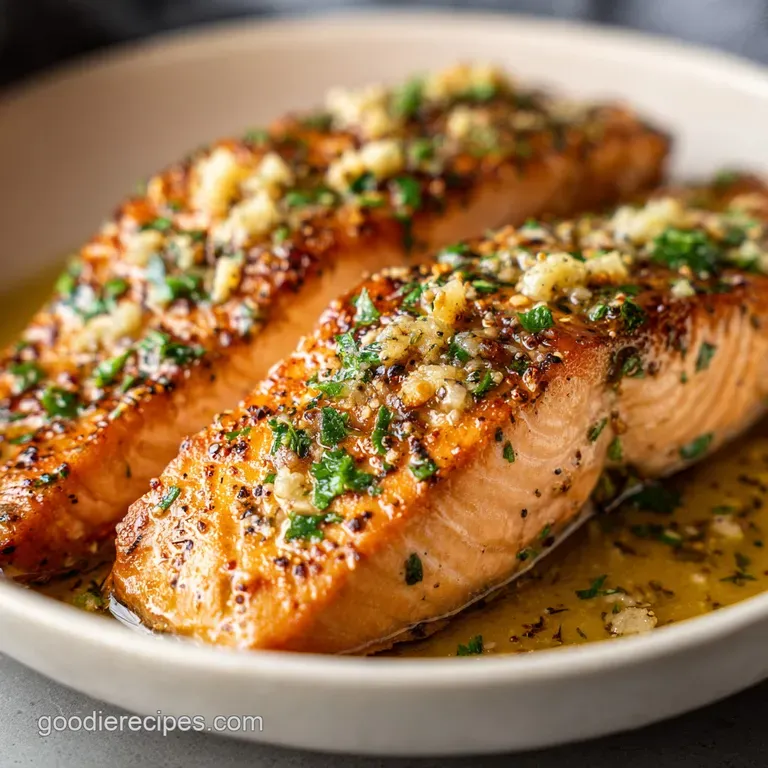
- Time: 5 min active + 15 min cook = Total 20 mins (plus 5 min rest)
- Flavor/Texture Hook: Velvety interior with a buttery, garlic infused crust
- Perfect for: Fast weeknight dinners or a healthy meal prep base
- Our Favorite Easy Oven Baked Salmon
- The Logic Behind the Texture
- Component Analysis
- What You'll Need
- Essential Tool Kit
- Bringing It Together
- Avoiding Kitchen Disasters
- Troubleshooting Common Issues
- Adjusting The Batch Size
- Debunking Salmon Myths
- Storage Guidelines
- Perfect Complements
- Recipe FAQs
- 📝 Recipe Card
Our Favorite Easy Oven Baked Salmon
That first hit of garlic and lemon hitting 400°F air is an instant mood lifter. I remember the first time I tried to "healthify" this dish by skipping the butter, thinking a drizzle of oil was enough.
I ended up with fillets that felt like damp cardboard, lacking that silky, melt in-your mouth quality that makes salmon special. It was a harsh lesson in how fat isn't just for flavor, it's the actual barrier that keeps the fish from drying out.
Since then, I've obsessed over the timing. Most people wait until the fish "looks done," but by then, it's usually too late. I once ruined a dinner party by waiting for the white albumin (that weird white protein) to fully emerge, only to find the center was as dry as a desert.
Now, I trust the thermometer and the rest, which is why our favorite easy oven baked salmon actually stays juicy.
You can expect a dish that feels high end but takes almost zero effort. We're talking about a velvety texture that flakes effortlessly with a fork, paired with a zingy, garlic heavy glaze. It's the kind of meal that makes you feel like you have your life together, even if you're wearing pajamas at 6 PM.
The Logic Behind the Texture
- The Fat Buffer: Combining butter and olive oil creates a heat stable shield that prevents the fish from searing too quickly on the outside while the inside stays raw.
- High Heat Blast: Using 400°F ensures the outside gets a light golden hue without spending so much time in the oven that the center overcooks.
- Precision Pull: Taking the fish out at 135°F allows the residual heat to carry it to the safe 145°F mark without crossing the line into "rubbery" territory.
- Moisture Retention: Patting the fillets dry before glazing prevents the fish from steaming in its own juices, which is how you get that slightly charred edge.
| Feature | Fresh Salmon | Frozen (Thawed) | Impact |
|---|---|---|---|
| Texture | Firm, tight flakes | Softer, more moisture | Frozen can be slightly more watery |
| Flavor | Clean, buttery | Mild, slightly neutral | Fresh has a more pronounced "sea" taste |
| Prep | Ready to go | Needs 12 hours thaw | Frozen requires more planning |
Component Analysis
| Ingredient | Science Role | Pro Secret |
|---|---|---|
| Unsalted Butter | Flavor carrier & moisture lock | Melt it slowly to avoid separating the fats |
| Lemon Juice | Acidity to cut through fat | Use fresh; bottled juice adds a metallic tang |
| Garlic | Aromatic depth | Mince it fine so it doesn't burn at 400°F |
| Kosher Salt | Protein seasoning | Use coarse salt for a better crust formation |
What You'll Need
For the best results, grab the freshest fillets you can find. I prefer center cut because the thickness is consistent, which means every piece finishes cooking at the same time.
For the Salmon 4 salmon fillets, approx 6 oz each Why this? Standard size ensures a consistent 15 minute cook time 1/2 tsp kosher salt Why this? Pulls moisture from the surface for better glazing 1/4 tsp cracked black pepper
Why this? Adds a woody heat that complements the fat
For the Garlic Lemon Glaze 3 tbsp unsalted butter, melted Why this? Provides the velvety mouthfeel 1 tbsp extra virgin olive oil Why this? Raises the smoke point of the butter 3 cloves garlic, minced Why this?
Essential for that pungent, savory aroma 1 tbsp fresh lemon juice Why this? Brightens the entire flavor profile 1 tbsp fresh parsley, finely chopped Why this? Adds a fresh, grassy finish
| Original Ingredient | Substitute | Why It Works |
|---|---|---|
| Unsalted Butter | Ghee (clarified butter) | Higher smoke point. Note: Slightly more nutty flavor |
| Fresh Lemon Juice | Lime Juice | Similar acidity. Note: Shifts flavor toward a Mexican/Thai profile |
| Fresh Parsley | Fresh Dill | Classic salmon pairing. Note: More intense, anise like flavor |
| Garlic Cloves | Garlic Powder (1 tsp) | Concentrated flavor. Note: Lacks the fresh "bite" of minced garlic |
Right then, don't go overboard with the salt. Salmon can be naturally salty depending on where it's from, so a light dusting is all you need.
Essential Tool Kit
You don't need a professional kitchen for this. I've made our favorite easy oven baked salmon with just a few basic items.
- 9x13 inch baking sheet: This gives the fillets enough breathing room so they don't steam each other.
- Parchment paper: A total lifesaver for cleanup. Don't bother with foil if you have parchment, as the fish slides off easier.
- Digital meat thermometer: This is the only "must have." Guessing the temperature is how salmon dies.
- Paper towels: Essential for getting the skin and flesh bone dry before the oil hits.
- Small whisk or fork: To emulsify the butter and lemon juice.
Bringing It Together
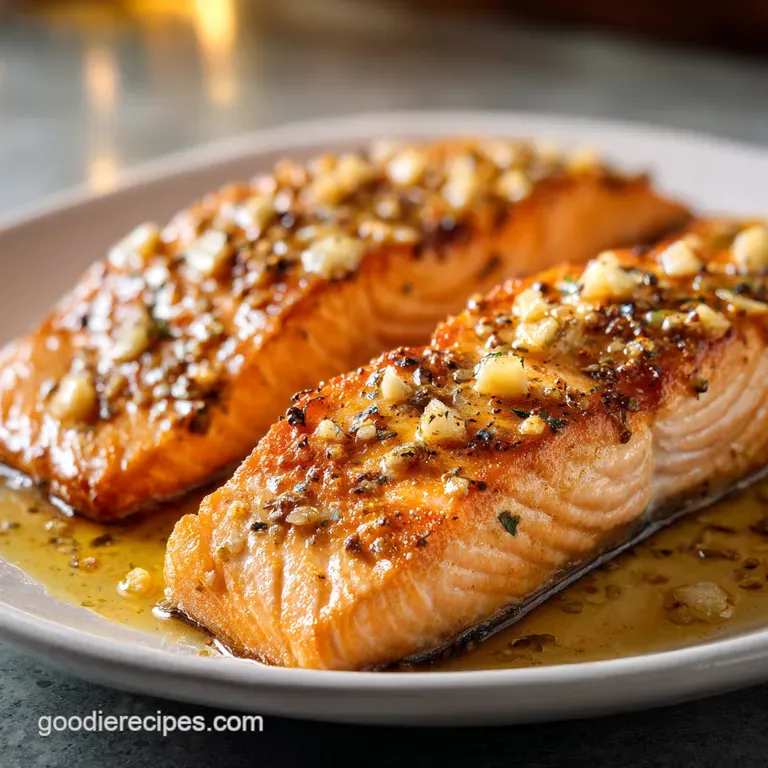
Let's crack on. The key here is speed and precision.
- Heat the oven. Set it to 400°F (200°C) and line your pan with parchment paper. Note: A hot oven prevents sticking
- Dry the fish. Pat the salmon fillets completely dry with paper towels. Note: Wet fish won't brown, it just steams
- Mix the glaze. In a small bowl, whisk together melted butter, olive oil, minced garlic, and lemon juice.
- Season. Place fillets on the pan and season both sides with salt and pepper.
- Glaze the fillets. Spoon the garlic lemon mixture generously over each fillet, making sure the edges are covered.
- Bake. Place on the center rack for 12-15 minutes until the flesh is opaque and the internal temperature hits 135°F (57°C).
- Rest. Remove from oven and let the salmon rest for 5 minutes. Note: This lets the temp rise to 145°F (63°C) naturally
- Garnish. Sprinkle with finely chopped fresh parsley just before serving for a pop of color.
Chef's Note: If you're using fillets of different thicknesses, pull the thin ones out at 10 minutes and leave the thick ones for the full 15. Trust the thermometer, not the clock.
Avoiding Kitchen Disasters
The most common issue with this dish is the "white gunk" (albumin) that seeps out of the fish. This happens when the muscle fibers contract too quickly from high heat, squeezing out the protein. It's safe to eat, but it doesn't look great. To minimize this, don't overcook the fish.
Troubleshooting Common Issues
| Issue | Solution |
|---|---|
| Why Your Salmon Is Dry | Usually, this is because the fish was left in the oven until it reached 145°F internally. Remember, the temperature keeps rising after you pull it out. If you pull at 145°F, it'll end up at 155°F, whi |
| Why Your Garlic Burned | If your garlic looks black instead of golden, it probably wasn't minced finely enough or the oven was too hot. Ensure the garlic is well incorporated into the butter oil mixture to protect it from dir |
| Why The Fish Sticks | If the salmon is clinging to the pan, you likely skipped the parchment paper or didn't use enough oil in the glaze. |
Common Mistakes Checklist
- ✓ Patting salmon completely dry before oiling
- ✓ Using a digital thermometer for the 135°F pull
- ✓ Allowing a full 5 minute rest period
- ✓ Lining the pan with parchment to prevent tearing
- ✓ Using fresh lemon juice instead of bottled concentrate
Adjusting The Batch Size
If you're cooking for one or hosting a crowd, you can't just multiply everything linearly.
Scaling Down (1-2 fillets) Use a smaller baking sheet or a toaster oven. Reduce the baking time by about 20%, as a smaller mass of fish heats up faster. I recommend beating one egg and using half if you're making a breaded version, but for this glaze, just halve the butter and lemon.
Scaling Up (8+ fillets) Work in batches. If you crowd the pan, the fillets will release moisture and steam rather than roast, leaving you with a soggy crust. I only increase salt and spices to 1.5x the original ratio, as too much salt can draw out too much moisture in large batches.
If you're doing a massive batch in the oven, lower the temperature to 375°F (190°C) and extend the time by 5-8 minutes. This ensures the fillets in the middle of the pan cook as evenly as the ones on the edges.
Debunking Salmon Myths
Myth: Searing salmon "seals in the juices." Actually, searing just adds flavor and color. Moisture loss happens regardless of whether you sear first or just bake. The glaze in our favorite easy oven baked salmon provides the moisture barrier, not a "seal."
Myth: You must cook salmon until it's opaque all the way through. Actually, a slightly translucent center is where the best texture lives. According to FDA recommends cooking salmon to 145°F, but many home cooks prefer a medium finish (around 130-135°F) for a more velvety result.
Just ensure your sourcing is high-quality.
Myth: Frozen salmon is always inferior. Not true. Flash frozen salmon is often frozen on the boat, locking in freshness better than "fresh" fish that's sat on a counter for three days. Just thaw it slowly in the fridge.
Storage Guidelines
Fridge Storage Store leftovers in an airtight container for up to 3 days. To keep it from getting "fishy," make sure it's completely cooled before sealing.
Freezing I don't recommend freezing cooked salmon, as the texture becomes mealy. However, you can freeze raw fillets in vacuum sealed bags for up to 3 months.
Zero Waste Tips Don't toss the lemon halves! Squeeze every last drop for the glaze, then zest the peel into a salad or pasta. If you have salmon skin scraps, fry them in a pan with a bit of oil until they shatter like chips. For a different flavor profile, you could top your leftovers with a Pesto Recipe to refresh the taste.
Perfect Complements
Since this dish is rich and buttery, you need sides that provide a sharp contrast.
- Roasted Asparagus: Toss them on the same pan as the salmon for the last 10 minutes of cooking.
- Quinoa or Farro: These nutty grains soak up the leftover garlic butter from the pan.
- Cucumber Salad: A vinegary, cold salad cuts right through the fat of the fish.
- Salmon Tacos: Flake the cooked salmon into Homemade Flour Tortillas with some slaw and lime.
This recipe is a weeknight lifesaver. Once you stop fearing the oven and start trusting the thermometer, our favorite easy oven baked salmon becomes the most reliable meal in your rotation. It's fast, it's healthy, and most importantly, it actually works.
Trust me on this, pull it at 135°F and you'll never look back.
Recipe FAQs
Why is my baked salmon dry?
Pull the fillets from the oven at 135°F (57°C). The internal temperature continues to rise to 145°F (63°C) during the 5-minute resting period, ensuring the fish stays moist.
Why did the garlic on my salmon burn?
Ensure the garlic is minced finely and thoroughly whisked into the butter and olive oil. This fat-based coating protects the garlic from the direct heat of the oven.
How to prevent the salmon from sticking to the pan?
Line your baking sheet with parchment paper. This creates a non-stick surface that makes removing the fillets effortless and cleanup faster.
How long can I store cooked salmon in the fridge?
Store in an airtight container for up to 3 days. Make sure the fish is completely cooled before sealing to prevent it from developing a strong fishy odor.
Is it true that I should freeze cooked salmon for long term storage?
No, this is a common misconception. Freezing cooked salmon often results in a mealy texture; instead, freeze raw fillets in vacuum sealed bags for up to 3 months.
How to prepare the fillets for the best results?
Pat the salmon completely dry with paper towels. Removing surface moisture ensures the garlic lemon butter mixture adheres properly and prevents the fish from steaming.
Can I use this method for other types of fish?
Yes, it works for most firm fillets. If you enjoyed mastering the buttery flavor profile here, see how that same principle works in our golden seared cod.
Easy Oven Baked Salmon